Aix-Marseille Université, CNRS, UMR 6116 - IMEP, Equipe Evolution Génome Environnement, Centre Saint Charles, case 36, 3 place Victor Hugo, 13331 Marseille, France.
School of Biological and Chemical Sciences, Queen Mary, University of London, Mile End Road, London E1 4NS, UK.
Front Zool. 2009 Oct 27;6:26. doi: 10.1186/1742-9994-6-26.
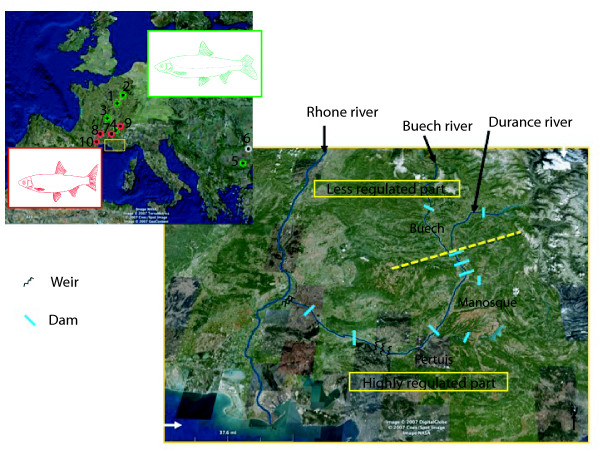
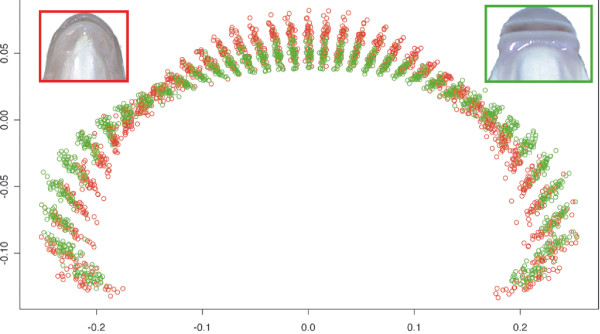
The invasive Chondrostoma nasus nasus has colonized part of the distribution area of the protected endemic species Chondrostoma toxostoma toxostoma. This hybrid zone is a complex system where multiple effects such as inter-species competition, bi-directional introgression, strong environmental pressure and so on are combined. Why do sympatric Chondrostoma fish present a unidirectional change in body shape? Is this the result of inter-species interactions and/or a response to environmental effects or the result of trade-offs? Studies focusing on the understanding of a trade-off between multiple parameters are still rare. Although this has previously been done for Cichlid species flock and for Darwin finches, where mouth or beak morphology were coupled to diet and genetic identification, no similar studies have been done for a fish hybrid zone in a river. We tested the correlation between morphology (body and mouth morphology), diet (stable carbon and nitrogen isotopes) and genomic combinations in different allopatric and sympatric populations for a global data set of 1330 specimens. To separate the species interaction effect from the environmental effect in sympatry, we distinguished two data sets: the first one was obtained from a highly regulated part of the river and the second was obtained from specimens coming from the less regulated part.
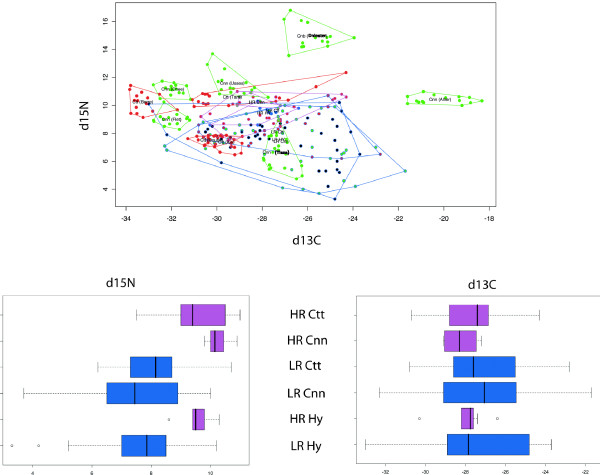
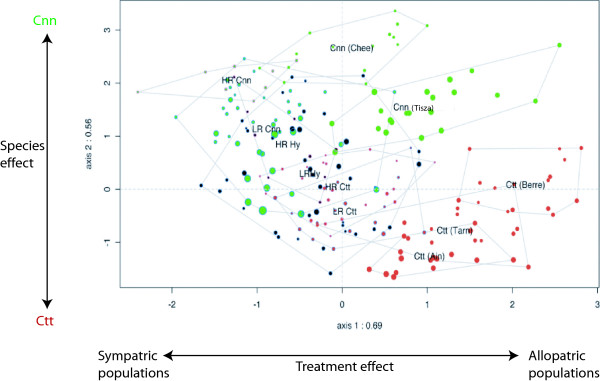
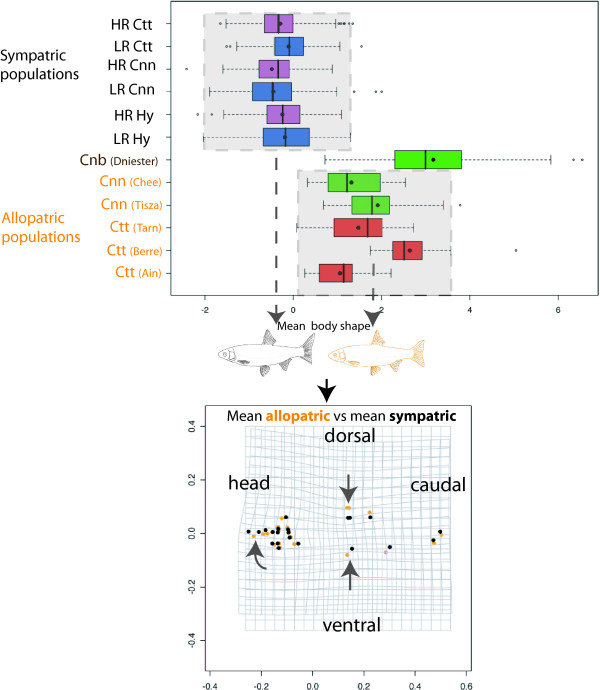
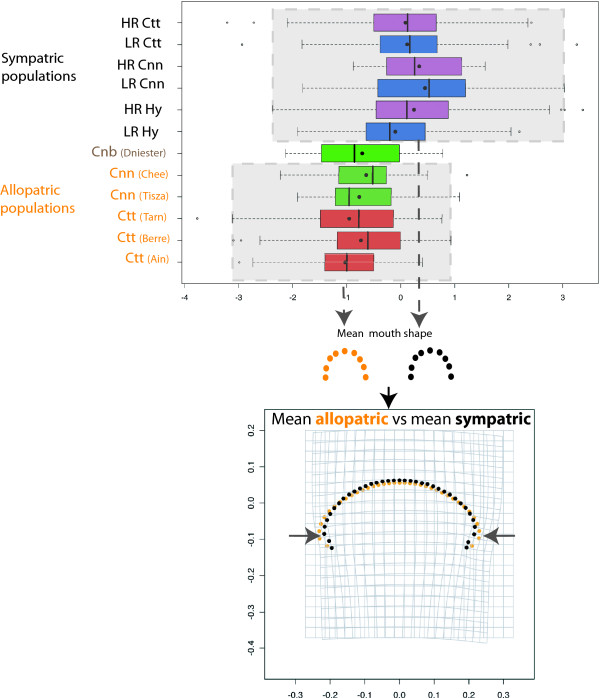
The distribution of the hybrid combinations was different in the two part of the sympatric zone, whereas all the specimens presented similar overall changes in body shape and in mouth morphology. Sympatric specimens were also characterized by a larger diet behavior variance than reference populations, characteristic of an opportunistic diet. No correlation was established between the body shape (or mouth deformation) and the stable isotope signature.
The Durance River is an untamed Mediterranean river despite the presence of numerous dams that split the river from upstream to downstream. The sympatric effect on morphology and the large diet behavior range can be explained by a tendency toward an opportunistic behavior of the sympatric specimens. Indeed, the similar response of the two species and their hybrids implied an adaptation that could be defined as an alternative trade-off that underline the importance of epigenetics mechanisms for potential success in a novel environment.
入侵物种北方铜鱼已在部分保护特有物种北方铜鱼的分布区定居。这个杂交区是一个复杂的系统,多种因素如种间竞争、双向基因渗入、强烈的环境压力等相互作用。为什么同域的铜鱼呈现出单向的体型变化?这是种间相互作用的结果,还是对环境影响的反应,或者是权衡的结果?目前还很少有研究关注对多个参数之间权衡的理解。尽管之前已经在慈鲷鱼群和达尔文雀类中进行了这样的研究,其中嘴或喙的形态与饮食和遗传鉴定相关联,但在河流的鱼类杂交区还没有进行过类似的研究。我们测试了形态(身体和嘴的形态)、饮食(稳定的碳和氮同位素)和不同地理种群的基因组组合之间的相关性,该数据来自全球的 1330 个标本。为了将种间相互作用的影响与同域环境影响区分开来,我们区分了两个数据集:第一个数据集来自河流的高度调控区域,第二个数据集来自较少受调控的区域。
杂交组合的分布在两个同域区是不同的,而所有的标本都表现出相似的身体形状和嘴形态的整体变化。同域标本的饮食行为方差也比参考种群大,这是一种机会主义饮食的特征。身体形状(或嘴变形)与稳定同位素特征之间没有相关性。
尽管有许多大坝将河流从上游到下游分割开来,但多尔多涅河仍然是一条狂野的地中海河流。对形态和大的饮食行为范围的同域效应可以用同域标本的机会主义行为倾向来解释。事实上,两种物种及其杂交种的相似反应意味着一种适应,这种适应可以被定义为一种替代权衡,突显了表观遗传机制对在新环境中取得成功的重要性。