Nagarkar Deepti R, Wang Qiong, Shim Jee, Zhao Ying, Tsai Wan C, Lukacs Nicholas W, Sajjan Uma, Hershenson Marc B
Department of Molecular and Integrative Physiology, University of Michigan, Ann Arbor, MI 48109-5688, USA.
J Immunol. 2009 Nov 15;183(10):6698-707. doi: 10.4049/jimmunol.0900298. Epub 2009 Oct 28.
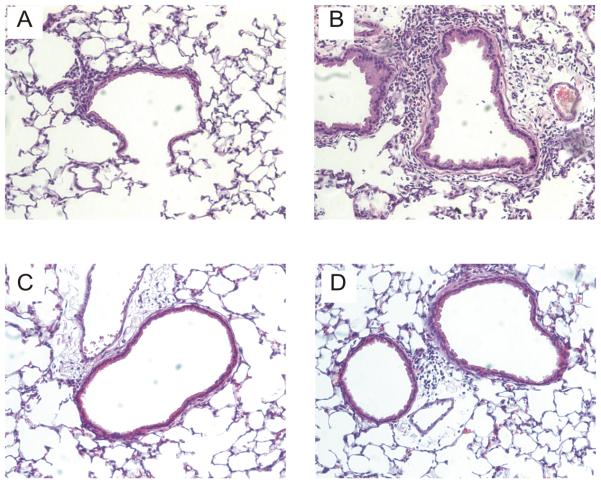
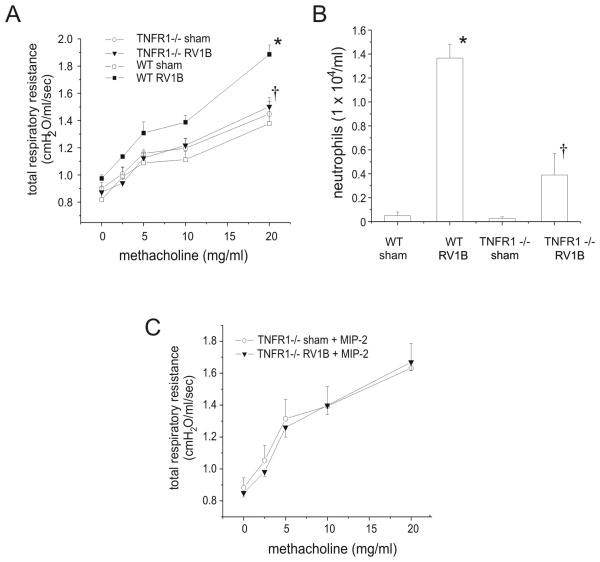
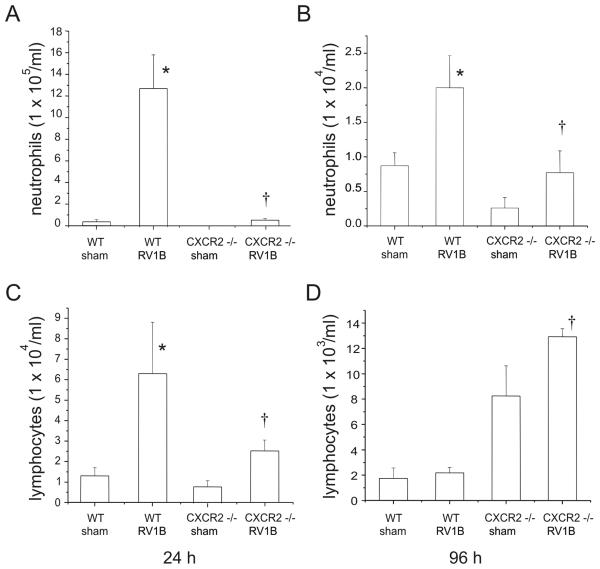
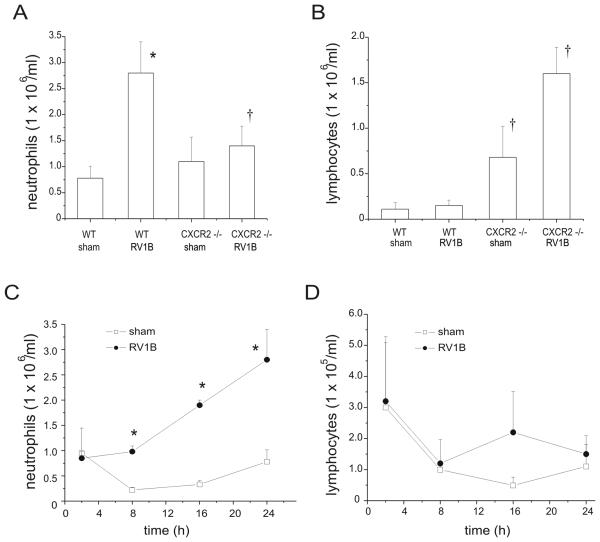
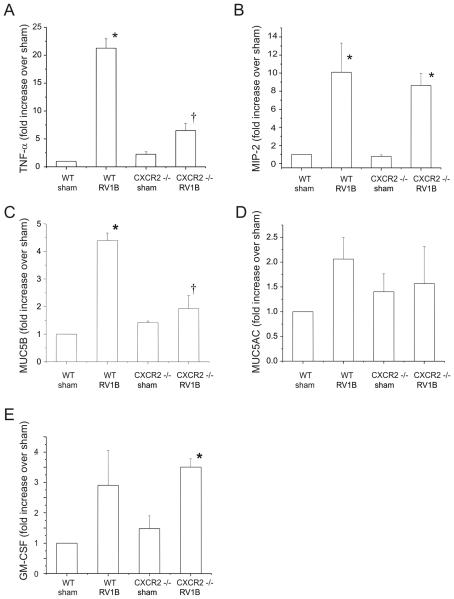
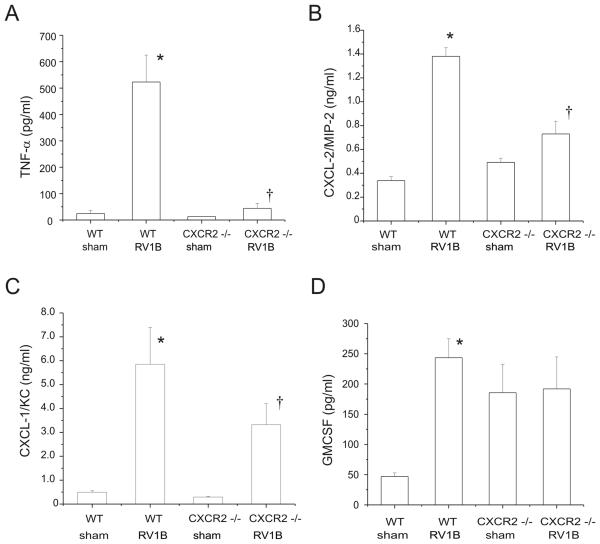
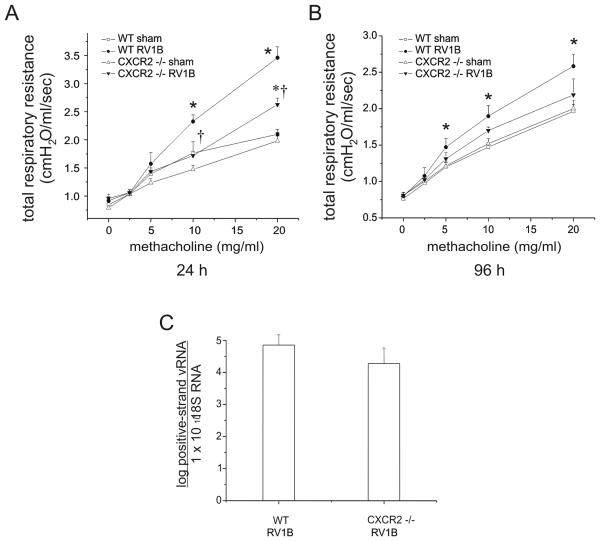
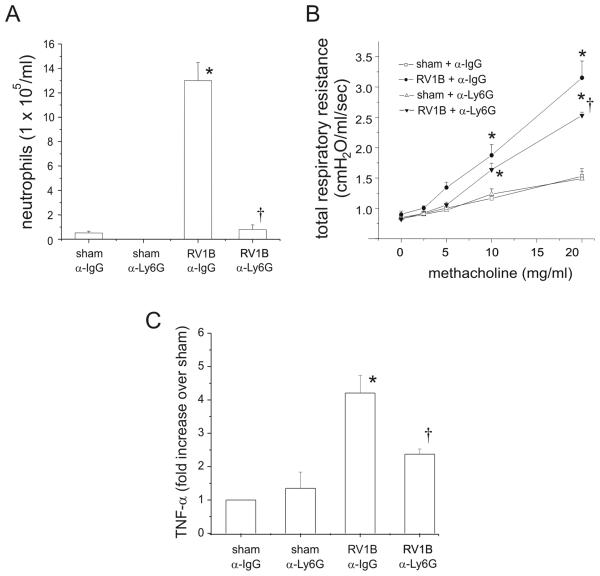
Human rhinovirus (RV) infection is responsible for the majority of virus-induced asthma exacerbations. Using a mouse model of human RV infection, we sought to determine the requirement of CXCR2, the receptor for ELR-positive CXC chemokines, for RV-induced airway neutrophilia and hyperresponsiveness. Wild-type and CXCR2(-/-) mice were inoculated intranasally with RV1B or sham HeLa cell supernatant. Following RV1B infection, CXCR2(-/-) mice showed reduced airway and lung neutrophils and cholinergic responsiveness compared with wild-type mice. Similar results were obtained in mice treated with neutralizing Ab to Ly6G, a neutrophil-depleting Ab. Lungs from RV-infected, CXCR2(-/-) mice showed significantly reduced production of TNF-alpha, MIP-2/CXCL2, and KC/CXCL1 and lower expression of MUC5B compared with RV-treated wild-type mice. The requirement of TNF-alpha for RV1B-induced airway responses was tested using TNFR1(-/-) mice. TNFR1(-/-) animals displayed reduced airway responsiveness to RV1B, even when exogenous MIP-2 was added to the airways. We conclude that CXCR2 is required for RV-induced neutrophilic airway inflammation and that neutrophil TNF-alpha release is required for airway hyperresponsiveness.
人鼻病毒(RV)感染是大多数由病毒引起的哮喘加重的原因。利用人RV感染的小鼠模型,我们试图确定ELR阳性CXC趋化因子的受体CXCR2对RV诱导的气道中性粒细胞增多和高反应性的必要性。野生型和CXCR2(-/-)小鼠经鼻内接种RV1B或假HeLa细胞上清液。RV1B感染后,与野生型小鼠相比,CXCR2(-/-)小鼠的气道和肺中性粒细胞及胆碱能反应性降低。在用抗Ly6G中和抗体(一种中性粒细胞清除抗体)处理的小鼠中也获得了类似结果。与经RV处理的野生型小鼠相比,RV感染的CXCR2(-/-)小鼠的肺中TNF-α、MIP-2/CXCL2和KC/CXCL1的产生显著减少,且MUC5B的表达降低。使用TNFR1(-/-)小鼠测试了TNF-α对RV1B诱导的气道反应的必要性。即使向气道中添加外源性MIP-2,TNFR1(-/-)动物对RV1B的气道反应性也降低。我们得出结论,CXCR2是RV诱导的嗜中性气道炎症所必需的,并且气道高反应性需要中性粒细胞释放TNF-α。