Arun K P, Murugan R, Kanna M Rajesh, Rajalakshmi S, Kalaiselvi R, Komathi V
Department of Pharmacy Practice, Kamalakshi Pandurangan College of Pharmacy, Tiruvannamalai - 606 603, Tamil Nadu, India.
Int J Diabetes Dev Ctries. 2008 Jan;28(1):15-8. doi: 10.4103/0973-3930.41981.
To evaluate the impact of pharmaceutical care on the clinical outcomes of patients enrolled in a pharmacist-coordinated diabetes management program in a rural health setup.
Patients were registered into 'control' and 'intervention' groups by randomization at three primary health centers. The study was an open-label parallel study.
Medical records were prospectively reviewed. Capillary blood glucose level, blood pressure and demographic data were collected at baseline and at the follow-up visits. Pharmacists gave counseling to the intervention group during every visit and their health-related quality of life (HRQoL) was assessed with the Ferrans and Powers questionnaire.
Single factor ANOVA and the t-test were used to compare the results using SPSS version 0.9 software and MS Excel worksheets.
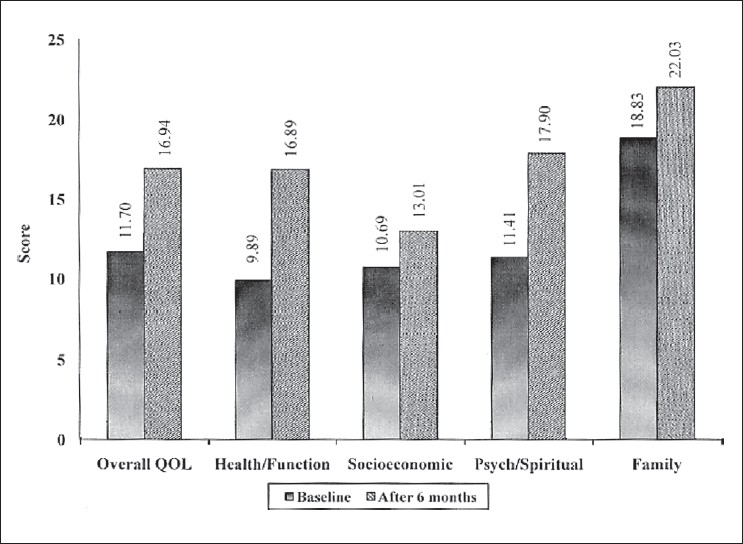
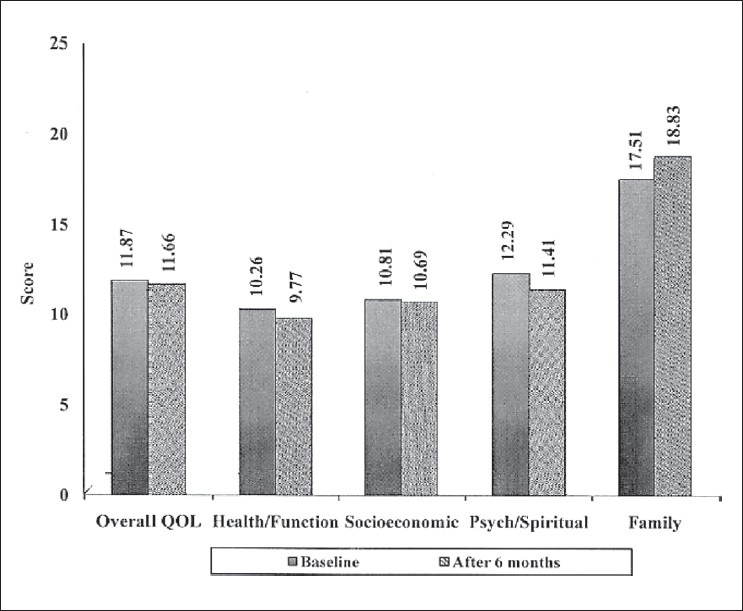
The intervention group (n = 104) showed well-controlled BMI, whereas the control group (n = 50) showed significant increase in the BMI. Mean blood glucose level in the intervention group reduced to 25 units from baseline (P = 0.0001) but was significantly increased in the control group (P = 0.0001). ANOVA showed that from the second follow-up onward there was significant decrease in blood glucose levels. Overall, the HRQoL scores increased by 45% in the intervention group and decreased by 2% in the control group.
The pharmaceutical care program was effective in improving the clinical outcome and HRQoL of diabetes patients in rural India. Such 'pharmaceutical care' models should be fine-tuned and implemented widely.
评估药学服务对农村卫生机构中参加药师协调糖尿病管理项目患者临床结局的影响。
在三个初级卫生中心通过随机化将患者分为“对照组”和“干预组”。该研究为开放标签平行研究。
对病历进行前瞻性审查。在基线和随访时收集毛细血管血糖水平、血压和人口统计学数据。药师在每次访视时对干预组进行咨询,并使用费兰斯和鲍尔斯问卷评估其健康相关生活质量(HRQoL)。
使用SPSS 0.9版软件和MS Excel工作表,采用单因素方差分析和t检验比较结果。
干预组(n = 104)的BMI得到良好控制,而对照组(n = 50)的BMI显著增加。干预组的平均血糖水平从基线降至25单位(P = 0.0001),而对照组则显著升高(P = 0.0001)。方差分析表明,从第二次随访起血糖水平显著下降。总体而言,干预组的HRQoL得分提高了45%,而对照组下降了2%。
药学服务项目在改善印度农村糖尿病患者的临床结局和HRQoL方面有效。此类“药学服务”模式应进行微调并广泛实施。