Modiano G, Morpurgo G, Terrenato L, Novelletto A, Di Rienzo A, Colombo B, Purpura M, Mariani M, Santachiara-Benerecetti S, Brega A
Department of Biology, University of Rome, Tor Vergata, Italy.
Am J Hum Genet. 1991 Feb;48(2):390-7.
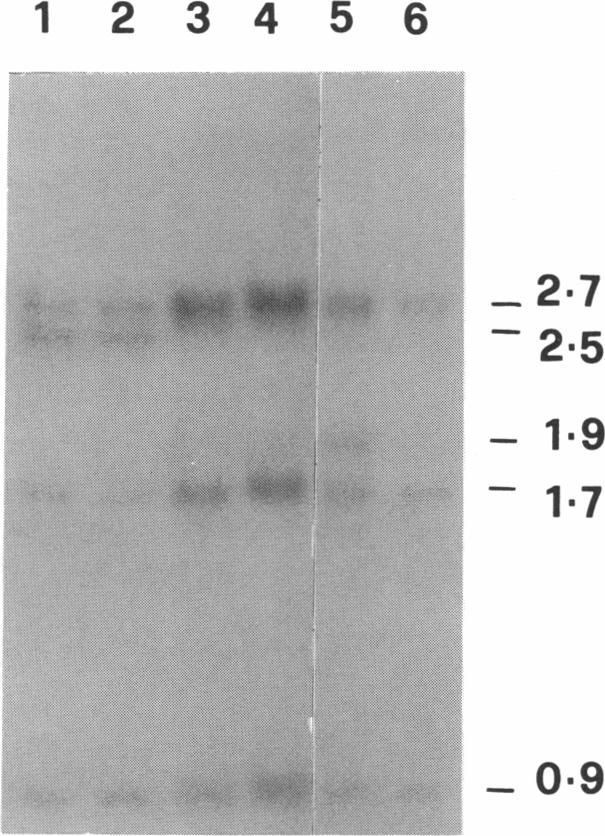
We have previously reported that the Tharu people of the Terai region in southern Nepal have an incidence of malaria about sevenfold lower than that of synpatric non-Tharu people. In order to find out whether this marked resistance against malaria has a genetic basis, we have now determined in these populations the prevalence of candidate protective genes and have performed in-vitro cultures of Plasmodium falciparum in both Tharu and non-Tharu red cells. We have found significant but relatively low and variable frequencies of beta-thal, beta S, G6PD (-), and Duffy (a-b-) in different parts of the Terai region. The average in-vitro rate of invasion and of parasite multiplication did not differ significantly in red cells from Tharus versus those from non-Tharu controls. By contrast, the frequency of alpha-thalassemia is uniformly high in Tharus, with the majority of them having the homozygous alpha-/alpha-genotype and an overall alpha-thal gene (alpha-) frequency of .8. We suggest that holoendemic malaria has caused preferential survival of subjects with alpha-thal and that this genetic factor has enabled the Tharus as a population to survive for centuries in a malaria-holoendemic area. From our data we estimate that the alpha-thal homozygous state decreases morbidity from malaria by about 10-fold. This is an example of selection evolution toward fixation of an otherwise abnormal gene.
我们之前曾报道,尼泊尔南部特莱地区的塔鲁人疟疾发病率比同域的非塔鲁人低约7倍。为了弄清楚这种对疟疾的显著抗性是否有遗传基础,我们现在已在这些人群中确定了候选保护基因的流行情况,并在塔鲁人和非塔鲁人的红细胞中进行了恶性疟原虫的体外培养。我们发现在特莱地区不同地方,β-地中海贫血、β-S、G6PD(-)和达菲血型(a-b-)的频率显著但相对较低且存在差异。与非塔鲁对照的红细胞相比,塔鲁人红细胞的体外平均侵袭率和寄生虫增殖率没有显著差异。相比之下,塔鲁人中α-地中海贫血的频率普遍较高,他们中的大多数具有纯合α-/α-基因型,总体α-地中海贫血基因(α-)频率为0.8。我们认为,全域性疟疾导致了α-地中海贫血患者的优先存活,并且这个遗传因素使塔鲁人群体能够在疟疾全域流行地区存活数百年。根据我们的数据,我们估计α-地中海贫血纯合状态可使疟疾发病率降低约10倍。这是一个朝着固定一个原本异常的基因进行选择进化的例子。