Department für Biologie I, Bereich Botanik, Ludwig-Maximilians-Universität München, Menzinger Strasse 67, 80638 Munich, Germany.
Mol Genet Genomics. 2010 Jan;283(1):35-47. doi: 10.1007/s00438-009-0491-1. Epub 2009 Nov 13.
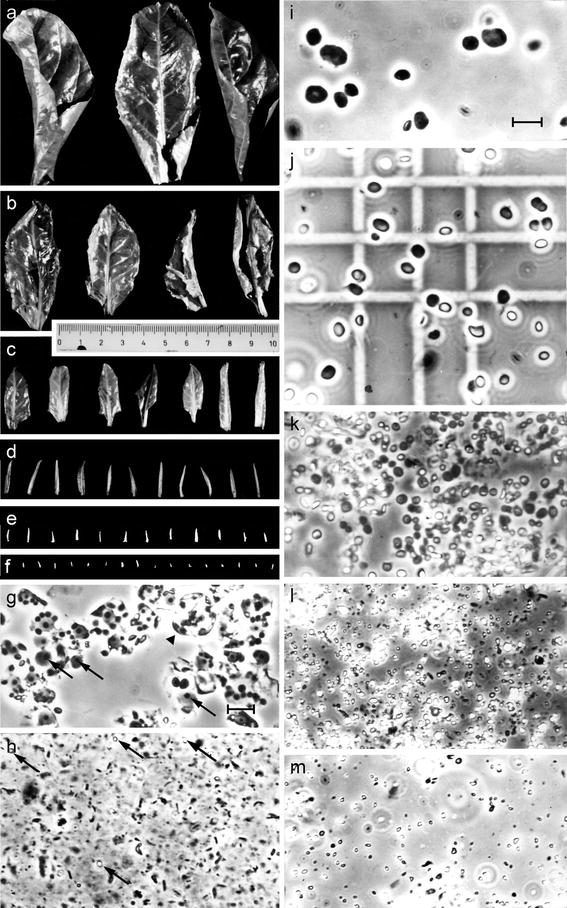
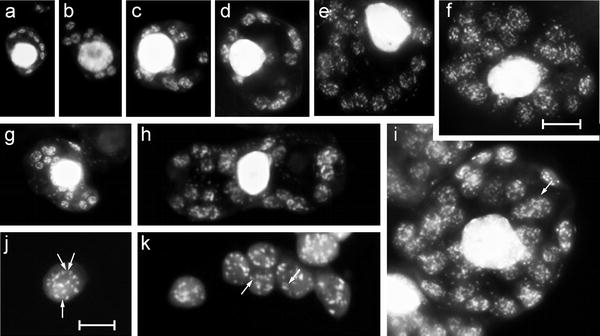
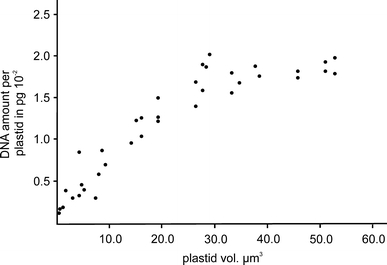
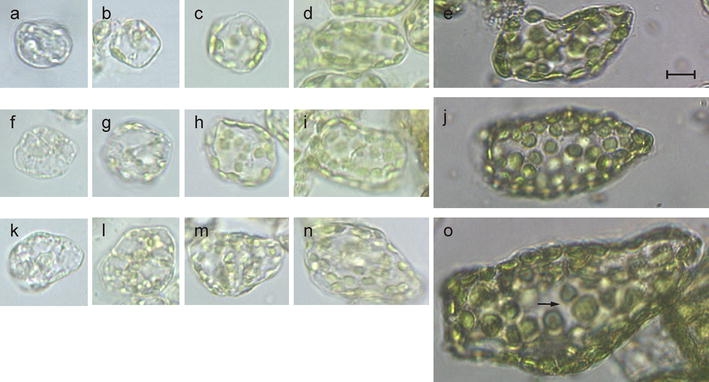
Plastid genomes (plastomes) are part of the integrated compartmentalised genetic system of photoautotrophic eukaryotes. They are highly redundant and generally dispersed in several regions (nucleoids) within organelles. DNA quantities and number of DNA-containing regions per plastid vary and are developmentally regulated in a way not yet understood. Reliable quantitative data describing these patterns are scarce. We present a protocol to isolate fractions of pure plastids with varying average sizes from leaflets (<or=1 mm) and leaves of different developmental stages continuously up to maturity (25 cm) from Beta vulgaris L. (sugar beet) to determine DNA amounts per organelle. The approach is based on plastid purification from homogenates of moderately fixed tissue by differential and isopycnic gradient centrifugations and on application of two different DNA specific colorimetric reactions after removing potentially interfering compounds. The sensitive fluorochrome DAPI (4',6-diamidino-2-phenylindole) was used to estimate numbers and emission intensity of nucleoids per plastid. The amounts determined ranged from 0.15 to 4.9 x 10(-2) pg DNA for plastids of 1-->8 microm average diameter, corresponding from approximately a dozen to 330 genome equivalents per organelle and on average four to seven copies per nucleoid. The ratio of plastid/nuclear DNA changed continuously during leaf development from as little as 0.4% to about 20% in fully developed leaves. On the other hand, mesophyll cells of mature leaves differing in ploidy (di-, tri- and tetraploid) appeared to maintain a relatively constant nuclear genome/plastome ratio, equivalent to about 1,700 copies per C-value.
质体基因组(质体基因组)是光合真核生物整合的分区遗传系统的一部分。它们具有高度冗余性,通常分散在细胞器的几个区域(核体)中。每个质体中的 DNA 数量和含 DNA 的区域数量因发育而变化,其调控方式尚未得到理解。描述这些模式的可靠定量数据很少。我们提出了一种从不同发育阶段的叶片(<或=1 毫米)和叶片中分离具有不同平均大小的纯质体部分的方案,从 Beta vulgaris L.(糖甜菜)一直到成熟(25 厘米)。该方法基于从中度固定组织的匀浆中通过差速和等密度梯度离心分离质体,以及在去除潜在干扰化合物后应用两种不同的 DNA 特异性比色反应。灵敏的荧光染料 DAPI(4',6-二脒基-2-苯基吲哚)用于估计每个质体中的核体数量和发射强度。所确定的数量范围为 1-8 µm 平均直径的质体的 0.15 到 4.9 x 10(-2) pg DNA,对应于每个细胞器约十几个到 330 个基因组当量,平均每个核体 4 到 7 个拷贝。在叶片发育过程中,质体/核 DNA 的比例从完全发育的叶片中的 0.4%左右连续变化到 20%左右。另一方面,在成熟叶片中的不同倍性(二倍体、三倍体和四倍体)的叶肉细胞似乎保持相对恒定的核基因组/质体比例,相当于每个 C 值约 1700 个拷贝。