Department of Molecular Biology and Biochemistry, University of California, Irvine, California 92697-3900, USA.
J Neurochem. 2010 Feb;112(3):733-43. doi: 10.1111/j.1471-4159.2009.06494.x. Epub 2009 Nov 16.
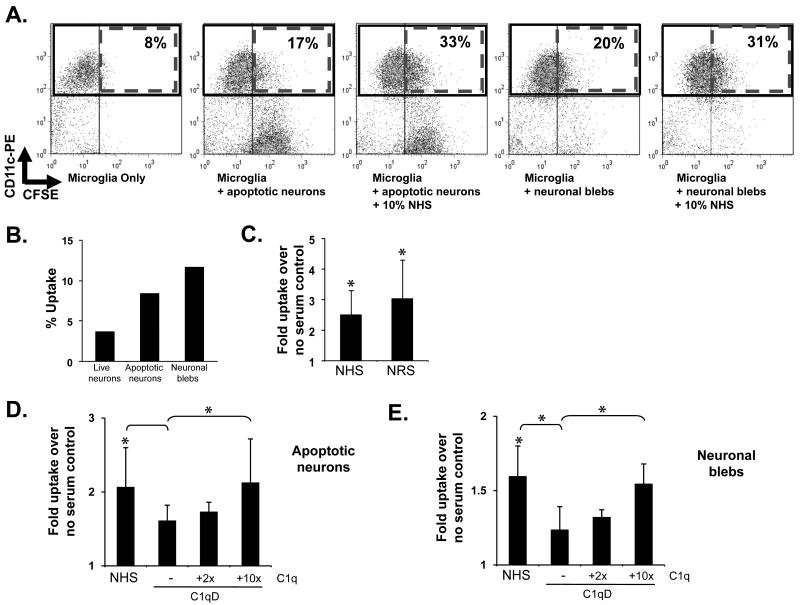
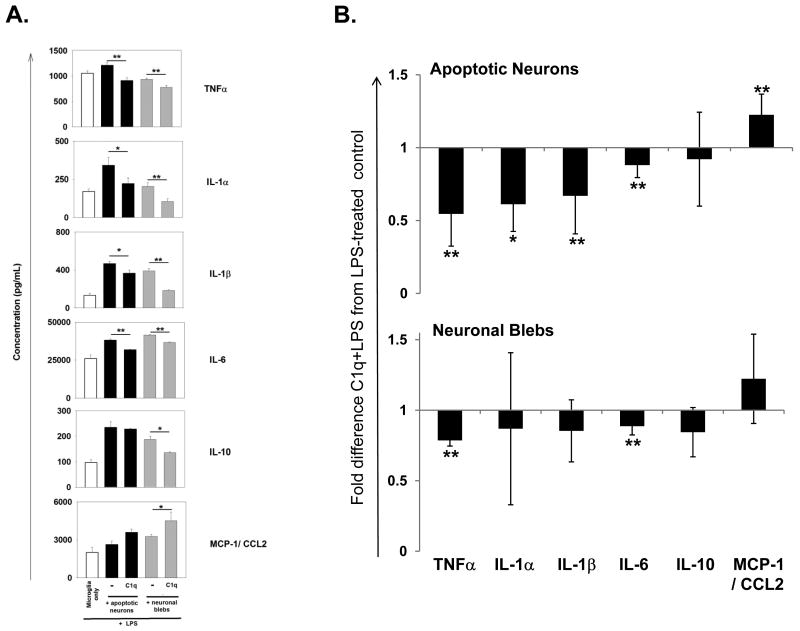
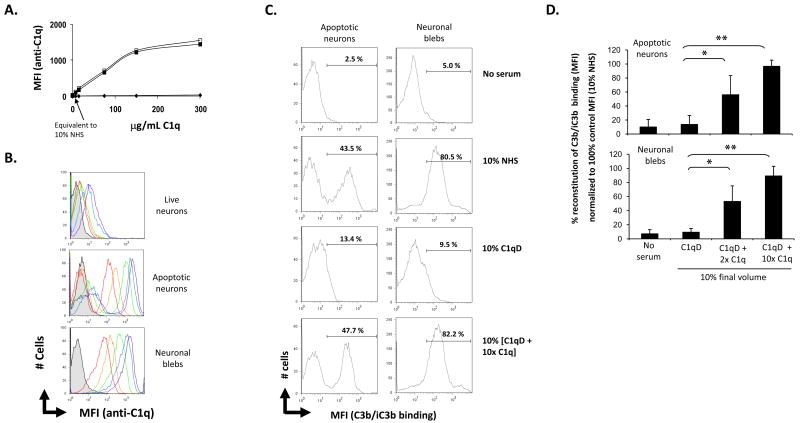
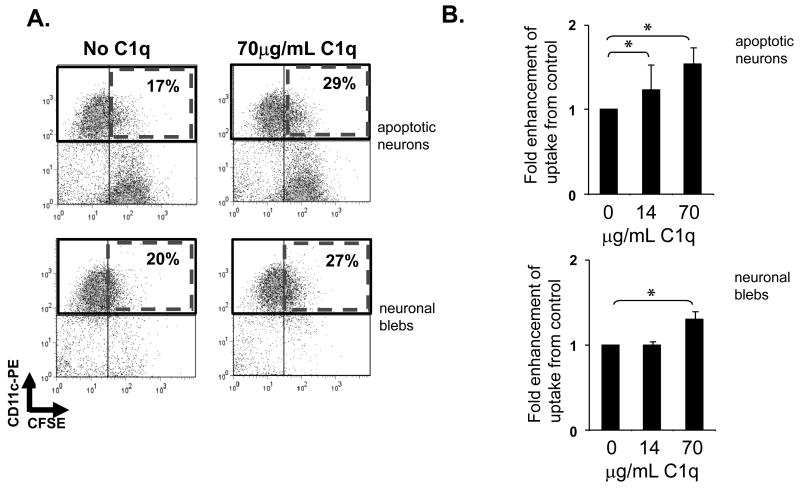
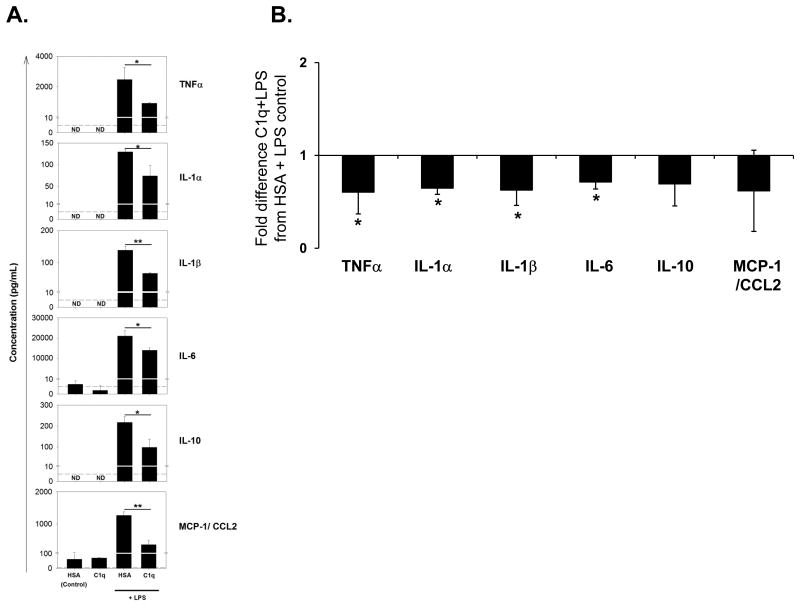
The expression of C1q, a recognition molecule of the complement system, is up-regulated following neuronal injury and is detected early in neurodegenerative disorders such as Alzheimer's disease. This multimeric protein triggers an enhancement of phagocytosis of suboptimally opsonized targets by microglia, the phagocytic cells of the CNS, similar to other phagocytes, enhances the uptake of apoptotic cells in peripheral phagocytes, and suppresses inflammatory cytokine production in human monocytes, macrophages and dendritic cells in the absence of activation of the entire complement cascade. The goal of this study was to determine if C1q could influence the inflammatory response to injury in the CNS, using primary rat microglia and neurons. The data show that microglia preferentially ingest apoptotic cells in comparison to live cells, like other professional phagocytes, that microglial ingestion of apoptotic neurons and neuronal blebs is enhanced by the presence of normal serum and that these enhanced levels of uptake are diminished in serum depleted of C1q. In addition, purified C1q bound to apoptotic neurons and neuronal blebs in a dose dependent manner, and alone triggered a significant enhancement of uptake by microglia. Microglia added to C1q coated wells or fed apoptotic neurons or neuronal blebs coated with C1q suppressed the lipopolysaccharide-induced production of proinflammatory cytokines interleukin (IL)-1alpha, IL-1beta, IL-6 and TNF-alpha, while the presence of C1q enhanced levels of the chemokine MCP-1/CCL2. The data are consistent with a protective role for C1q in the CNS during early stages of cell death by enhancing microglial clearance of apoptotic cells and suppressing proinflammatory cytokines.
补体系统识别分子 C1q 的表达在神经元损伤后上调,并在神经退行性疾病(如阿尔茨海默病)的早期阶段被检测到。这种多聚蛋白触发了小胶质细胞(中枢神经系统的吞噬细胞)对未被最佳调理的靶标的吞噬作用增强,类似于其他吞噬细胞,增强了外周吞噬细胞中凋亡细胞的摄取,并在补体级联未被完全激活的情况下抑制了人单核细胞、巨噬细胞和树突状细胞中炎症细胞因子的产生。本研究的目的是确定 C1q 是否可以影响中枢神经系统损伤的炎症反应,使用原代大鼠小胶质细胞和神经元。研究数据表明,小胶质细胞优先吞噬凋亡细胞,而不是活细胞,与其他专业吞噬细胞一样,正常血清的存在增强了小胶质细胞对凋亡神经元和神经元泡的吞噬作用,并且这些摄取水平的增强在 C1q 耗尽的血清中减少。此外,纯化的 C1q 以剂量依赖的方式与凋亡神经元和神经元泡结合,并且单独触发小胶质细胞摄取的显著增强。小胶质细胞添加到 C1q 包被的孔中或被 C1q 包被的凋亡神经元或神经元泡喂养时,会抑制脂多糖诱导的促炎细胞因子白细胞介素 (IL)-1α、IL-1β、IL-6 和 TNF-α的产生,而 C1q 的存在增强了趋化因子 MCP-1/CCL2 的水平。这些数据表明,C1q 通过增强小胶质细胞对凋亡细胞的清除和抑制促炎细胞因子,在细胞死亡的早期阶段在中枢神经系统中发挥保护作用。