Kordis Dusan, Turk Vito
Department of Biochemistry and Molecular and Structural Biology, J, Stefan Institute, Ljubljana, Slovenia.
BMC Evol Biol. 2009 Nov 18;9:266. doi: 10.1186/1471-2148-9-266.
The cystatin superfamily comprises cysteine protease inhibitors that play key regulatory roles in protein degradation processes. Although they have been the subject of many studies, little is known about their genesis, evolution and functional diversification. Our aim has been to obtain a comprehensive insight into their origin, distribution, diversity, evolution and classification in Eukaryota, Bacteria and Archaea.
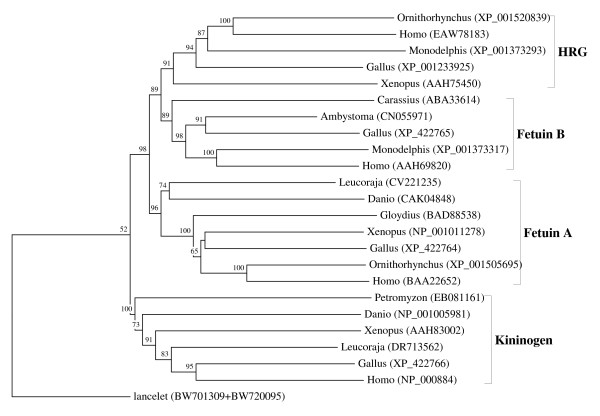
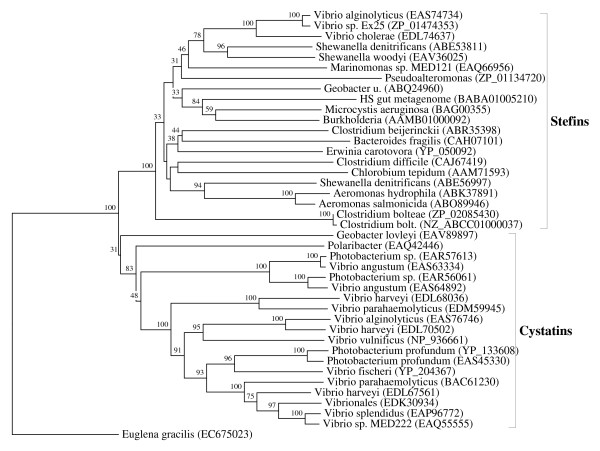
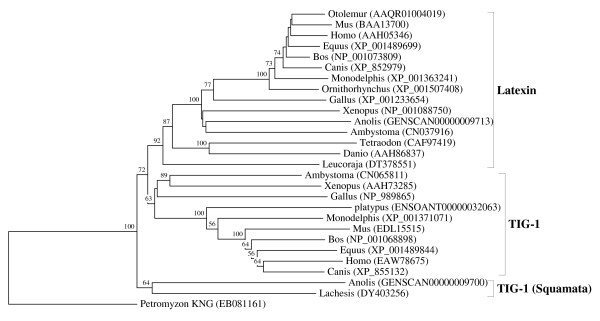
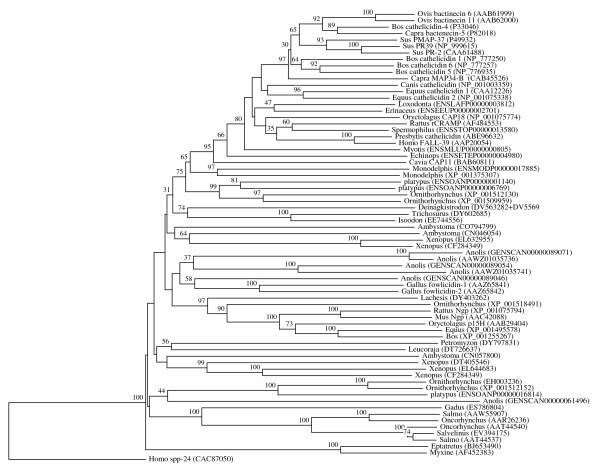
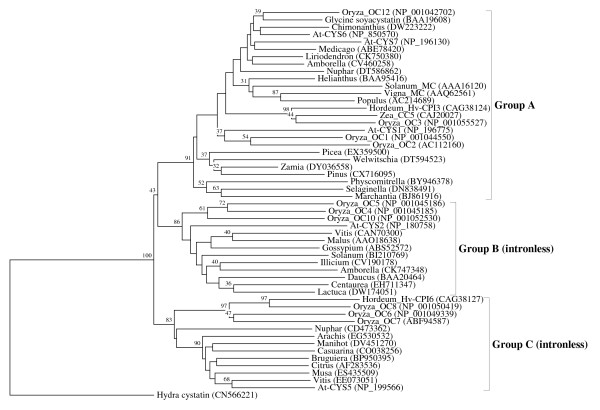
We have identified in silico the full complement of the cystatin superfamily in more than 2100 prokaryotic and eukaryotic genomes. The analysis of numerous eukaryotic genomes has provided strong evidence for the emergence of this superfamily in the ancestor of eukaryotes. The progenitor of this superfamily was most probably intracellular and lacked a signal peptide and disulfide bridges, much like the extant Giardia cystatin. A primordial gene duplication produced two ancestral eukaryotic lineages, cystatins and stefins. While stefins remain encoded by a single or a small number of genes throughout the eukaryotes, the cystatins have undergone a more complex and dynamic evolution through numerous gene and domain duplications. In the cystatin superfamily we discovered twenty vertebrate-specific and three angiosperm-specific orthologous families, indicating that functional diversification has occurred only in multicellular eukaryotes. In vertebrate orthologous families, the prevailing trends were loss of the ancestral inhibitory activity and acquisition of novel functions in innate immunity. Bacterial cystatins and stefins may be emergency inhibitors that enable survival of bacteria in the host, defending them from the host's proteolytic activity.
This study challenges the current view on the classification, origin and evolution of the cystatin superfamily and provides valuable insights into their functional diversification. The findings of this comprehensive study provide guides for future structural and evolutionary studies of the cystatin superfamily as well as of other protease inhibitors and proteases.
胱抑素超家族由半胱氨酸蛋白酶抑制剂组成,这些抑制剂在蛋白质降解过程中发挥关键调节作用。尽管它们已成为众多研究的对象,但对其起源、进化和功能多样化却知之甚少。我们的目标是全面深入了解它们在真核生物、细菌和古细菌中的起源、分布、多样性、进化和分类。
我们通过计算机分析在2100多个原核生物和真核生物基因组中鉴定出了胱抑素超家族的完整成员。对众多真核生物基因组的分析为该超家族在真核生物祖先中的出现提供了有力证据。这个超家族的祖先是细胞内的,很可能缺乏信号肽和二硫键,这与现存的贾第虫胱抑素非常相似。一次原始的基因复制产生了两个原始真核生物谱系,即胱抑素和丝氨酸蛋白酶抑制剂。虽然在整个真核生物中丝氨酸蛋白酶抑制剂仍然由单个或少数几个基因编码,但胱抑素通过大量的基因和结构域复制经历了更复杂和动态的进化。在胱抑素超家族中,我们发现了20个脊椎动物特异性和3个被子植物特异性直系同源家族,这表明功能多样化仅发生在多细胞真核生物中。在脊椎动物直系同源家族中,主要趋势是丧失祖先的抑制活性并在先天免疫中获得新功能。细菌胱抑素和丝氨酸蛋白酶抑制剂可能是应急抑制剂,使细菌能够在宿主中存活,保护它们免受宿主的蛋白水解活性的影响。
本研究挑战了当前关于胱抑素超家族分类、起源和进化的观点,并为其功能多样化提供了有价值的见解。这项综合研究的结果为胱抑素超家族以及其他蛋白酶抑制剂和蛋白酶的未来结构和进化研究提供了指导。