Swords Ronan, Mahalingam Devalingam, Padmanabhan Swaminathan, Carew Jennifer, Giles Francis
Institute for Drug Development, Cancer Therapy and Research Centre, University of Texas Health Science Centre at San Antonio, 7979 Wurzbach Road, San Antonio, TX 78229, USA.
Drug Des Devel Ther. 2009 Sep 21;3:89-101. doi: 10.2147/dddt.s3069.
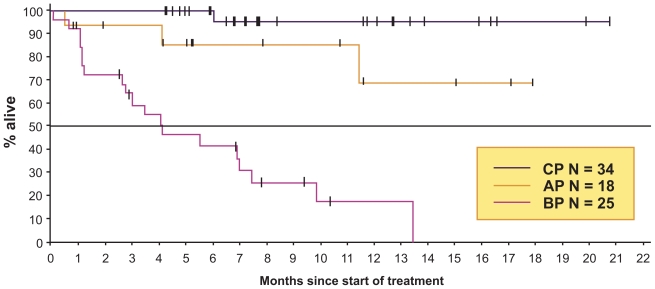
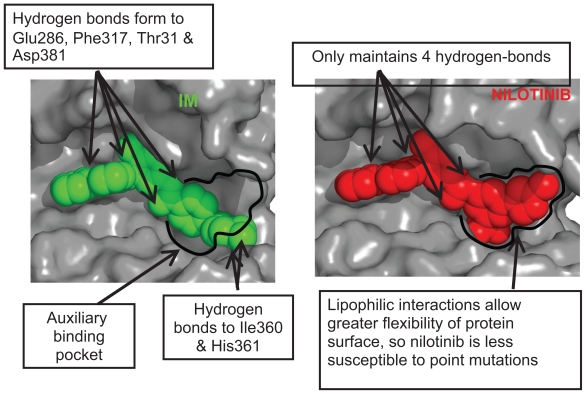
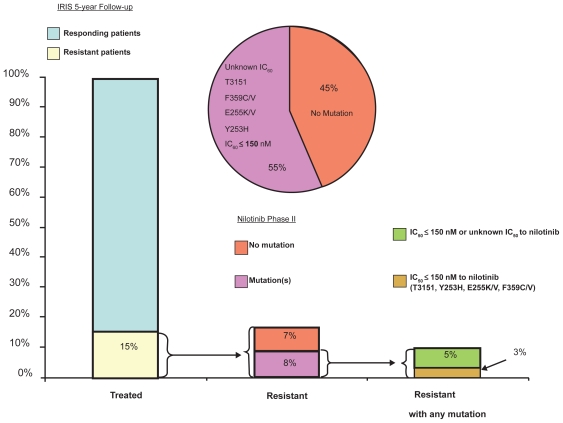
Chronic myeloid leukemia (CML) is the consequence of a single balanced translocation that produces the BCR-ABL fusion oncogene which is detectable in over 90% of patients at presentation. The BCR-ABL inhibitor imatinib mesylate (IM) has improved survival in all phases of CML and is the standard of care for newly diagnosed patients in chronic phase. Despite the very significant therapeutic benefits of IM, a small minority of patients with early stage disease do not benefit optimally while IM therapy in patients with advanced disease is of modest benefit in many. Diverse mechanisms may be responsible for IM failures, with point mutations within the Bcr-Abl kinase domain being amongst the most common resistance mechanisms described in patients with advanced CML. The development of novel agents designed to overcome IM resistance, while still primarily targeted on BCR-ABL, led to the creation of the high affinity aminopyrimidine inhibitor, nilotinib. Nilotinib is much more potent as a BCR-ABL inhibitor than IM and inhibits both wild type and IM-resistant BCR-ABL with significant clinical activity across the entire spectrum of BCR-ABL mutants with the exception of T315I. The selection of a second generation tyrosine kinase inhibitor to rescue patients with imatinib failure will be based on several factors including age, co-morbid medical problems and ABL kinase mutational profile. It should be noted that while the use of targeted BCR-ABL kinase inhibitors in CML represents a paradigm shift in CML management these agents are not likely to have activity against the quiescent CML stem cell pool. The purpose of this review is to summarize the pre-clinical and clinical data on nilotinib in patients with CML who have failed prior therapy with IM or dasatinib.
慢性髓性白血病(CML)是由单一平衡易位导致的结果,该易位产生BCR-ABL融合致癌基因,超过90%的患者在初诊时可检测到该基因。BCR-ABL抑制剂甲磺酸伊马替尼(IM)改善了CML各阶段患者的生存率,是慢性期新诊断患者的标准治疗方法。尽管IM具有非常显著的治疗益处,但一小部分早期疾病患者并未获得最佳疗效,而晚期疾病患者接受IM治疗的获益在许多情况下也较为有限。IM治疗失败可能由多种机制导致,Bcr-Abl激酶结构域内的点突变是晚期CML患者中描述的最常见耐药机制之一。旨在克服IM耐药性的新型药物的研发,虽然仍主要靶向BCR-ABL,但催生了高亲和力氨基嘧啶抑制剂尼罗替尼。尼罗替尼作为BCR-ABL抑制剂比IM更有效,可抑制野生型和IM耐药的BCR-ABL,对除T315I之外的整个BCR-ABL突变体谱均具有显著临床活性。选择第二代酪氨酸激酶抑制剂来挽救伊马替尼治疗失败的患者将基于几个因素,包括年龄、合并的医疗问题和ABL激酶突变谱。应当指出的是,虽然在CML中使用靶向BCR-ABL激酶抑制剂代表了CML管理的范式转变,但这些药物不太可能对静止的CML干细胞池产生活性。本综述的目的是总结尼罗替尼在接受过IM或达沙替尼先前治疗失败的CML患者中的临床前和临床数据。