Reach Gérard
Department of Endocrinology, Diabetes and Metabolic Diseases, Avicenne Hospital, Assistance Publique-Hôpitaux de Paris, and Laboratory of Pedagogy of Health, EA 3412, University Paris 13, CRNH-Idf, Bobigny, France.
Patient Prefer Adherence. 2008 Feb 2;2:7-19.
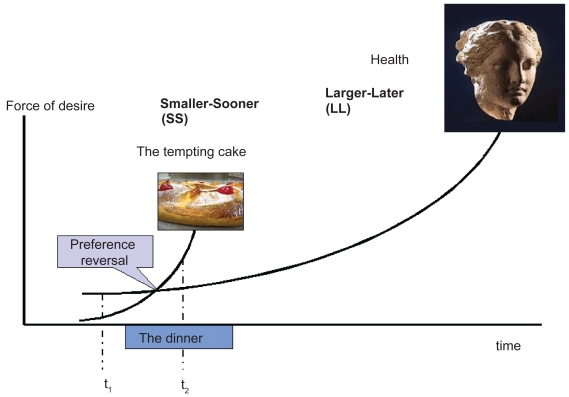
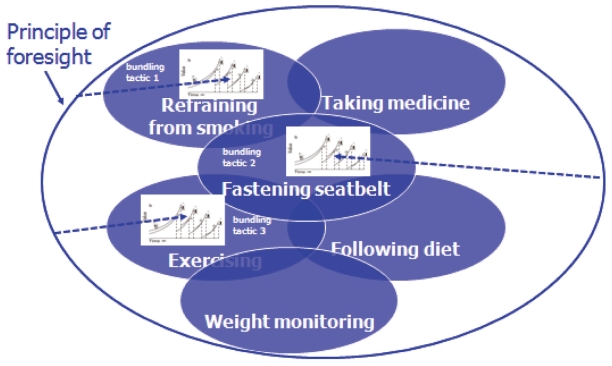
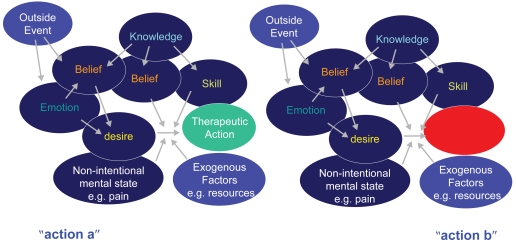
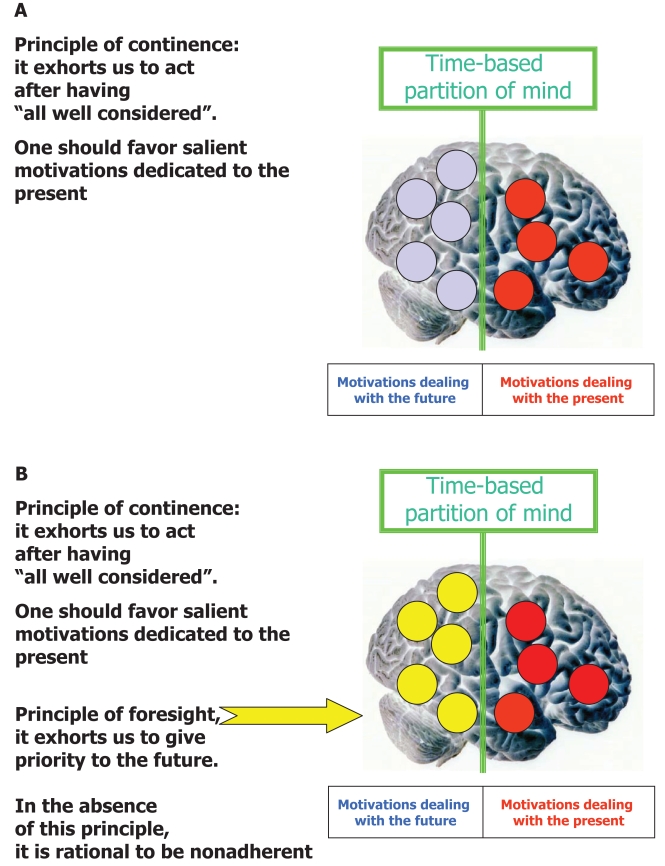
The World Health Organization claimed recently that improving patient adherence to long term therapies would be more beneficial than any biomedical progress. First, however, we must understand its mechanisms. In this paper I propose a novel approach using concepts elaborated in a field rarely explored in medicine, the philosophy of mind. While conventional psychological models (eg, the Health Belief Model) provide explanations and predictions which have only a statistical value, the philosophical assumption that mental states (eg, beliefs) are causally efficient (mental causation) can provide the basis for a causal theory of health behaviors. This paper shows that nonadherence to long term therapies can be described as the medical expression of a philosophical concept, that is, weakness of will. I use philosophical explanations of this concept to suggest a mechanistic explanation of nonadherence. I propose that it results from the failure of two principles of rationality. First, a principle of continence, described by the philosopher Donald Davidson in his explanation of weakness of will. This principle exhorts us to act after having considered all available arguments and according to which option we consider best. However, patients conforming to this principle of continence should rationally be nonadherent. Indeed, when patients face a choice between adherence and nonadherence, they must decide, in general, between a large, but delayed reward (eg, health) and a small, but immediate reward (eg, smoking a cigarette). According to concepts elaborated by George Ainslie and Jon Elster, the force of our desires is strongly influenced by the proximity of reward. This inter-temporal choice theory on one hand, and the mere principle of continence on the other, should therefore lead to nonadherence. Nevertheless, adherence to long term therapies is possible, as a result of the intervention of an additional principle, the principle of foresight, which tells us to give priority to mental states oriented towards the future.
世界卫生组织最近宣称,提高患者对长期治疗的依从性比任何生物医学进展都更有益。然而,首先我们必须了解其机制。在本文中,我提出了一种新颖的方法,运用在医学中鲜有探索的领域——心灵哲学中阐述的概念。虽然传统的心理学模型(如健康信念模型)提供的解释和预测仅具有统计价值,但心灵状态(如信念)具有因果效力(心理因果关系)这一哲学假设可为健康行为的因果理论提供基础。本文表明,不坚持长期治疗可被描述为一个哲学概念的医学表现,即意志薄弱。我运用对这一概念的哲学解释来提出对不依从的一种机制性解释。我认为它是由两条理性原则的失效导致的。首先是自制原则,哲学家唐纳德·戴维森在解释意志薄弱时对其进行了描述。该原则劝诫我们在考虑了所有可用论据之后,根据我们认为最佳的选项来行动。然而,遵循这条自制原则的患者在理性上应该是不依从的。事实上,当患者面临依从与不依从之间的选择时,他们通常必须在一个大但延迟的奖励(如健康)和一个小但即时的奖励(如吸一支烟)之间做出决定。根据乔治·安斯利和乔恩·埃尔斯特阐述的概念,我们欲望的力量受到奖励接近程度的强烈影响。因此,一方面是这种跨期选择理论,另一方面仅仅是自制原则,都应该导致不依从。然而,由于另一条原则——远见原则的干预,坚持长期治疗是可能的,这条原则告诉我们要优先考虑面向未来的心灵状态。