Penn Center for Bioinformatics, Department of Genetics, 415 Curie Boulevard, University of Pennsylvania, Philadelphia, PA 19104, USA.
Genome Biol. 2009;10(11):R131. doi: 10.1186/gb-2009-10-11-r131. Epub 2009 Nov 18.
CTCF (CCCTC-binding factor) is an evolutionarily conserved zinc finger protein involved in diverse functions ranging from negative regulation of MYC, to chromatin insulation of the beta-globin gene cluster, to imprinting of the Igf2 locus. The 11 zinc fingers of CTCF are known to differentially contribute to the CTCF-DNA interaction at different binding sites. It is possible that the differences in CTCF-DNA conformation at different binding sites underlie CTCF's functional diversity. If so, the CTCF binding sites may belong to distinct classes, each compatible with a specific functional role.
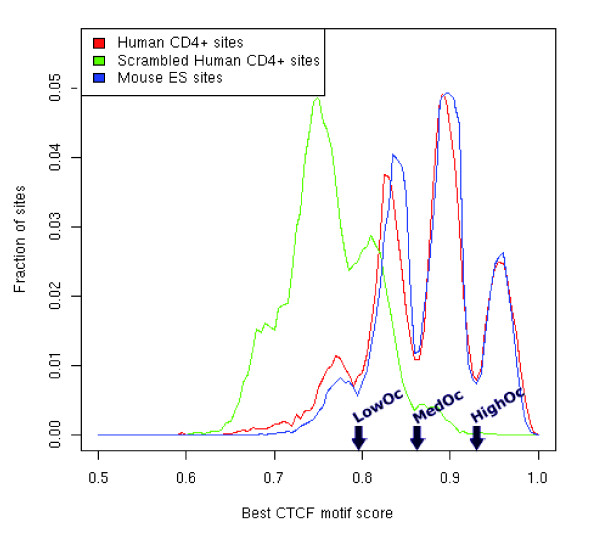
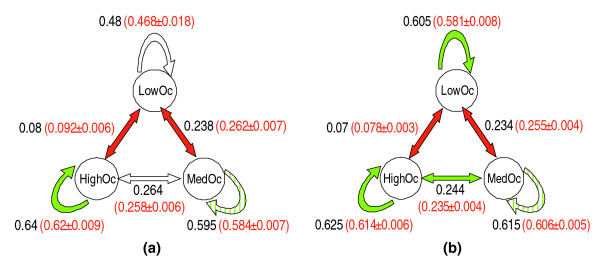
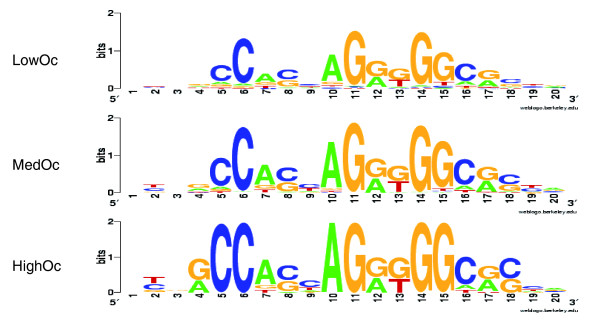
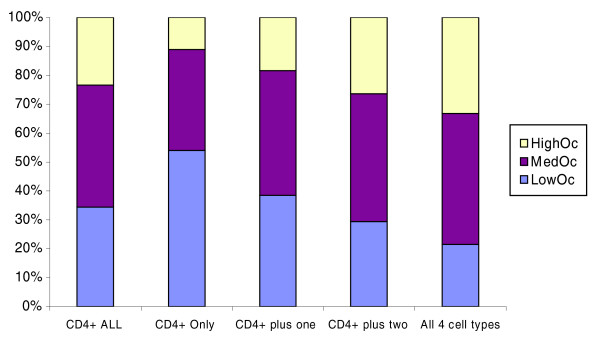
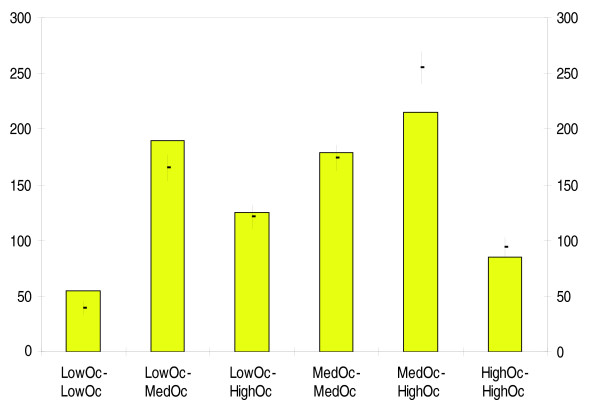
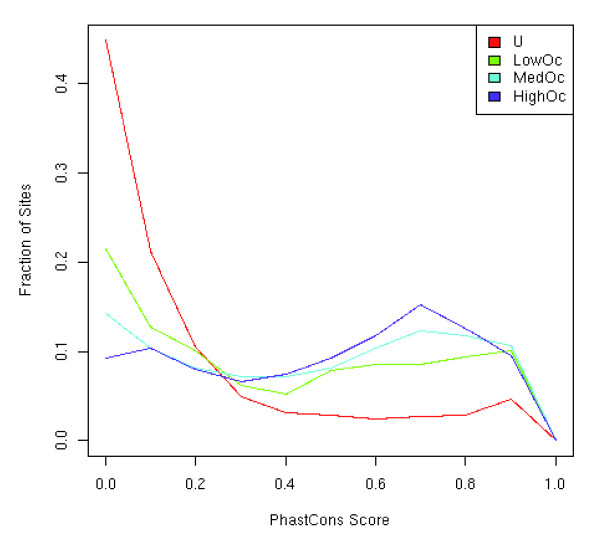
We have classified approximately 26,000 CTCF binding sites in CD4+ T cells into three classes based on their similarity to the well-characterized CTCF DNA-binding motif. We have comprehensively characterized these three classes of CTCF sites with respect to several evolutionary, genomic, epigenomic, transcriptomic and functional features. We find that the low-occupancy sites tend to be cell type specific. Furthermore, while the high-occupancy sites associate with repressive histone marks and greater gene co-expression within a CTCF-flanked block, the low-occupancy sites associate with active histone marks and higher gene expression. We found that the low-occupancy sites have greater conservation in their flanking regions compared to high-occupancy sites. Interestingly, based on a novel class-conservation metric, we observed that human low-occupancy sites tend to be conserved as low-occupancy sites in mouse (and vice versa) more frequently than expected.
Our work reveals several key differences among CTCF occupancy-based classes and suggests a critical, yet distinct functional role played by low-occupancy sites.
CTCF(CCCTC 结合因子)是一种进化上保守的锌指蛋白,参与多种功能,从 MYC 的负调控,到β-珠蛋白基因簇的染色质隔离,再到 Igf2 基因座的印迹。CTCF 的 11 个锌指在不同的结合位点对 CTCF-DNA 相互作用有不同的贡献。不同结合位点的 CTCF-DNA 构象的差异可能是 CTCF 功能多样性的基础。如果是这样,那么 CTCF 结合位点可能属于不同的类别,每个类别都与特定的功能作用相兼容。
我们根据其与已知的 CTCF DNA 结合基序的相似性,将 CD4+T 细胞中的大约 26000 个 CTCF 结合位点分为三类。我们全面地研究了这三类 CTCF 位点在几个进化、基因组、表观基因组、转录组和功能特征方面的特征。我们发现低占有率的位点往往是细胞类型特异性的。此外,虽然高占有率的位点与抑制性组蛋白标记和 CTCF 侧翼区域内更大的基因共表达相关,但低占有率的位点与活性组蛋白标记和更高的基因表达相关。我们发现,低占有率的位点在其侧翼区域的保守性比高占有率的位点更高。有趣的是,根据一种新的类保守性度量标准,我们观察到,与预期相比,人类低占有率的位点在小鼠中更倾向于作为低占有率的位点保守(反之亦然)。
我们的工作揭示了 CTCF 基于占有率的分类之间的几个关键差异,并表明低占有率的位点起着关键但不同的功能作用。