Department of Dermatology and Skin Diseases Research Center, Yale University School of Medicine, 333 Cedar Street, New Haven, CT 06520, USA.
J Invest Dermatol. 2010 Jun;130(6):1726-36. doi: 10.1038/jid.2009.362. Epub 2009 Nov 19.
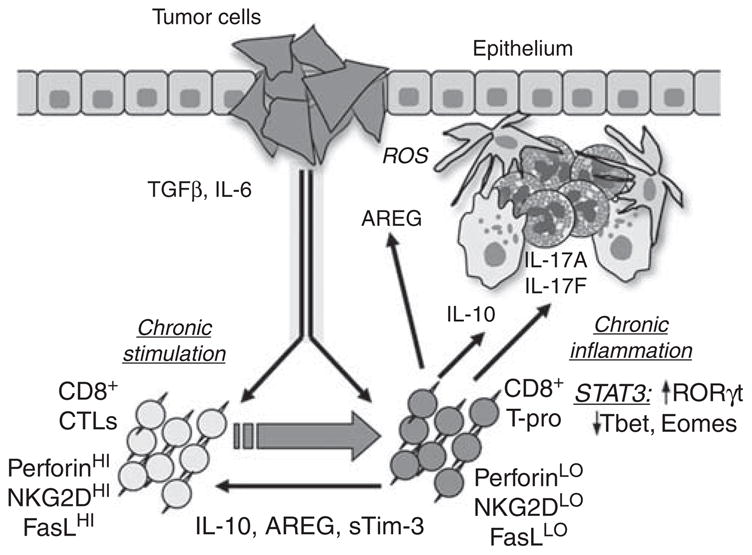
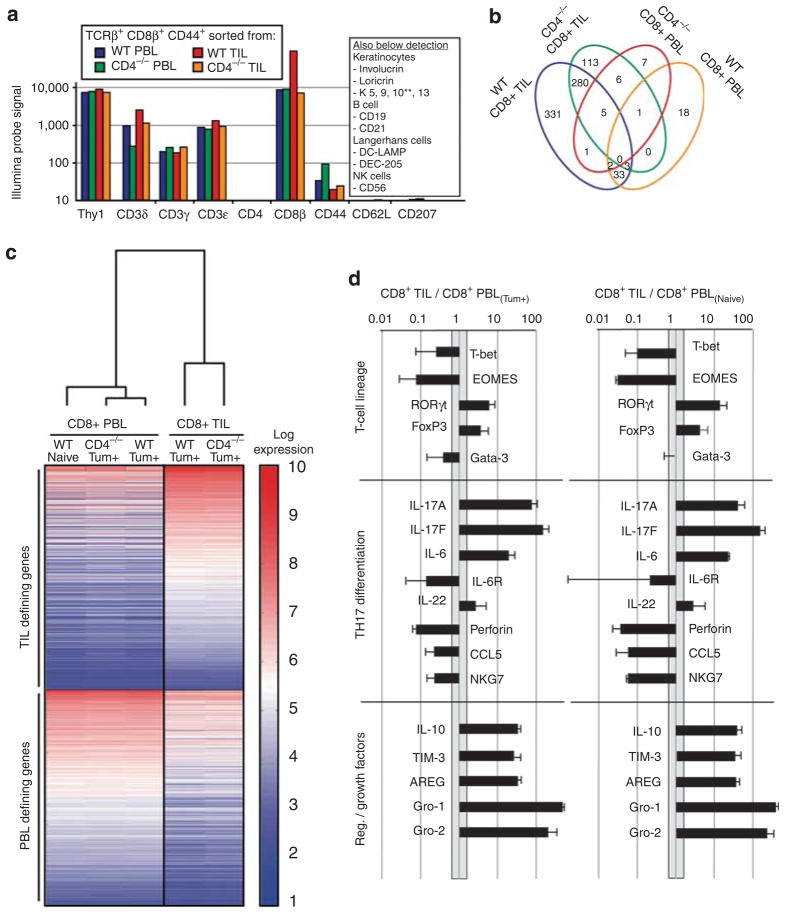
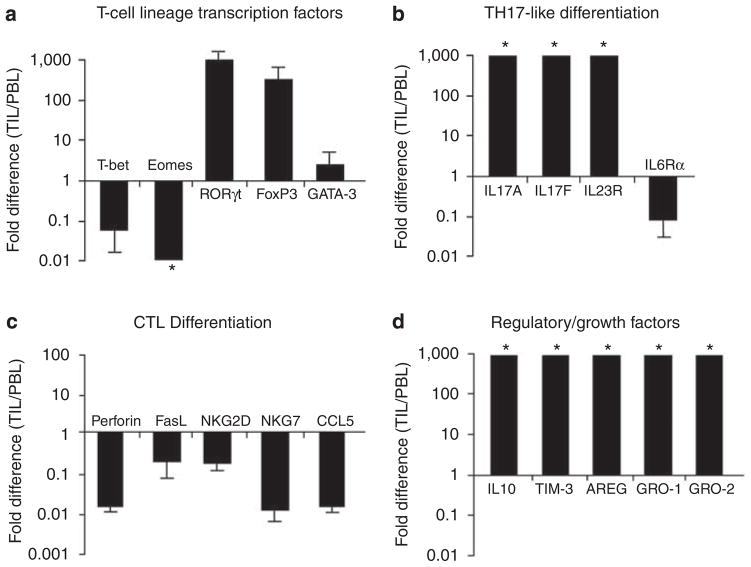
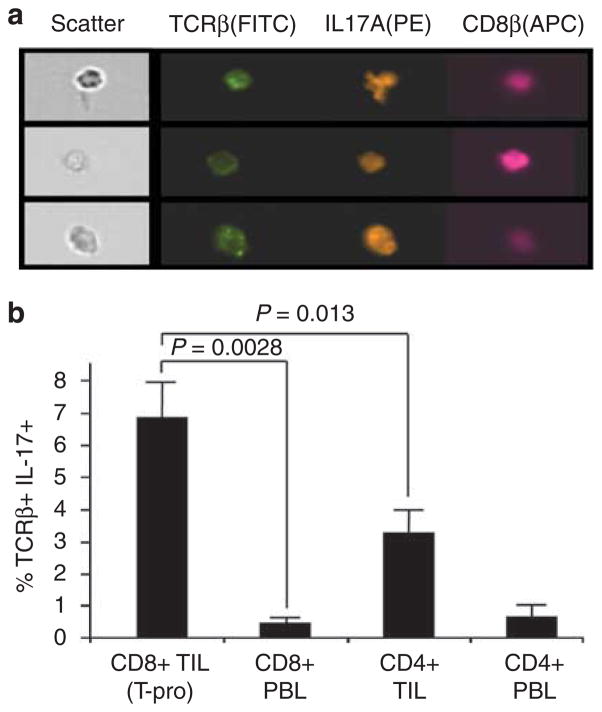
T-pro are tumor-infiltrating TCRalphabeta(+)CD8(+) cells of reduced cytotoxic potential that promote experimental two-stage chemical cutaneous carcinogenesis. Toward understanding their mechanism of action, this study uses whole-genome expression analysis to compare T-pro with systemic CD8(+) T cells from multiple groups of tumor-bearing mice. T-pro show an overt T helper 17-like profile (high retinoic acid-related orphan receptor-(ROR)gammat, IL-17A, IL-17F; low T-bet and eomesodermin), regulatory potential (high FoxP3, IL-10, Tim-3), and transcripts encoding epithelial growth factors (amphiregulin, Gro-1, Gro-2). Tricolor flow cytometry subsequently confirmed the presence of TCRbeta(+) CD8(+) IL-17(+) T cells among tumor-infiltrating lymphocytes (TILs). Moreover, a time-course analysis of independent TIL isolates from papillomas versus carcinomas exposed a clear association of the "T-pro phenotype" with malignant progression. This molecular characterization of T-pro builds a foundation for elucidating the contributions of inflammation to cutaneous carcinogenesis, and may provide useful biomarkers for cancer immunotherapy in which the widely advocated use of tumor-specific CD8(+) cytolytic T cells should perhaps accommodate the cells' potential corruption toward the T-pro phenotype. The data are also likely germane to psoriasis, in which the epidermis may be infiltrated by CD8(+) IL-17-producing T cells.
T-pro 是浸润肿瘤的 TCRalphabeta(+)CD8(+)细胞,其细胞毒性潜力降低,可促进实验性两阶段化学性皮肤致癌作用。为了了解其作用机制,本研究使用全基因组表达分析比较了 T-pro 与来自多组荷瘤小鼠的系统 CD8(+)T 细胞。T-pro 表现出明显的辅助性 17 样表型(高维甲酸相关孤儿受体-(ROR)gammat、IL-17A、IL-17F;低 T-bet 和 eomesodermin)、调节潜能(高 FoxP3、IL-10、Tim-3)和编码上皮生长因子的转录本(双调蛋白、Gro-1、Gro-2)。三色流式细胞术随后证实了肿瘤浸润淋巴细胞 (TIL) 中存在 TCRbeta(+)CD8(+)IL-17(+)T 细胞。此外,对来自乳头瘤与癌的独立 TIL 分离物的时间进程分析表明,“T-pro 表型”与恶性进展之间存在明确的关联。T-pro 的这种分子特征为阐明炎症对皮肤致癌作用的贡献奠定了基础,并且可能为癌症免疫治疗提供有用的生物标志物,在这种治疗中,广泛提倡使用肿瘤特异性 CD8(+)细胞毒性 T 细胞可能需要考虑这些细胞向 T-pro 表型的潜在转变。这些数据也可能与银屑病有关,其中表皮可能被 CD8(+)IL-17 产生的 T 细胞浸润。