Department of Psychology, Harvard University, Cambridge, Massachusetts, USA.
PLoS One. 2009 Nov 18;4(11):e7834. doi: 10.1371/journal.pone.0007834.
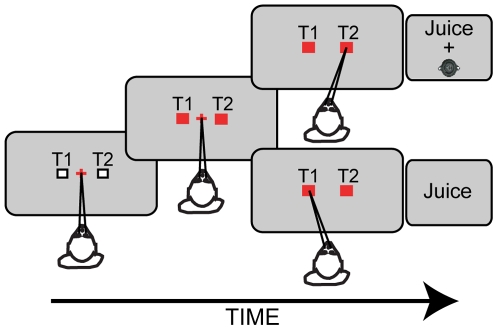
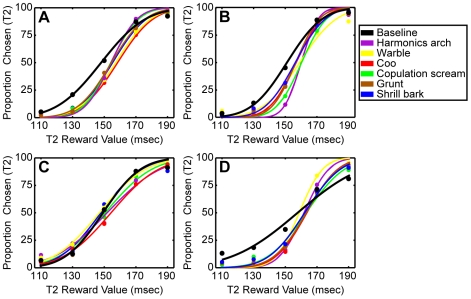
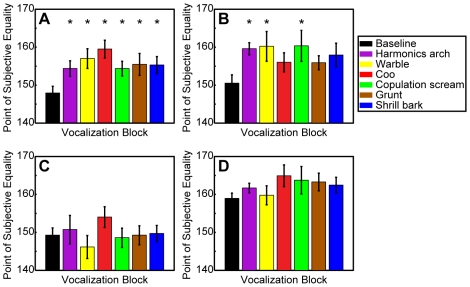
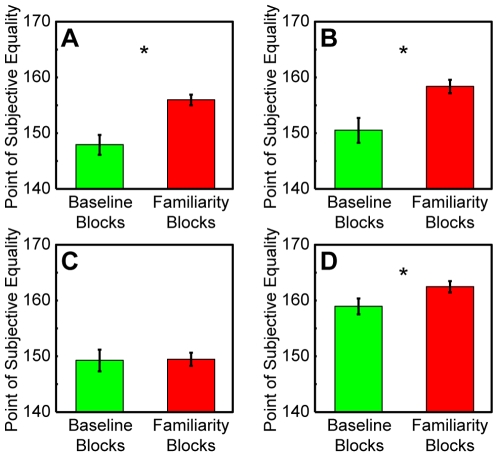
Adaptive behavior requires that animals integrate current and past information with their decision-making. One important type of information is auditory-communication signals (i.e., species-specific vocalizations). Here, we tested how rhesus monkeys incorporate the opportunity to listen to different species-specific vocalizations into their decision-making processes. In particular, we tested how monkeys value these vocalizations relative to the opportunity to get a juice reward. To test this hypothesis, monkeys chose one of two targets to get a varying juice reward; at one of those targets, in addition to the juice reward, a vocalization was presented. By titrating the juice amounts at the two targets, we quantified the relationship between the monkeys' juice choices relative to the opportunity to listen to a vocalization. We found that, rhesus were not willing to give up a large juice reward to listen to vocalizations indicating that, relative to a juice reward, listening to vocalizations has a low value.
适应性行为要求动物将当前和过去的信息与它们的决策过程相结合。一种重要的信息类型是听觉通讯信号(即特定于物种的发声)。在这里,我们测试了恒河猴如何将聆听不同物种特定发声的机会纳入其决策过程。具体来说,我们测试了猴子相对于获得果汁奖励的机会,如何重视这些发声。为了检验这一假设,猴子选择了两个目标中的一个以获得不同的果汁奖励;在其中一个目标中,除了果汁奖励之外,还呈现了一个发声。通过调整两个目标的果汁量,我们量化了猴子相对于聆听发声的机会的果汁选择之间的关系。我们发现,恒河猴不愿意放弃大量的果汁奖励去聆听发声,这表明与果汁奖励相比,聆听发声的价值较低。