Clinical Cooperation Group Molecular Oncology, Helmholtz-Zentrum München, German Research Center for Environmental Health, and Head and Neck Research Dept, Ludwig-Maximilians-University of Munich, Germany.
BMC Cancer. 2009 Nov 19;9:402. doi: 10.1186/1471-2407-9-402.
Epithelial cell adhesion molecule EpCAM is a transmembrane glycoprotein, which is frequently over-expressed in simple epithelia, progenitors, embryonic and tissue stem cells, carcinoma and cancer-initiating cells. Besides functioning as a homophilic adhesion protein, EpCAM is an oncogenic receptor that requires regulated intramembrane proteolysis for activation of its signal transduction capacity. Upon cleavage, the extracellular domain EpEX is released as a soluble ligand while the intracellular domain EpICD translocates into the cytoplasm and eventually into the nucleus in combination with four-and-a-half LIM domains protein 2 (FHL2) and beta-catenin, and drives cell proliferation.
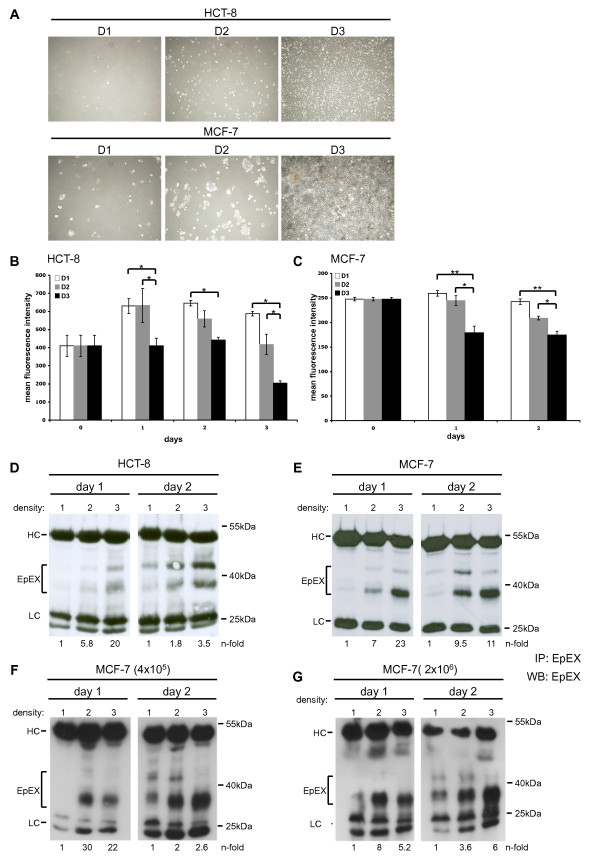
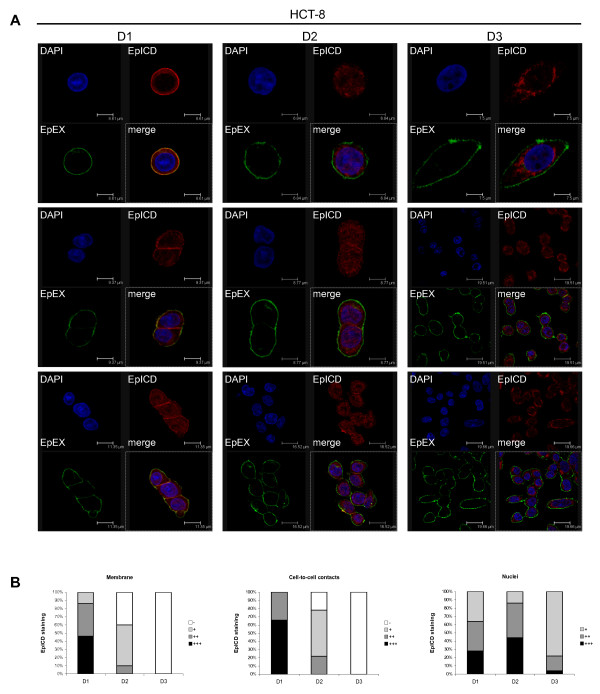
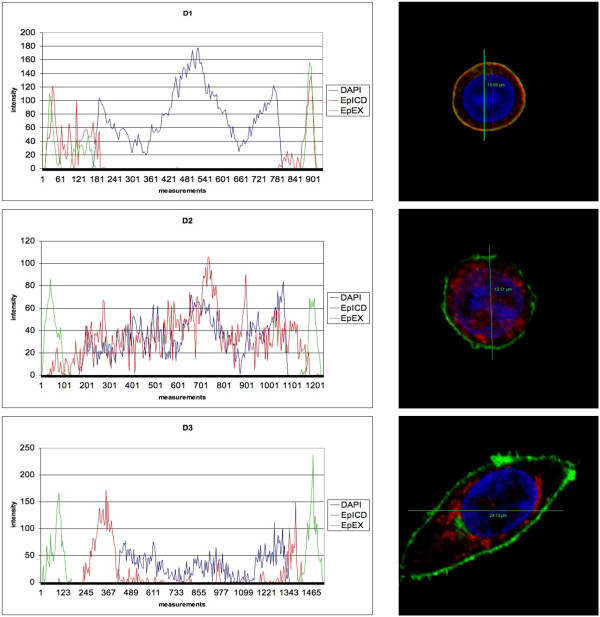
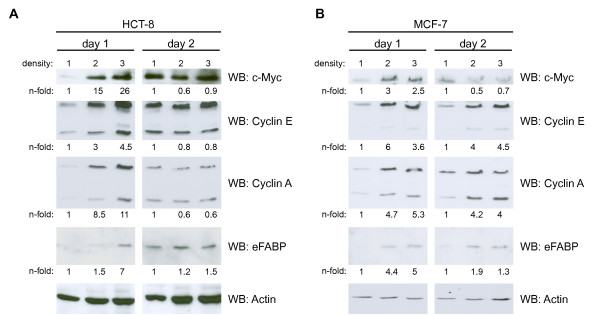
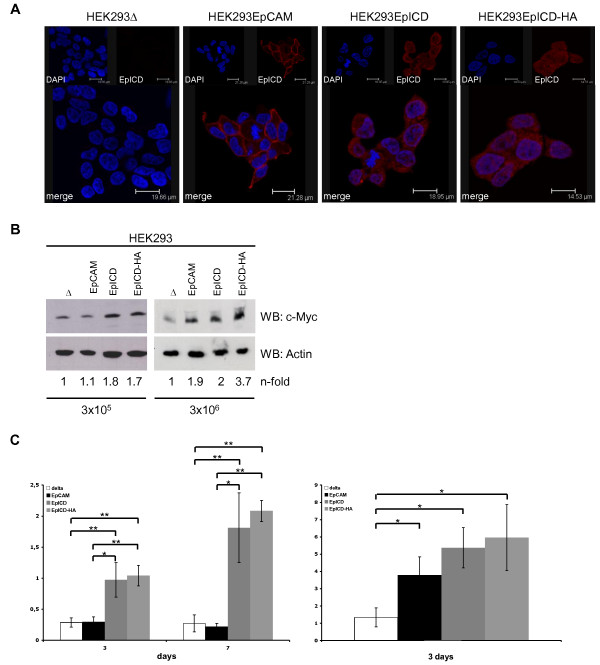
EpCAM cleavage, induction of the target genes, and transmission of proliferation signals were investigated under varying density conditions using confocal laser scanning microscopy, immunoblotting, cell counting, and conditional cell systems.
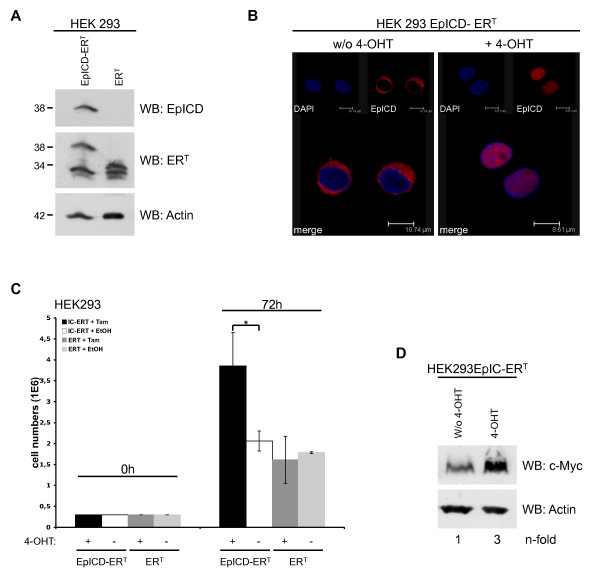
EpCAM cleavage, induction of the target genes, and transmission of proliferation signals were dependent on adequate cell-to-cell contact. If cell-to-cell contact was prohibited EpCAM did not provide growth advantages. If cells were allowed to undergo contact to each other, EpCAM transmitted proliferation signals based on signal transduction-related cleavage processes. Accordingly, the pre-cleaved version EpICD was not dependent on cell-to-cell contact in order to induce c-myc and cell proliferation, but necessitated nuclear translocation. For the case of contact-inhibited cells, although cleavage of EpCAM occurred, nuclear translocation of EpICD was reduced, as were EpCAM effects.
Activation of EpCAM's cleavage and oncogenic capacity is dependent on cellular interaction (juxtacrine) to provide for initial signals of regulated intramembrane proteolysis, which then support signalling via soluble EpEX (paracrine).
上皮细胞黏附分子 EpCAM 是一种跨膜糖蛋白,在简单上皮细胞、祖细胞、胚胎和组织干细胞、癌和癌起始细胞中常过度表达。除了作为同亲性黏附蛋白发挥作用外,EpCAM 还是一种致癌受体,其信号转导能力的激活需要受调控的跨膜蛋白水解。在切割后,细胞外结构域 EpEX 作为可溶性配体释放,而细胞内结构域 EpICD 则转位到细胞质中,最终与四个半 LIM 结构域蛋白 2(FHL2)和β-连环蛋白结合,并驱动细胞增殖。
使用共聚焦激光扫描显微镜、免疫印迹、细胞计数和条件细胞系统,在不同的密度条件下研究 EpCAM 切割、靶基因诱导和增殖信号的传递。
EpCAM 切割、靶基因诱导和增殖信号的传递取决于细胞间的充分接触。如果细胞间的接触受到限制,EpCAM 不会提供生长优势。如果细胞允许相互接触,EpCAM 会根据信号转导相关的切割过程传递增殖信号。因此,前切割形式 EpICD 不需要细胞间接触即可诱导 c-myc 和细胞增殖,但需要核转位。对于接触抑制的细胞,尽管 EpCAM 发生了切割,但 EpICD 的核转位减少,EpCAM 的作用也减弱。
EpCAM 切割和致癌能力的激活依赖于细胞间相互作用(旁分泌)提供受调控的跨膜蛋白水解的初始信号,然后通过可溶性 EpEX(旁分泌)支持信号传递。