Department of Otorhinolaryngology, University Hospital, LMU Munich, Marchioninistr. 15, 81377, Munich, Germany.
Clinical Cooperation Group "Personalized Radiotherapy in Head and Neck Cancer", Helmholtz Zentrum, Neuherberg, Germany.
Cancer Metastasis Rev. 2020 Sep;39(3):969-987. doi: 10.1007/s10555-020-09898-3.
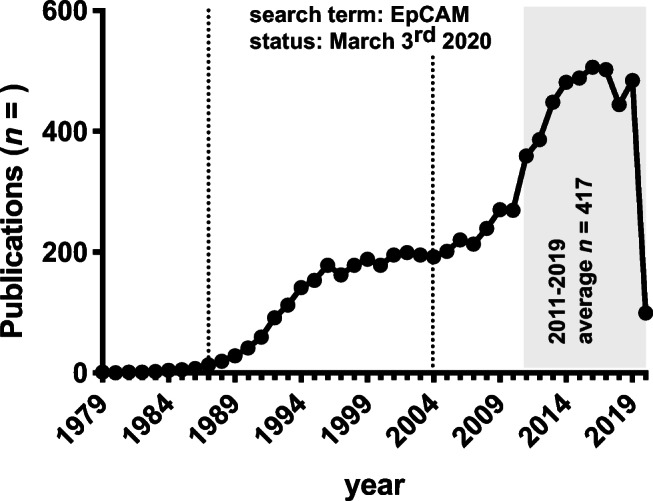
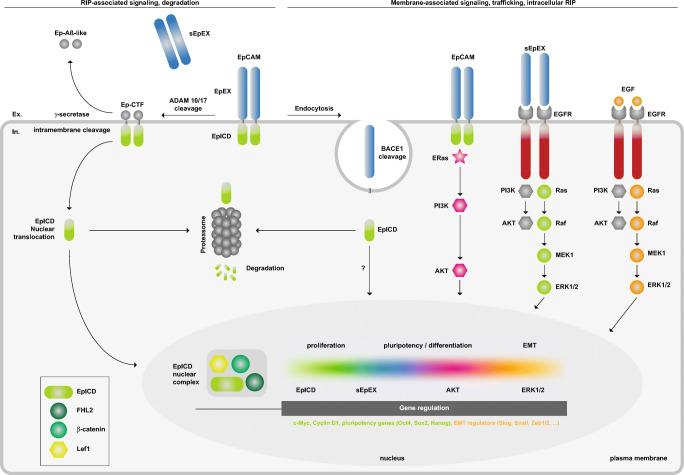
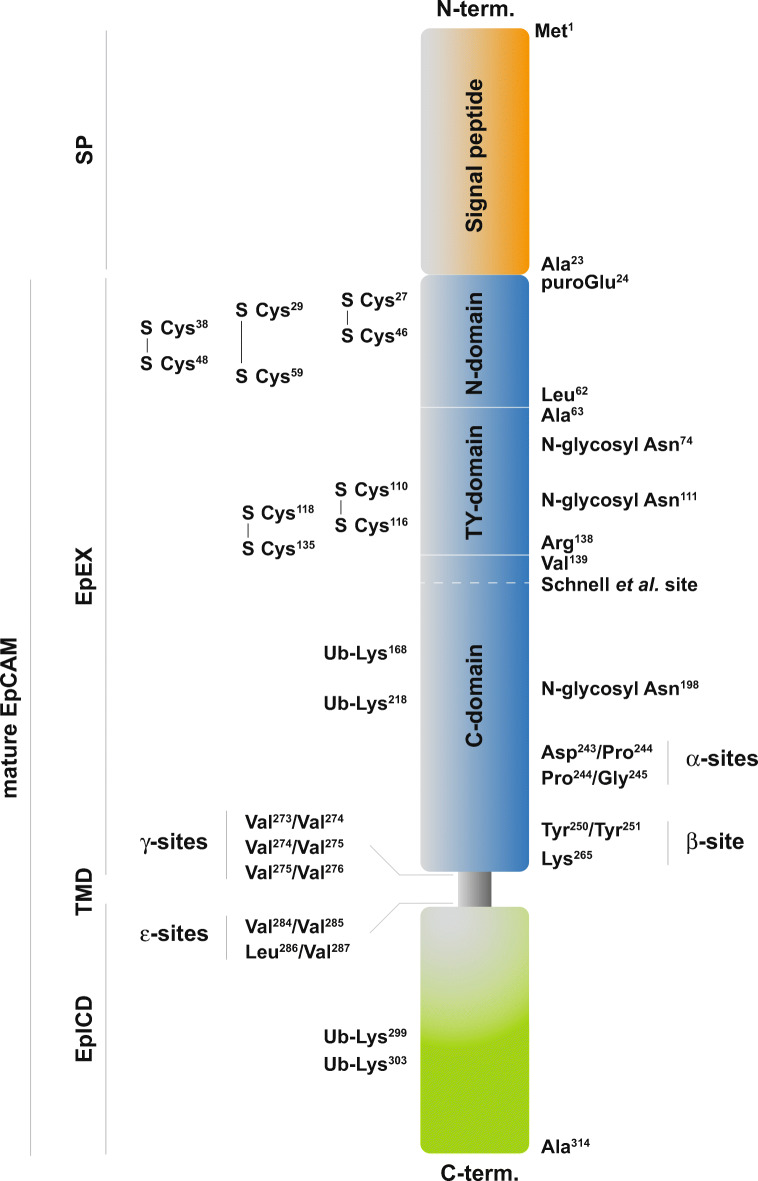
EpCAM (epithelial cell adhesion molecule) was discovered four decades ago as a tumor antigen on colorectal carcinomas. Owing to its frequent and high expression on carcinomas and their metastases, EpCAM serves as a prognostic marker, a therapeutic target, and an anchor molecule on circulating and disseminated tumor cells (CTCs/DTCs), which are considered the major source for metastatic cancer cells. Today, EpCAM is reckoned as a multi-functional transmembrane protein involved in the regulation of cell adhesion, proliferation, migration, stemness, and epithelial-to-mesenchymal transition (EMT) of carcinoma cells. To fulfill these functions, EpCAM is instrumental in intra- and intercellular signaling as a full-length molecule and following regulated intramembrane proteolysis, generating functionally active extra- and intracellular fragments. Intact EpCAM and its proteolytic fragments interact with claudins, CD44, E-cadherin, epidermal growth factor receptor (EGFR), and intracellular signaling components of the WNT and Ras/Raf pathways, respectively. This plethora of functions contributes to shaping intratumor heterogeneity and partial EMT, which are major determinants of the clinical outcome of carcinoma patients. EpCAM represents a marker for the epithelial status of primary and systemic tumor cells and emerges as a measure for the metastatic capacity of CTCs. Consequentially, EpCAM has reclaimed potential as a prognostic marker and target on primary and systemic tumor cells.
EpCAM(上皮细胞黏附分子)四十年前被发现是结直肠癌上的肿瘤抗原。由于其在癌及其转移灶上的频繁和高表达,EpCAM 可用作预后标志物、治疗靶点以及循环和播散肿瘤细胞(CTC/DTC)上的锚定分子,这些细胞被认为是转移性癌细胞的主要来源。如今,EpCAM 被认为是一种多功能跨膜蛋白,参与调节癌细胞的黏附、增殖、迁移、干性和上皮-间充质转化(EMT)。为了发挥这些功能,EpCAM 作为全长分子并在受调控的跨膜蛋白水解后,在细胞内和细胞间信号转导中发挥作用,产生具有功能活性的胞外和胞内片段。完整的 EpCAM 及其蛋白水解片段分别与 Claudin、CD44、E-cadherin、表皮生长因子受体(EGFR)以及 WNT 和 Ras/Raf 通路的细胞内信号转导成分相互作用。这些丰富的功能有助于塑造肿瘤内异质性和部分 EMT,这是影响癌患者临床结局的主要决定因素。EpCAM 是原发性和系统性肿瘤细胞上皮状态的标志物,并成为 CTC 转移能力的衡量标准。因此,EpCAM 重新成为原发性和系统性肿瘤细胞的预后标志物和治疗靶点。