Department of Investigative Medicine, Imperial College London, London, UK.
Diabetes. 2010 Feb;59(2):397-406. doi: 10.2337/db09-1198. Epub 2009 Nov 23.
Prokineticin 2 (PK2) is a hypothalamic neuropeptide expressed in central nervous system areas known to be involved in food intake. We therefore hypothesized that PK2 plays a role in energy homeostasis.
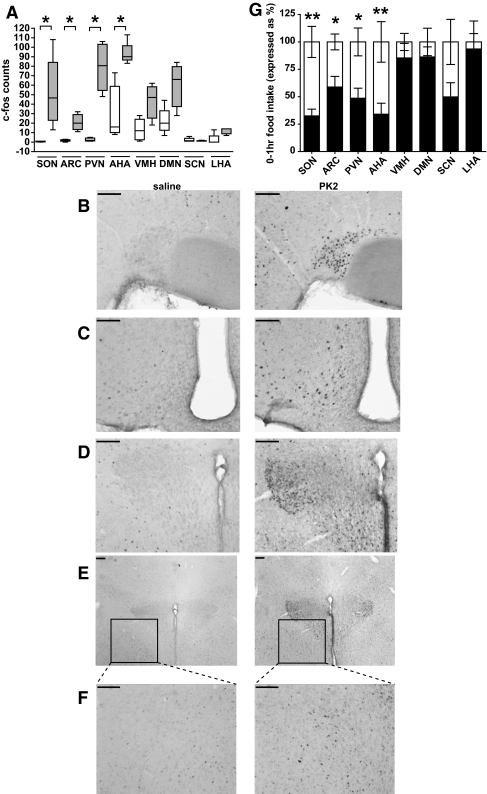
We investigated the effect of nutritional status on hypothalamic PK2 expression and effects of PK2 on the regulation of food intake by intracerebroventricular (ICV) injection of PK2 and anti-PK2 antibody. Subsequently, we investigated the potential mechanism of action by determining sites of neuronal activation after ICV injection of PK2, the hypothalamic site of action of PK2, and interaction between PK2 and other hypothalamic neuropeptides regulating energy homeostasis. To investigate PK2's potential as a therapeutic target, we investigated the effect of chronic administration in lean and obese mice.
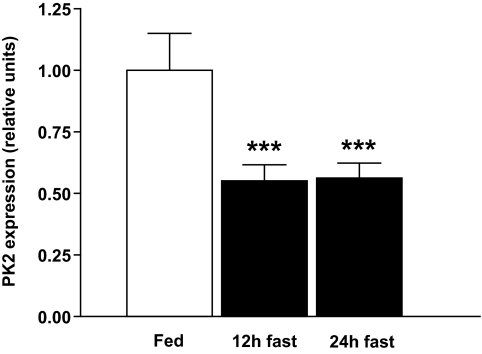
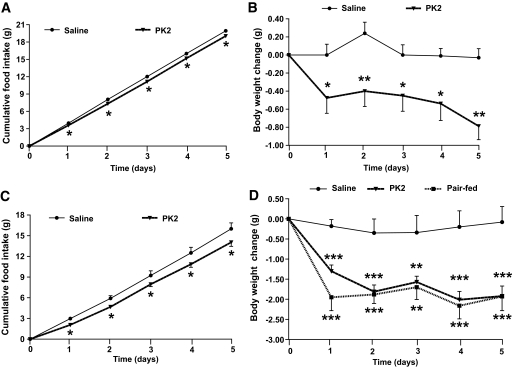
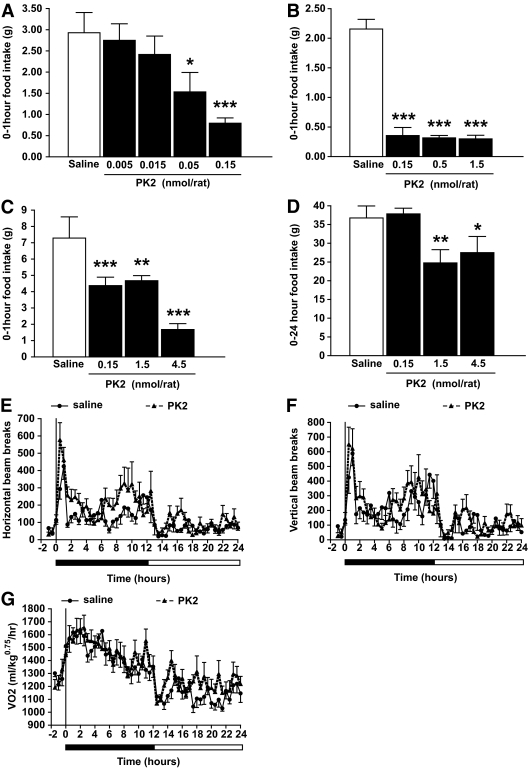
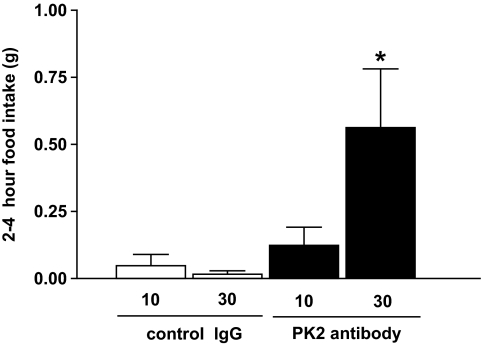
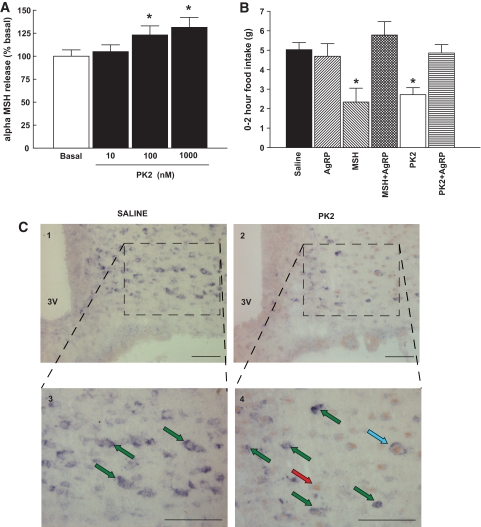
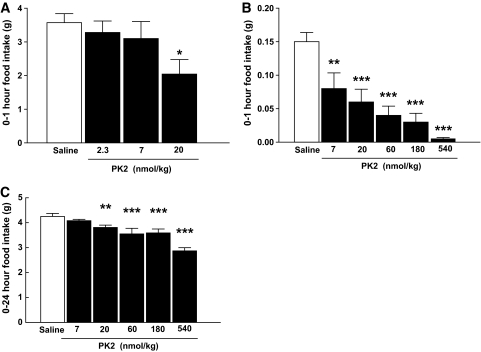
Hypothalamic PK2 expression was reduced by fasting. ICV administration of PK2 to rats potently inhibited food intake, whereas anti-PK2 antibody increased food intake, suggesting that PK2 is an anorectic neuropeptide. ICV administration of PK2 increased c-fos expression in proopiomelanocortin neurons of the arcuate nucleus (ARC) of the hypothalamus. In keeping with this, PK2 administration into the ARC reduced food intake and PK2 increased the release of alpha-melanocyte-stimulating hormone (alpha-MSH) from ex vivo hypothalamic explants. In addition, ICV coadministration of the alpha-MSH antagonist agouti-related peptide blocked the anorexigenic effects of PK2. Chronic peripheral administration of PK2 reduced food and body weight in lean and obese mice.
This is the first report showing that PK2 has a role in appetite regulation and its anorectic effect is mediated partly via the melanocortin system.
促动力素 2(PK2)是一种下丘脑神经肽,在已知参与摄食的中枢神经系统区域表达。因此,我们假设 PK2 在能量平衡中发挥作用。
我们研究了营养状况对下丘脑 PK2 表达的影响,以及通过脑室内(ICV)注射 PK2 和抗 PK2 抗体对食物摄入的调节作用。随后,我们通过确定脑室内注射 PK2 后神经元激活的部位、PK2 的下丘脑作用部位以及 PK2 与调节能量平衡的其他下丘脑神经肽之间的相互作用,研究了其潜在的作用机制。为了研究 PK2 作为治疗靶点的潜力,我们研究了在瘦鼠和肥胖鼠中进行慢性给药的效果。
禁食导致下丘脑 PK2 表达减少。PK2 脑室内给药可强烈抑制大鼠的摄食,而抗 PK2 抗体增加摄食,提示 PK2 是一种厌食神经肽。脑室内注射 PK2 增加了下丘脑弓状核(ARC)中前阿黑皮素原神经元的 c-fos 表达。与此一致的是,PK2 给药到 ARC 减少了食物摄入,PK2 增加了离体下丘脑组织中 α-促黑素细胞激素(α-MSH)的释放。此外,脑室内共给予 α-MSH 拮抗剂 agouti 相关肽可阻断 PK2 的厌食作用。慢性外周给予 PK2 可减少瘦鼠和肥胖鼠的食物和体重。
这是首次报道 PK2 在食欲调节中发挥作用,其厌食作用部分通过黑皮质素系统介导。