Laboratory of Experimental Medicine, Université Libre de Bruxelles, Brussels, Belgium.
Diabetes. 2010 Feb;59(2):358-74. doi: 10.2337/db09-1159. Epub 2009 Nov 23.
Cytokines contribute to pancreatic beta-cell death in type 1 diabetes. This effect is mediated by complex gene networks that remain to be characterized. We presently utilized array analysis to define the global expression pattern of genes, including spliced variants, modified by the cytokines interleukin (IL)-1beta + interferon (IFN)-gamma and tumor necrosis factor (TNF)-alpha + IFN-gamma in primary rat beta-cells.
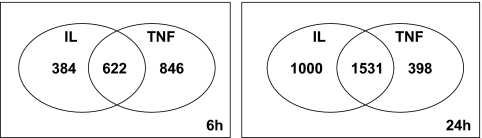
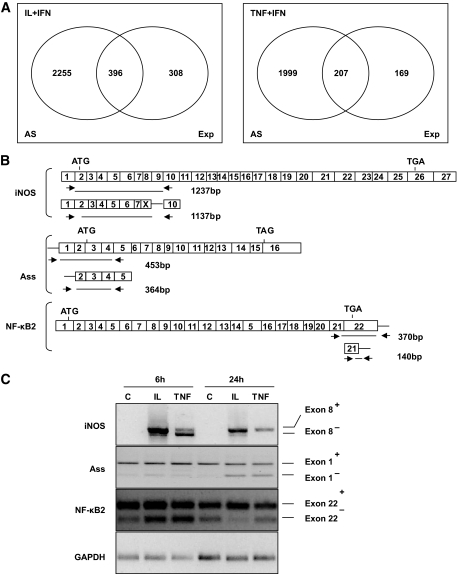
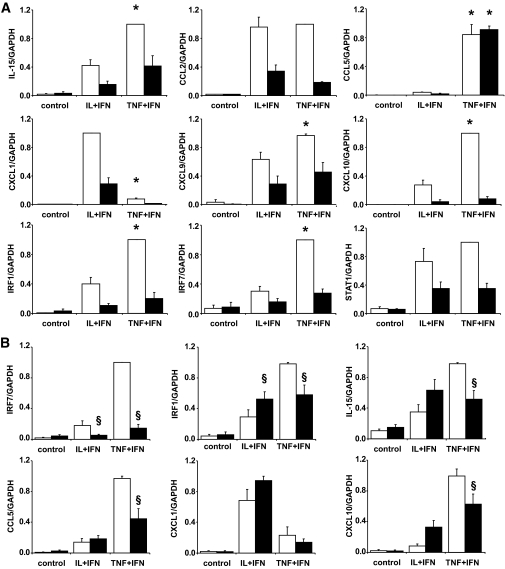
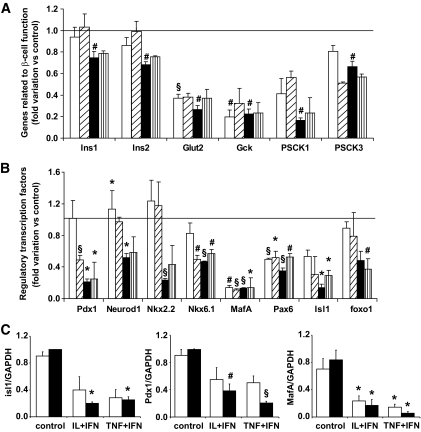
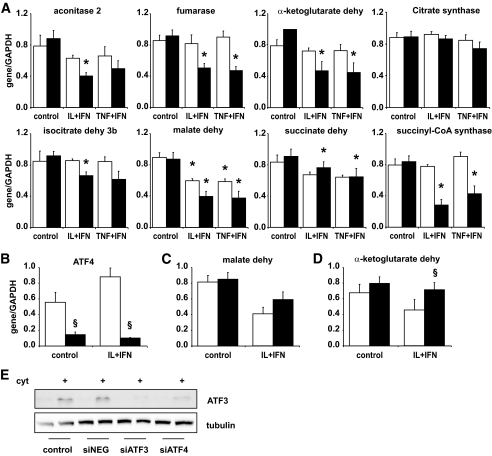
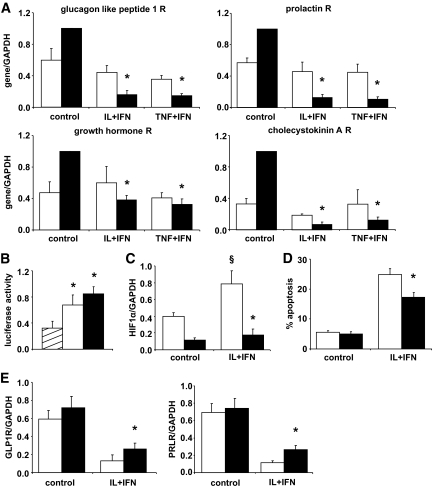
Fluorescence-activated cell sorter-purified rat beta-cells were exposed to IL-1beta + IFN-gamma or TNF-alpha + IFN-gamma for 6 or 24 h, and global gene expression was analyzed by microarray. Key results were confirmed by RT-PCR, and small-interfering RNAs were used to investigate the mechanistic role of novel and relevant transcription factors identified by pathway analysis. RESULTS Nearly 16,000 transcripts were detected as present in beta-cells, with temporal differences in the number of genes modulated by IL-1beta + IFNgamma or TNF-alpha + IFN-gamma. These cytokine combinations induced differential expression of inflammatory response genes, which is related to differential induction of IFN regulatory factor-7. Both treatments decreased the expression of genes involved in the maintenance of beta-cell phenotype and growth/regeneration. Cytokines induced hypoxia-inducible factor-alpha, which in this context has a proapoptotic role. Cytokines also modified the expression of >20 genes involved in RNA splicing, and exon array analysis showed cytokine-induced changes in alternative splicing of >50% of the cytokine-modified genes.
The present study doubles the number of known genes expressed in primary beta-cells, modified or not by cytokines, and indicates the biological role for several novel cytokine-modified pathways in beta-cells. It also shows that cytokines modify alternative splicing in beta-cells, opening a new avenue of research for the field.
细胞因子在 1 型糖尿病中导致胰岛 β 细胞死亡。这种作用是由复杂的基因网络介导的,这些基因网络仍有待描述。目前,我们利用基因芯片分析来定义包括剪接变异体在内的基因的全表达谱,这些基因受细胞因子白细胞介素 (IL)-1β+干扰素 (IFN)-γ和肿瘤坏死因子 (TNF)-α+IFN-γ在原代大鼠 β 细胞中的修饰。
用荧光激活细胞分选法纯化的大鼠 β 细胞暴露于 IL-1β+IFN-γ或 TNF-α+IFN-γ中 6 或 24 小时,通过微阵列分析进行全基因表达分析。关键结果通过 RT-PCR 进行确认,并使用小干扰 RNA 来研究通过途径分析确定的新型和相关转录因子的机制作用。
在 β 细胞中检测到近 16000 个转录本,IL-1β+IFNγ或 TNF-α+IFN-γ调节的基因数量存在时间差异。这些细胞因子组合诱导炎症反应基因的差异表达,这与 IFN 调节因子-7 的差异诱导有关。两种处理均降低了参与维持 β 细胞表型和生长/再生的基因表达。细胞因子诱导了缺氧诱导因子-α的表达,在这种情况下,它具有促凋亡作用。细胞因子还修饰了 20 多个参与 RNA 剪接的基因的表达,外显子芯片分析显示细胞因子诱导的对 50%以上细胞因子修饰基因的可变剪接的改变。
本研究将已知的在原代 β 细胞中表达的基因数量增加了一倍,这些基因要么受细胞因子修饰,要么不受细胞因子修饰,并指出了几个在 β 细胞中细胞因子修饰途径的生物学作用。它还表明细胞因子在 β 细胞中修饰可变剪接,为该领域开辟了新的研究途径。