Department of Pathology, University of Cambridge, Tennis Court Road, Cambridge CB21QP, UK.
Immunogenetics. 2010 Feb;62(2):65-73. doi: 10.1007/s00251-009-0408-5.
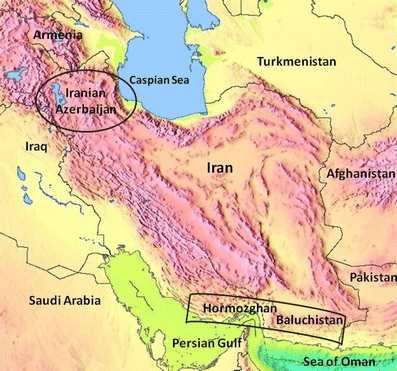
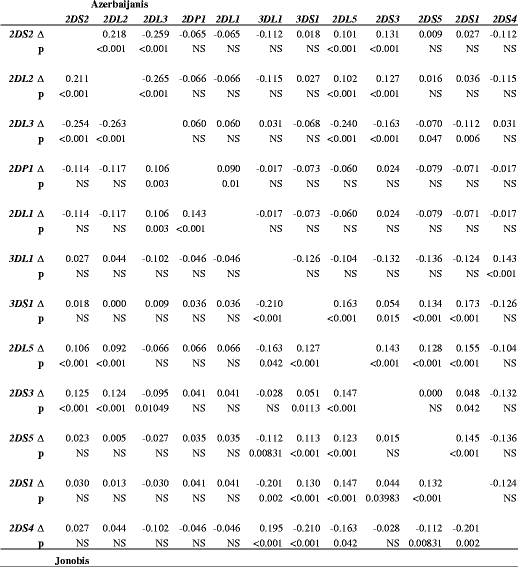
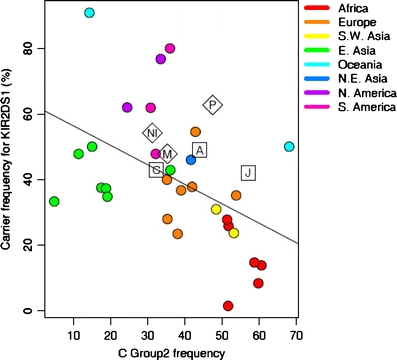
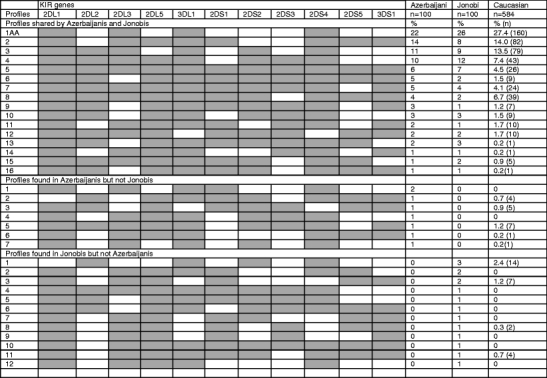
Killer cell immunoglobulin-like receptors (KIR) gene frequencies vary between populations and contribute to functional variation in immune responses to viruses,autoimmunity and reproductive success. This study describes the frequency distribution of 12 variable KIR genes and their HLA-C ligands in two Iranian populations who have lived for many generations in different environments:t he Azerbaijanis at high altitude and the Jonobi people at sea level. The results are compared with those published for other human populations and a large group of English Caucasians. Differences were seen in KIR and HLA-C group frequencies, in linkage disequilibrium and inhibitory/activating KIR ratios between the groups. Similarities with geographically close populations in the frequencies of the KIR A and B haplotypes and KIR AA genotype reflected their common ancestry. The extreme variability of the KIR gene family and their HLA-C ligands is highlighted and their importance in defining differences between geographically and culturally isolated communities subject to different environmental pressures who come from the same ethnic grouping.
杀伤细胞免疫球蛋白样受体(KIR)基因频率在不同人群中存在差异,这导致了对病毒、自身免疫和生殖成功的免疫反应的功能变化。本研究描述了在两个伊朗人群中 12 个可变 KIR 基因及其 HLA-C 配体的频率分布,这两个人群在不同的环境中生活了许多代:高海拔的阿塞拜疆人和低海拔的乔诺比人。将结果与其他人群以及一大组英国白种人的结果进行了比较。在 KIR 和 HLA-C 组频率、连锁不平衡以及抑制/激活 KIR 比值方面,这些组之间存在差异。在 KIR A 和 B 单倍型以及 KIR AA 基因型的频率方面,与地理上相近的人群存在相似性,这反映了它们的共同祖先。KIR 基因家族及其 HLA-C 配体的极端变异性得到了强调,它们对于定义来自同一族群但受到不同环境压力影响的地理和文化隔离社区之间的差异非常重要。