Department of Neurosurgery, Henry Ford Hospital, Detroit, Michigan 48202-2689, USA.
Stem Cells. 2010 Feb;28(2):181-90. doi: 10.1002/stem.264.
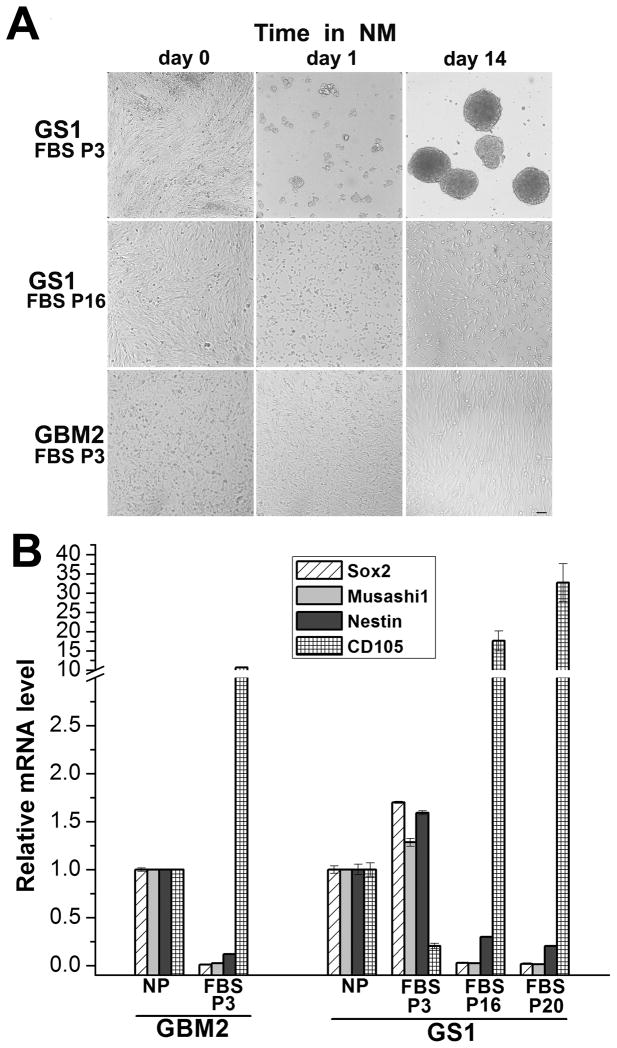
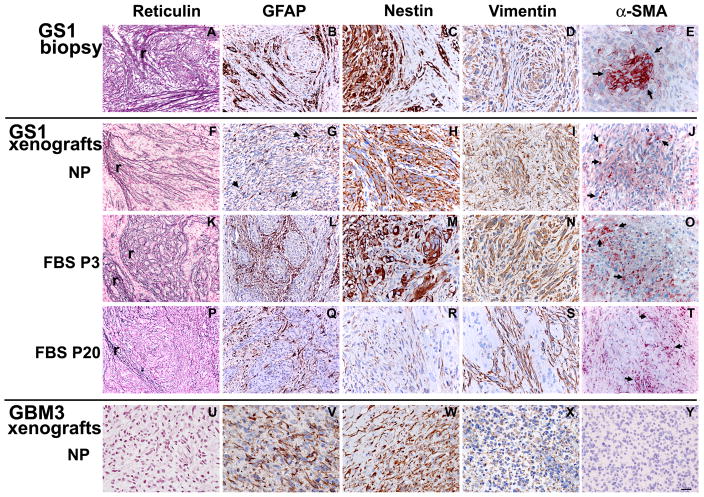
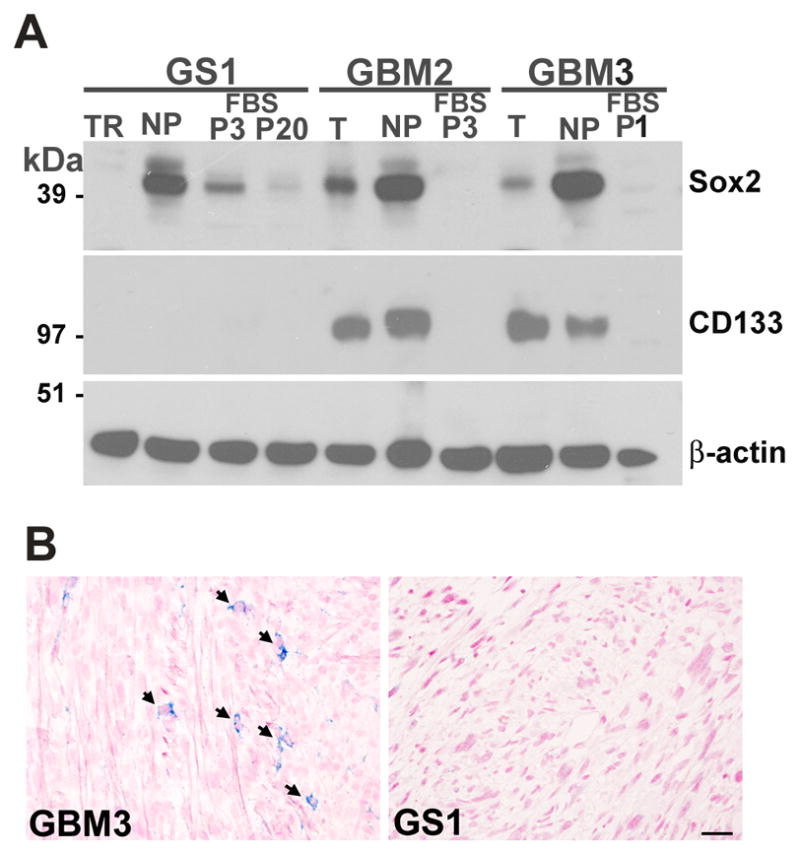
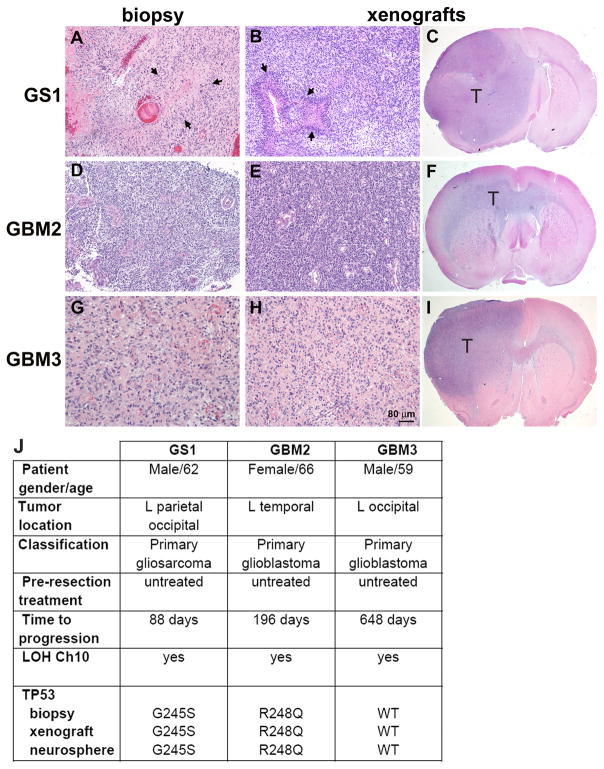
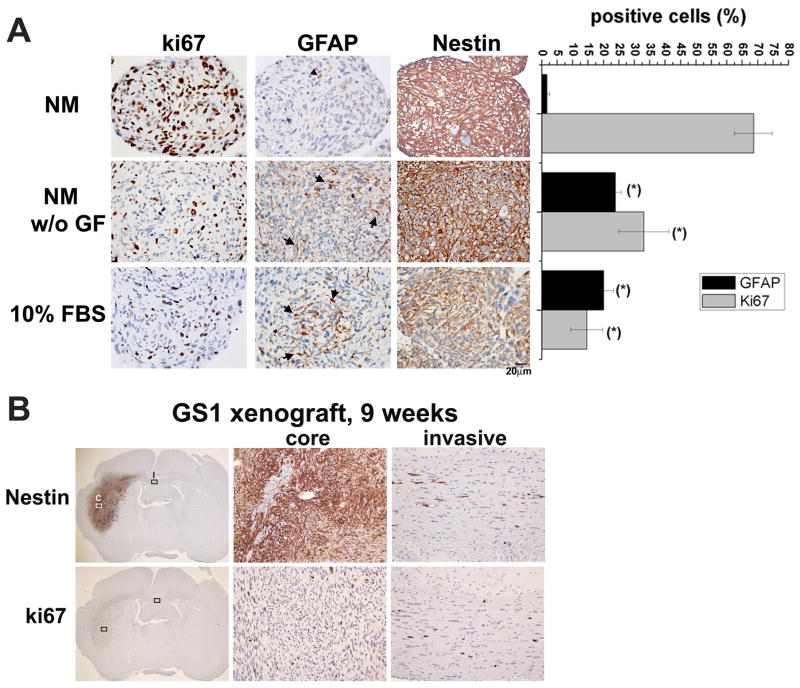
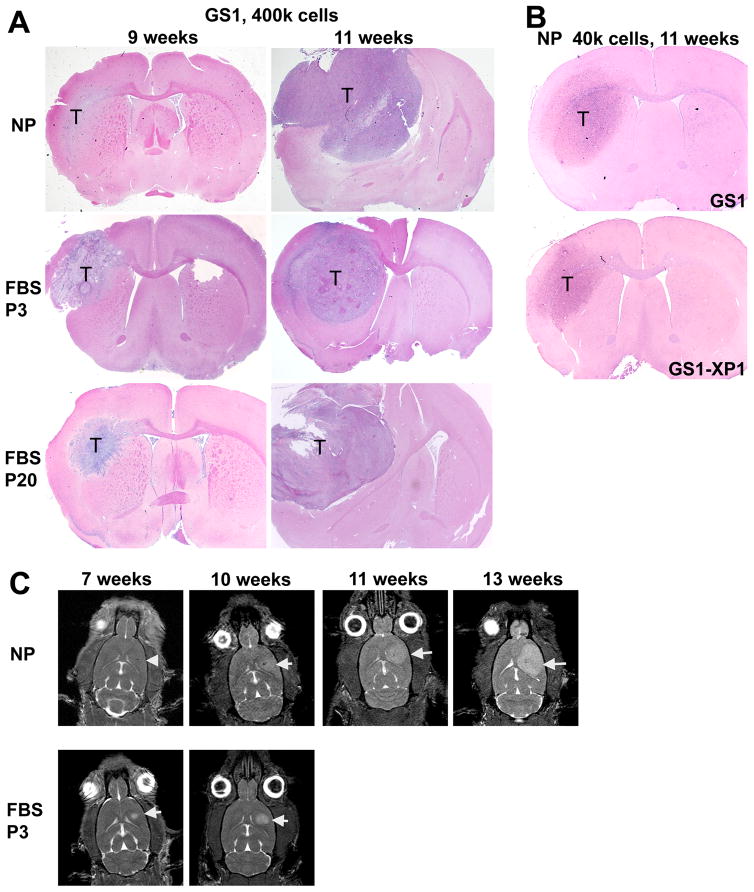
Cancer stem cells (CSCs) are characterized by their self-renewing potential and by their ability to differentiate and phenocopy the original tumor in orthotopic xenografts. Long-term propagation of glioblastoma (GBM) cells in serum-containing medium results in loss of the CSCs and outgrowth of cells genetically and biologically divergent from the parental tumors. In contrast, the use of a neurosphere assay, a serum-free culture for selection, and propagation of central nervous system-derived stem cells allows the selection of a subpopulation containing CSCs. Gliosarcoma (GS), a morphological variant comprising approximately 2% of GBMs, present a biphasic growth pattern, composed of glial and metaplastic mesenchymal components. To assess whether the neurosphere assay would allow the amplification of a subpopulation of cells with "gliosarcoma stem cell" properties, capable of propagating both components of this malignancy, we have generated neurospheres and serum cultures from primary GS and GBM surgical specimens. Neurosphere cultures from GBM and GS samples expressed neural stem cell markers Sox2, Musashi1, and Nestin. In contrast to the GBM neurosphere lines, the GS neurospheres were negative for the stem cell marker CD133. All neurosphere lines generated high-grade invasive orthotopic tumor xenografts, with histological features strikingly similar to the parental tumors, demonstrating that these cultures indeed are enriched in CSCs. Remarkably, low-passage GS serum cultures retained the expression of stem cell markers, the ability to form neurospheres, and tumorigenicity. The GS experimental tumors phenocopied the parental tumor, exhibiting biphasic glial and mesenchymal components, constituting a clinically relevant model to investigate mesenchymal differentiation in GBMs.
癌症干细胞 (CSC) 的特征是自我更新能力以及分化和表型复制同源移植肿瘤的能力。在含血清的培养基中长期培养神经胶质瘤 (GBM) 细胞会导致 CSC 的丧失,以及与亲本肿瘤在遗传和生物学上不同的细胞的生长。相比之下,使用神经球测定法、无血清培养法选择和增殖中枢神经系统来源的干细胞,可以选择包含 CSC 的亚群。神经胶质瘤肉瘤 (GS),一种占 GBM 约 2%的形态学变异体,表现出双相生长模式,由胶质和间变间充质成分组成。为了评估神经球测定法是否允许扩增具有“神经胶质瘤肉瘤干细胞”特性的细胞亚群,这些细胞能够增殖这种恶性肿瘤的两个成分,我们从原发性 GS 和 GBM 手术标本中生成了神经球和血清培养物。GBM 和 GS 样本的神经球培养物表达神经干细胞标记物 Sox2、Musashi1 和 Nestin。与 GBM 神经球系相比,GS 神经球系缺乏干细胞标记物 CD133。所有神经球系都生成了高级侵袭性原位异种移植肿瘤,其组织学特征与亲本肿瘤非常相似,表明这些培养物确实富含 CSC。值得注意的是,低传代 GS 血清培养物保留了干细胞标记物的表达、形成神经球的能力和致瘤性。GS 实验性肿瘤表型复制了亲本肿瘤,表现出双相胶质和间充质成分,构成了一种临床相关的模型,可用于研究 GBM 中的间充质分化。