Department of Surgery, The Methodist Hospital, 6550 Fannin Street, SM 1661, Houston, TX 77030, USA.
Crit Care. 2009;13 Suppl 5(Suppl 5):S10. doi: 10.1186/cc8008. Epub 2009 Nov 30.
The purpose of the present review is to review our experience with near-infrared spectroscopy (NIRS) monitoring in shock resuscitation and predicting clinical outcomes.
The management of critically ill patients with goal-oriented intensive care unit (ICU) resuscitation continues to evolve as our understanding of the appropriate physiologic targets improves. It is now recognized that resuscitation to achieve supranormal indices is not beneficial in all patients and may precipitate abdominal compartment syndrome.
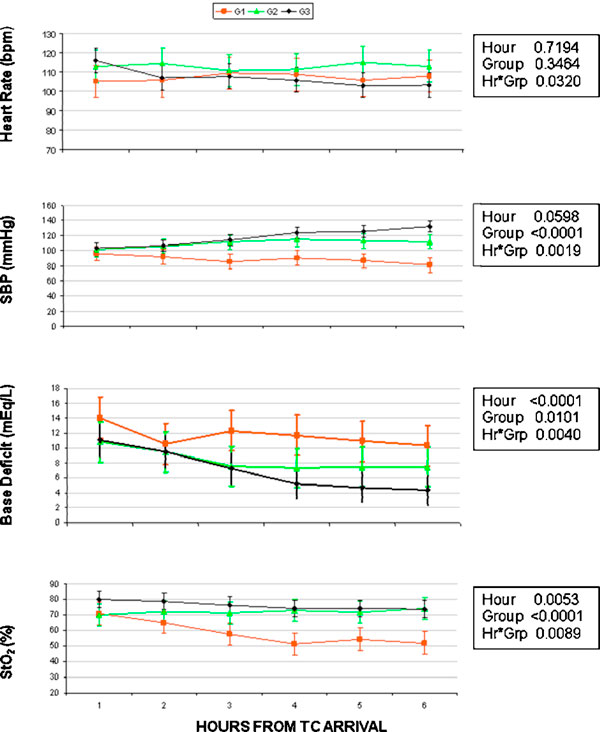
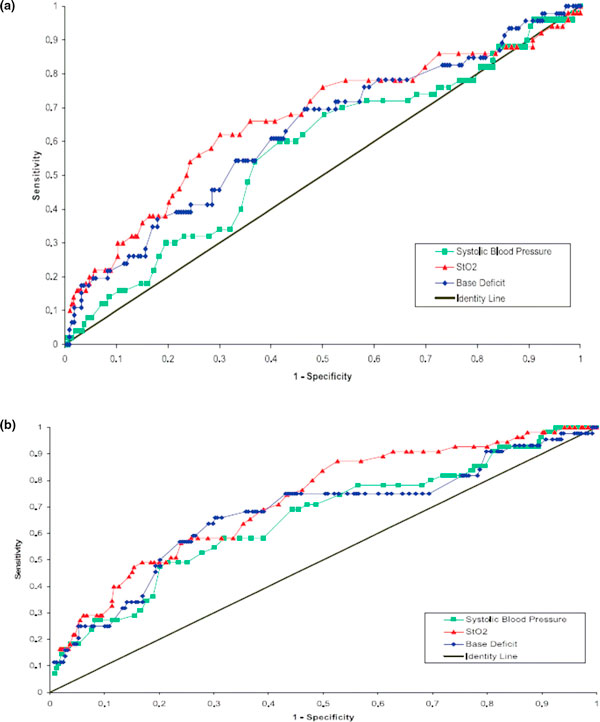
Over the years, ICU technology has provided physicians with specific physiologic parameters to guide shock resuscitation. Throughout this time, the tissue hemoglobin oxygen saturation (StO2) monitor has emerged as a non-invasive means to obtain reliable physiologic parameters to guide clinicians' resuscitative efforts. StO2 monitors have been shown to aid in early identification of nonresponders and to predict outcomes in hemorrhagic shock and ICU resuscitation. These data have also been used to better understand and refine existing resuscitation protocols. More recently, use of NIRS technology to guide resuscitation in septic shock has been shown to predict outcomes in high-risk patients.
StO2 is an important tool in identifying high-risk patients in septic and hemorrhagic shock. It is a non-invasive means of obtaining vital information regarding outcome and adequacy of resuscitation.
本综述旨在回顾我们在休克复苏和预测临床结局中使用近红外光谱(NIRS)监测的经验。
随着我们对适当生理目标的理解不断提高,以目标为导向的重症监护病房(ICU)复苏的危重病患者的管理仍在不断发展。现在人们认识到,在所有患者中实现超正常指标的复苏并没有益处,并且可能会引发腹腔间隔室综合征。
多年来,ICU 技术为医生提供了特定的生理参数来指导休克复苏。在此期间,组织氧饱和度(StO2)监测器已成为一种非侵入性手段,可以获得可靠的生理参数来指导临床医生的复苏努力。StO2 监测器已被证明有助于早期识别无反应者,并预测失血性休克和 ICU 复苏的结局。这些数据还被用于更好地了解和完善现有的复苏方案。最近,使用 NIRS 技术指导脓毒性休克复苏已被证明可以预测高危患者的结局。
StO2 是识别脓毒症和失血性休克中高危患者的重要工具。它是一种非侵入性手段,可以获取有关结局和复苏充分性的重要信息。