Gladstone Institute of Neurological Disease, University of California, San Francisco, 94158, USA.
Cell Stem Cell. 2009 Dec 4;5(6):624-33. doi: 10.1016/j.stem.2009.10.003.
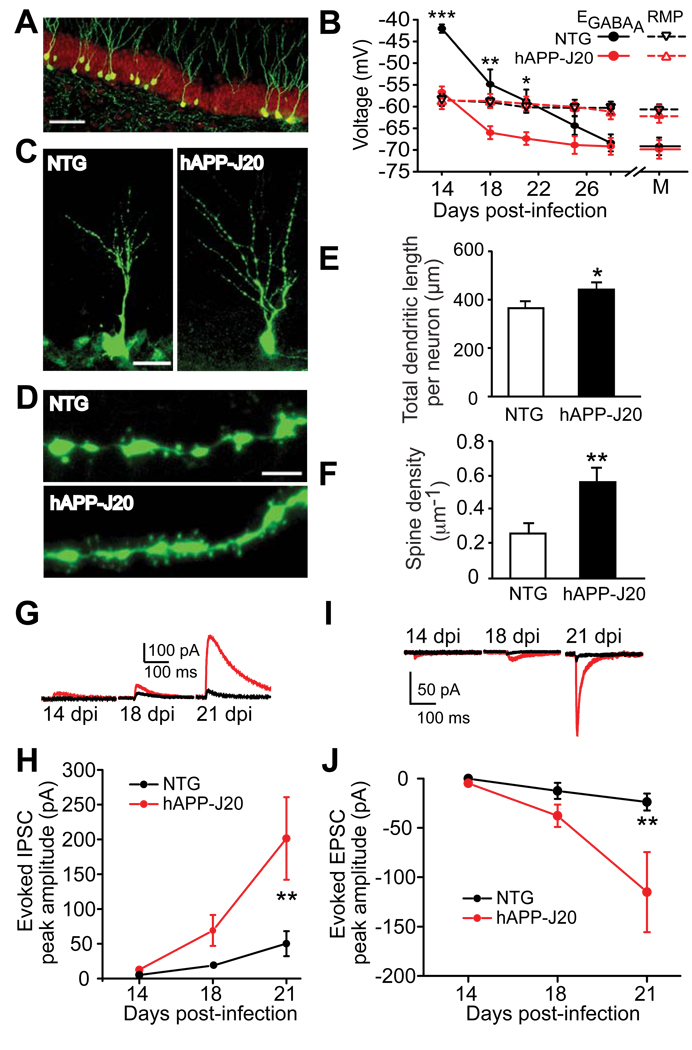
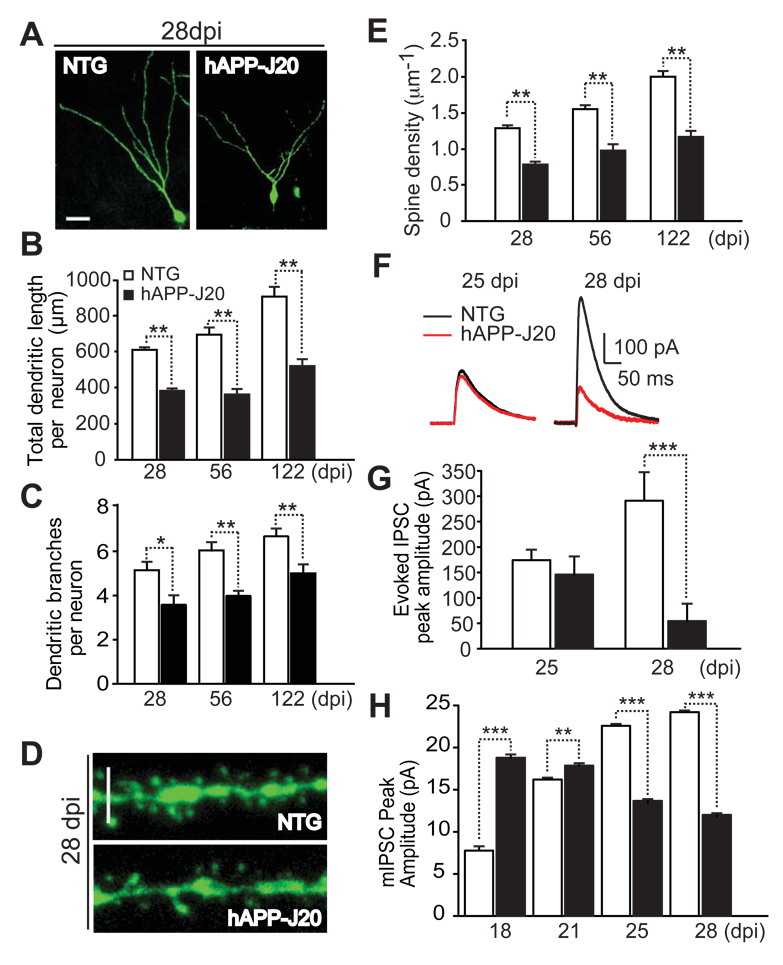
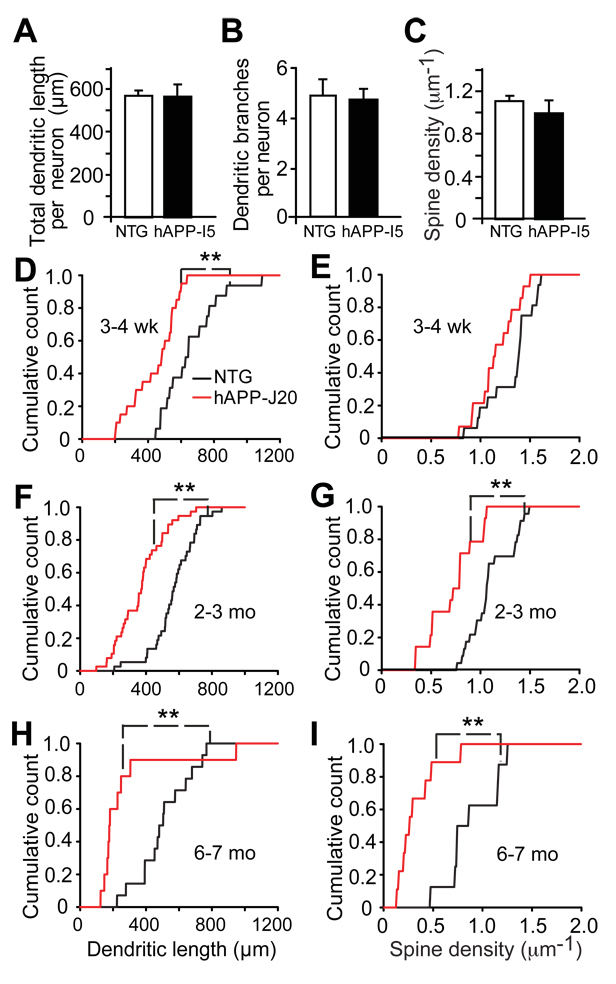
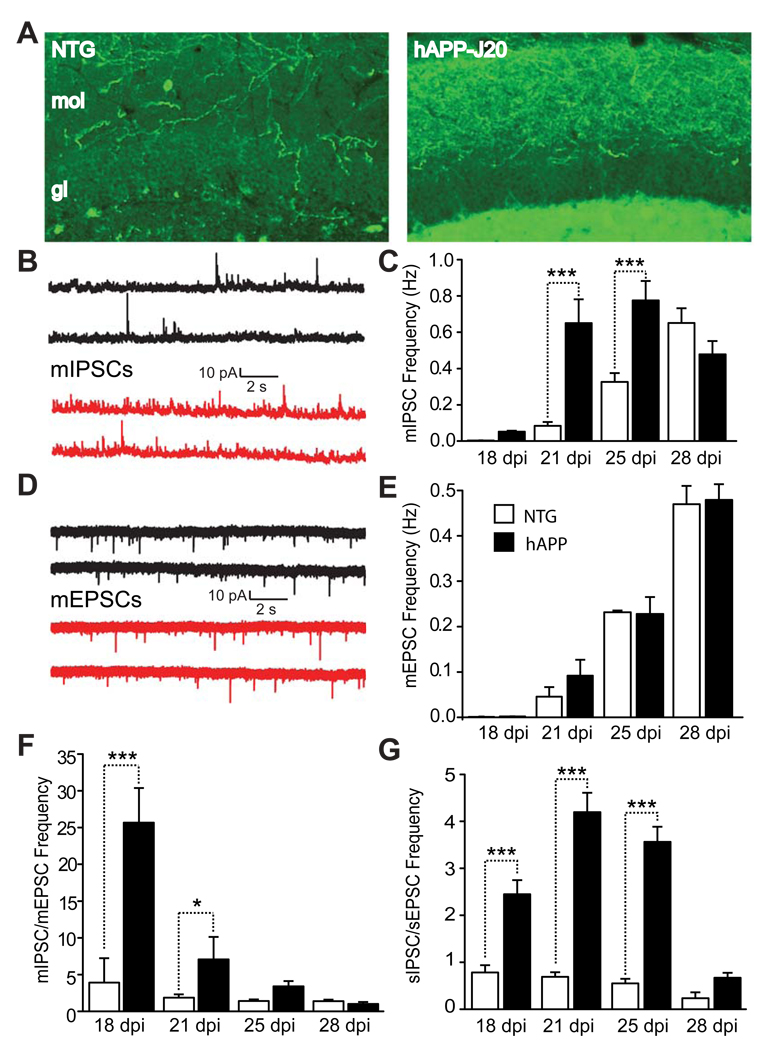
Adult neurogenesis regulates plasticity and function in the hippocampus, which is critical for memory and vulnerable to Alzheimer's disease (AD). Promoting neurogenesis may improve hippocampal function in AD brains. However, how amyloid beta (Abeta), the key AD pathogen, affects the development and function of adult-born neurons remains unknown. Adult-born granule cells (GCs) in human amyloid precursor protein (hAPP) transgenic mice, an AD model, showed greater dendritic length, spine density, and functional responses than did controls early in development, but were impaired morphologically and functionally during later maturation. Early inhibition of GABA(A) receptors to suppress GABAergic signaling or late inhibition of calcineurin to enhance glutamatergic signaling normalized the development of adult-born GCs in hAPP mice with high Abeta levels. Abeta-induced increases in GABAergic neurotransmission or an imbalance between GABAergic and glutamatergic neurotransmission may contribute to impaired neurogenesis in AD.
成人神经发生调节海马体的可塑性和功能,而海马体对于记忆至关重要,且易受阿尔茨海默病(AD)的影响。促进神经发生可能改善 AD 大脑中海马体的功能。然而,淀粉样β(Abeta),即 AD 的关键病原体,如何影响成年神经元的发育和功能尚不清楚。在 AD 模型人类淀粉样前体蛋白(hAPP)转基因小鼠中,成年产生的颗粒细胞(GCs)在早期发育中表现出比对照组更长的树突长度、更多的棘突密度和更强的功能反应,但在后期成熟过程中形态和功能受损。早期抑制 GABA(A) 受体以抑制 GABA 能信号传递,或晚期抑制钙调神经磷酸酶以增强谷氨酸能信号传递,可使高 Abeta 水平的 hAPP 小鼠中的成年产生 GCs 的发育正常化。Abeta 诱导的 GABA 能神经传递增加或 GABA 能和谷氨酸能神经传递之间的失衡可能导致 AD 中的神经发生受损。