Centro de Biotecnologia Molecular Estrutural, Instituto de Física de São Carlos, Universidade de São Paulo, São Carlos, São Paulo, Brazil.
PLoS One. 2009 Nov 26;4(11):e8006. doi: 10.1371/journal.pone.0008006.
The yellow fever mosquito, Aedes aegypti, is the primary vector for the viruses that cause yellow fever, mostly in tropical regions of Africa and in parts of South America, and human dengue, which infects 100 million people yearly in the tropics and subtropics. A better understanding of the structural biology of olfactory proteins may pave the way for the development of environmentally-friendly mosquito attractants and repellents, which may ultimately contribute to reduction of mosquito biting and disease transmission.
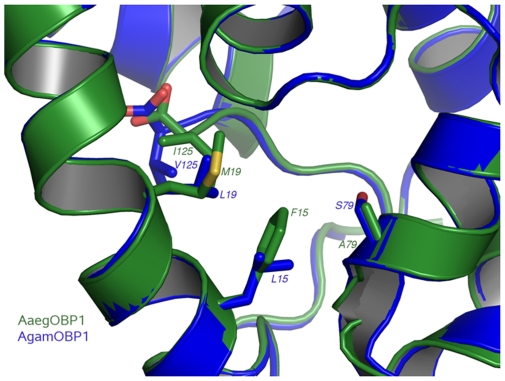
Previously, we isolated and cloned a major, female-enriched odorant-binding protein (OBP) from the yellow fever mosquito, AaegOBP1, which was later inadvertently renamed AaegOBP39. We prepared recombinant samples of AaegOBP1 by using an expression system that allows proper formation of disulfide bridges and generates functional OBPs, which are indistinguishable from native OBPs. We crystallized AaegOBP1 and determined its three-dimensional structure at 1.85 A resolution by molecular replacement based on the structure of the malaria mosquito OBP, AgamOBP1, the only mosquito OBP structure known to date.
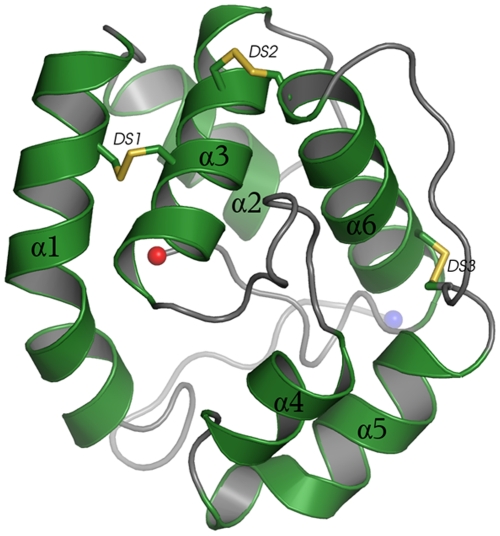
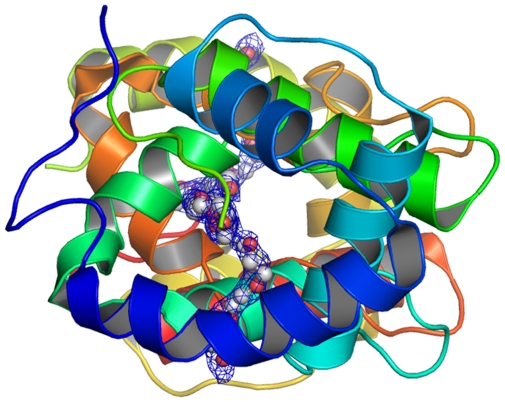
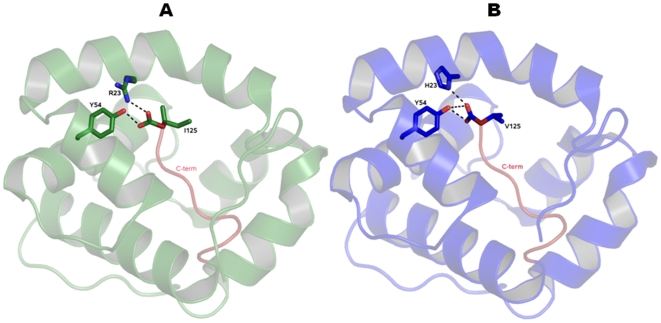
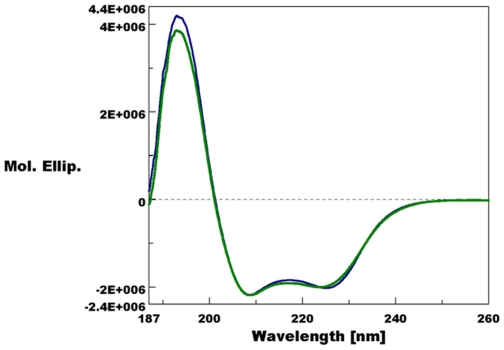
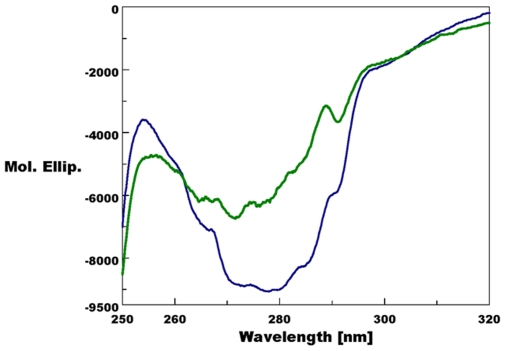
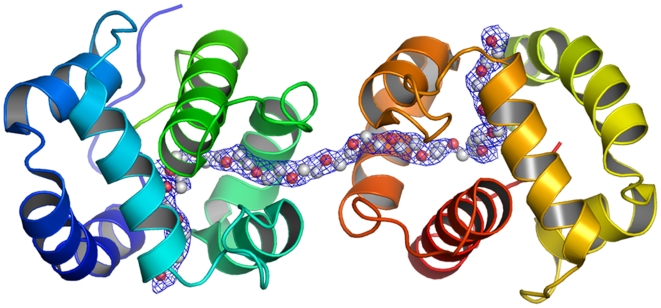
The structure of AaegOBP1 ( = AaegOBP39) shares the common fold of insect OBPs with six alpha-helices knitted by three disulfide bonds. A long molecule of polyethylene glycol (PEG) was built into the electron-density maps identified in a long tunnel formed by a crystallographic dimer of AaegOBP1. Circular dichroism analysis indicated that delipidated AaegOBP1 undergoes a pH-dependent conformational change, which may lead to release of odorant at low pH (as in the environment in the vicinity of odorant receptors). A C-terminal loop covers the binding cavity and this "lid" may be opened by disruption of an array of acid-labile hydrogen bonds thus explaining reduced or no binding affinity at low pH.
黄热病蚊子,埃及伊蚊,是引起黄热病病毒的主要媒介,主要在非洲的热带地区和南美洲的部分地区,以及人类登革热病毒,每年在热带和亚热带地区感染 1 亿人。更好地了解嗅觉蛋白的结构生物学可能为开发环保型蚊子引诱剂和驱避剂铺平道路,这最终可能有助于减少蚊子叮咬和疾病传播。
以前,我们从黄热病蚊子中分离并克隆了一种主要的、雌性富集的气味结合蛋白(OBP),AaegOBP1,后来它被无意中重新命名为 AaegOBP39。我们使用一种表达系统来制备重组 AaegOBP1 样本,该系统允许正确形成二硫键并产生功能 OBP,与天然 OBP 无法区分。我们对 AaegOBP1 进行了结晶,并根据疟蚊 OBP(AgamOBP1)的结构,利用分子替换法在 1.85 A 的分辨率下确定了其三维结构,这是迄今为止已知的唯一蚊子 OBP 结构。
AaegOBP1(=AaegOBP39)的结构与昆虫 OBP 的共同折叠具有六个由三个二硫键编织而成的α-螺旋。一条长的聚乙二醇(PEG)分子被构建到由 AaegOBP1 的晶体二聚体形成的长隧道的电子密度图中。圆二色性分析表明,去脂 AaegOBP1 经历了 pH 依赖性构象变化,这可能导致在低 pH 值下(如在气味受体附近的环境中)释放气味。C 端环覆盖结合腔,“盖子”可能通过破坏一系列不稳定的氢键而打开,这解释了在低 pH 值下结合亲和力降低或不存在。