Department of Medicine, Harvard Medical School, Boston, Massachusetts, United States of America.
PLoS One. 2009 Nov 24;4(11):e7983. doi: 10.1371/journal.pone.0007983.
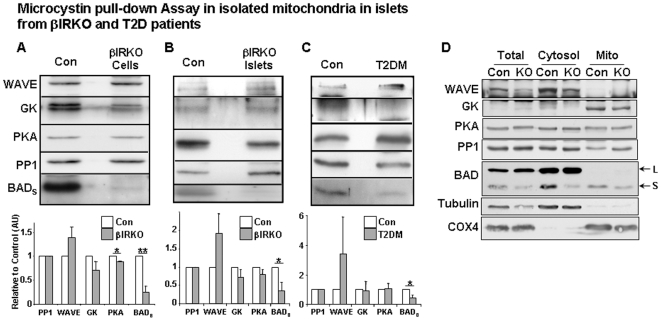
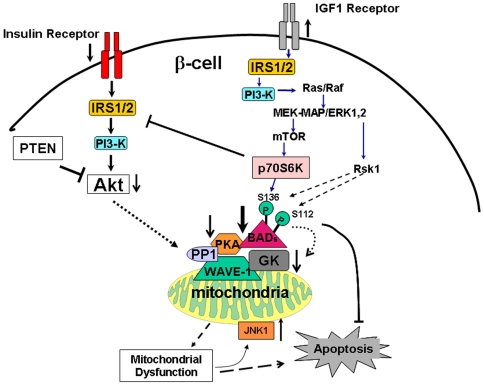
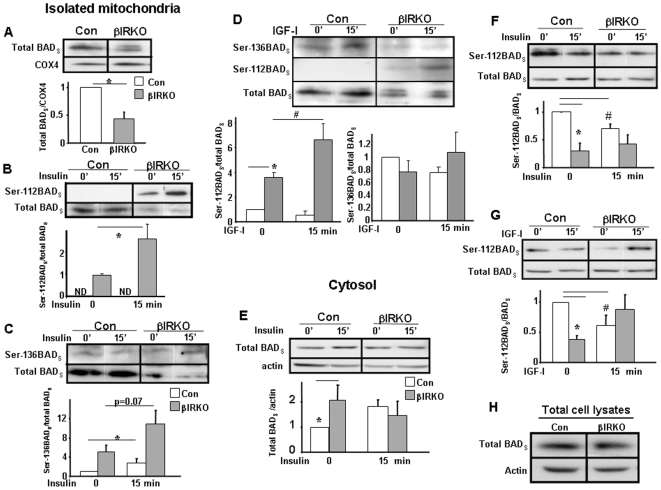
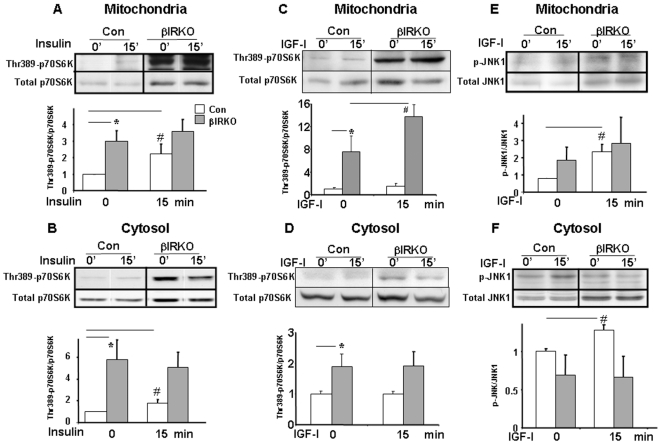
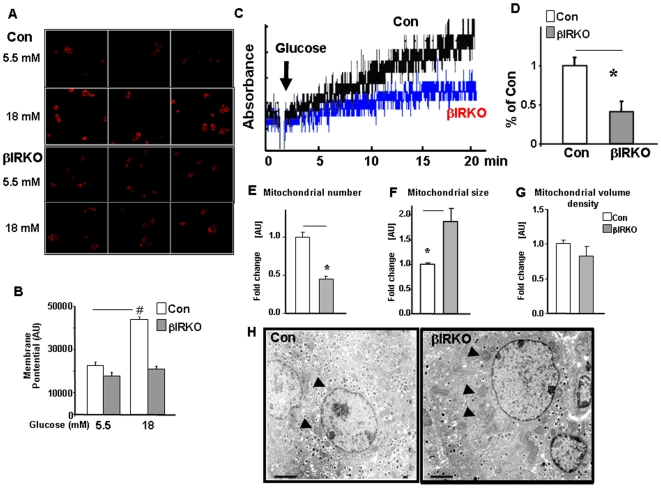
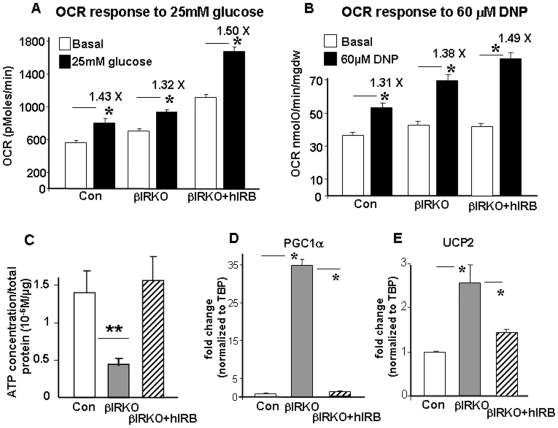
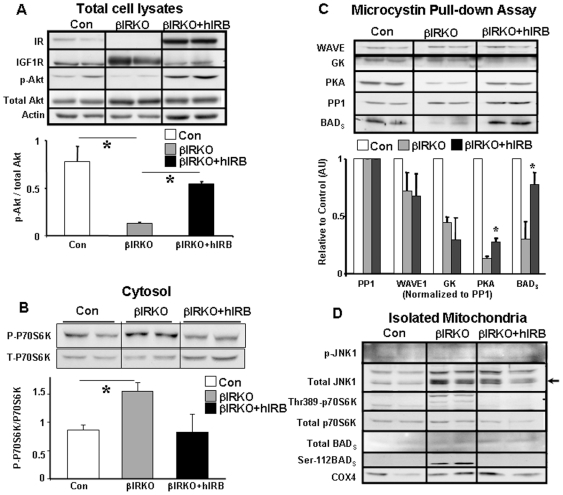
Insulin/IGF-I signaling regulates the metabolism of most mammalian tissues including pancreatic islets. To dissect the mechanisms linking insulin signaling with mitochondrial function, we first identified a mitochondria-tethering complex in beta-cells that included glucokinase (GK), and the pro-apoptotic protein, BAD(S). Mitochondria isolated from beta-cells derived from beta-cell specific insulin receptor knockout (betaIRKO) mice exhibited reduced BAD(S), GK and protein kinase A in the complex, and attenuated function. Similar alterations were evident in islets from patients with type 2 diabetes. Decreased mitochondrial GK activity in betaIRKOs could be explained, in part, by reduced expression and altered phosphorylation of BAD(S). The elevated phosphorylation of p70S6K and JNK1 was likely due to compensatory increase in IGF-1 receptor expression. Re-expression of insulin receptors in betaIRKO cells partially restored the stoichiometry of the complex and mitochondrial function. These data indicate that insulin signaling regulates mitochondrial function and have implications for beta-cell dysfunction in type 2 diabetes.
胰岛素/IGF-1 信号转导调节大多数哺乳动物组织的代谢,包括胰岛。为了剖析将胰岛素信号与线粒体功能联系起来的机制,我们首先在β细胞中鉴定出一种与线粒体相连的复合物,该复合物包括葡萄糖激酶(GK)和促凋亡蛋白 BAD(S)。从β细胞特异性胰岛素受体敲除(βIRKO)小鼠衍生的β细胞中分离的线粒体显示出复合物中 BAD(S)、GK 和蛋白激酶 A 的减少,以及功能减弱。2 型糖尿病患者的胰岛中也存在类似的改变。βIRKO 中减少的线粒体 GK 活性部分可以通过 BAD(S)表达减少和磷酸化改变来解释。p70S6K 和 JNK1 的磷酸化升高可能是由于 IGF-1 受体表达的代偿性增加。在βIRKO 细胞中重新表达胰岛素受体部分恢复了复合物和线粒体功能的化学计量。这些数据表明胰岛素信号调节线粒体功能,对 2 型糖尿病中β细胞功能障碍具有重要意义。