Department of Human Genetics, Leiden University Medical Center, Leiden, The Netherlands.
PLoS One. 2009 Nov 24;4(11):e7987. doi: 10.1371/journal.pone.0007987.
Mitochondrial succinate dehydrogenase (SDH) is a component of both the tricarboxylic acid cycle and the electron transport chain. Mutations of SDHD, the first protein of intermediary metabolism shown to be involved in tumorigenesis, lead to the human tumors paraganglioma (PGL) and pheochromocytoma (PC). SDHD is remarkable in showing an 'imprinted' tumor suppressor phenotype. Mutations of SDHD show a very high penetrance in man and we postulated that knockout of Sdhd would lead to the development of PGL/PC, probably in aged mice.
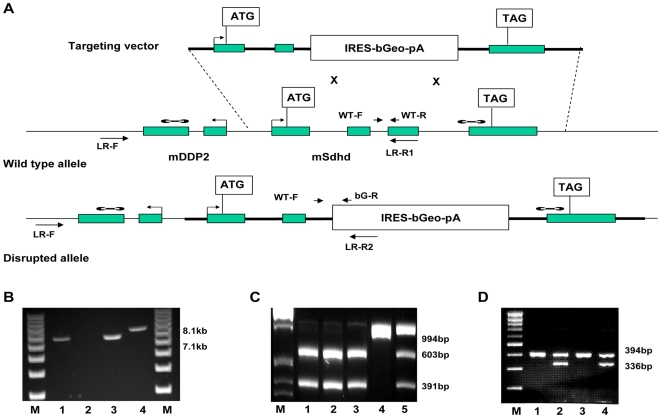
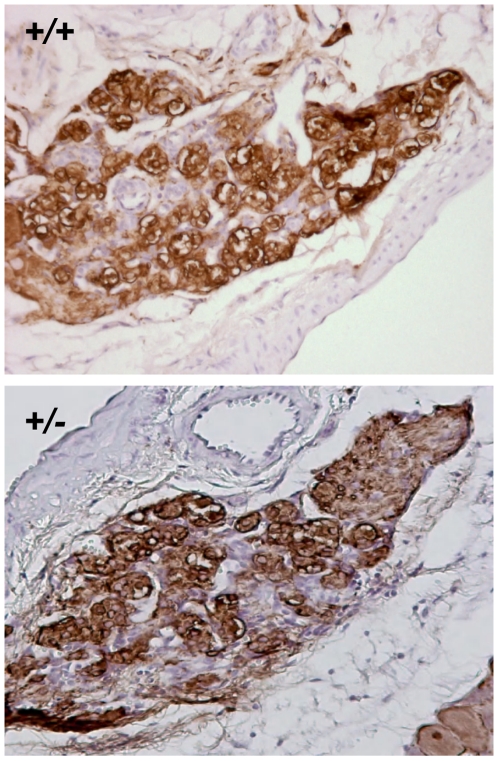
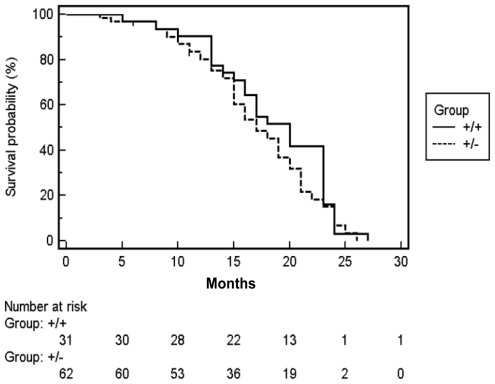
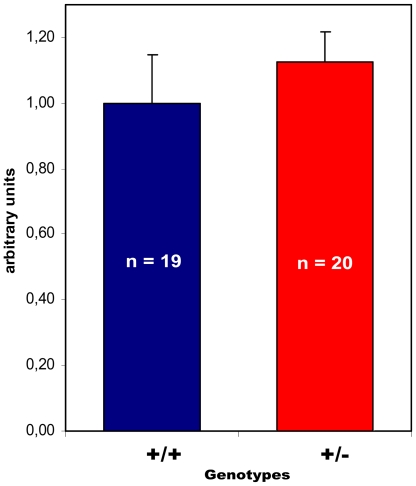
METHODOLOGY/PRINCIPAL FINDINGS: We generated a conventional knockout of Sdhd in the mouse, removing the entire third exon. We also crossed this mouse with a knockout of H19, a postulated imprinted modifier gene of Sdhd tumorigenesis, to evaluate if loss of these genes together would lead to the initiation or enhancement of tumor development. Homozygous knockout of Sdhd results in embryonic lethality. No paraganglioma or other tumor development was seen in Sdhd KO mice followed for their entire lifespan, in sharp contrast to the highly penetrant phenotype in humans. Heterozygous Sdhd KO mice did not show hyperplasia of paraganglioma-related tissues such as the carotid body or of the adrenal medulla, or any genotype-related pathology, with similar body and organ weights to wildtype mice. A cohort of Sdhd/H19 KO mice developed several cases of profound cardiac hypertrophy, but showed no evidence of PGL/PC.
Knockout of Sdhd in the mouse does not result in a disease phenotype. H19 may not be an initiator of PGL/PC tumorigenesis.
线粒体琥珀酸脱氢酶(SDH)是三羧酸循环和电子传递链的组成部分。中间代谢物中第一个被证明与肿瘤发生有关的蛋白 SDHD 的突变导致人类肿瘤副神经节瘤(PGL)和嗜铬细胞瘤(PC)。SDHD 的显著特点是表现出“印迹”肿瘤抑制表型。SDHD 的突变在人类中具有非常高的外显率,我们推测 Sdhd 的敲除会导致 PGL/PC 的发生,可能在老年小鼠中。
方法/主要发现:我们在小鼠中生成了 Sdhd 的常规敲除,去除了整个第三外显子。我们还将这种小鼠与 H19 的敲除杂交,H19 是 Sdhd 肿瘤发生的假定印迹修饰基因,以评估这两个基因的缺失是否会导致肿瘤的起始或增强。Sdhd 基因的纯合敲除导致胚胎致死。在整个寿命期内,Sdhd KO 小鼠没有发生 PGL 或其他肿瘤的发展,这与人类中高度外显的表型形成鲜明对比。杂合 Sdhd KO 小鼠没有表现出与颈动脉体或肾上腺髓质等副神经节相关组织的增生,也没有任何与基因型相关的病理学改变,其体重和器官重量与野生型小鼠相似。一组 Sdhd/H19 KO 小鼠发生了几例严重的心肌肥厚,但没有 PGL/PC 的证据。
在小鼠中敲除 Sdhd 不会导致疾病表型。H19 可能不是 PGL/PC 肿瘤发生的启动子。