Language Technologies Institute, School of Computer Science, Carnegie Mellon University, 5000 Forbes Avenue, Pittsburgh, PA 15213, USA.
BMC Genomics. 2009 Dec 3;10 Suppl 3(Suppl 3):S30. doi: 10.1186/1471-2164-10-S3-S30.
Human immunodeficiency virus-1 (HIV-1) has a minimal genome of only 9 genes, which encode 15 proteins. HIV-1 thus depends on the human host for virtually every aspect of its life cycle. The universal language of communication in biological systems, including between pathogen and host, is via signal transduction pathways. The fundamental units of these pathways are protein protein interactions. Understanding the functional significance of HIV-1, human interactions requires viewing them in the context of human signal transduction pathways.
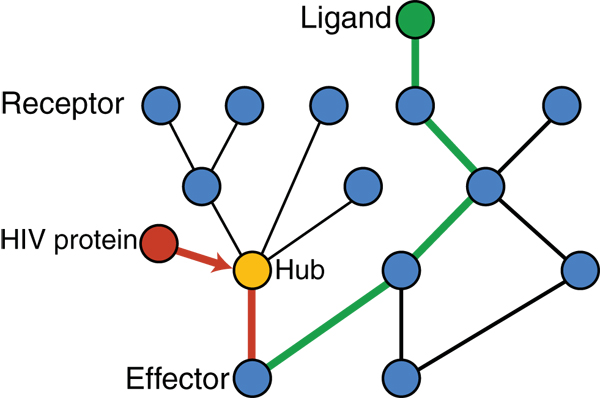
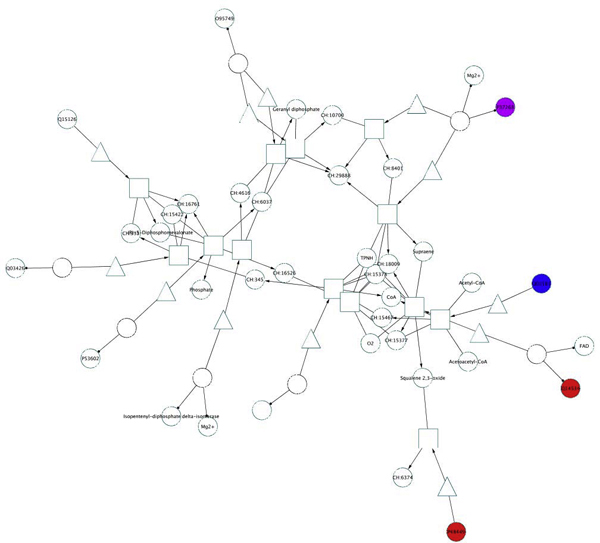
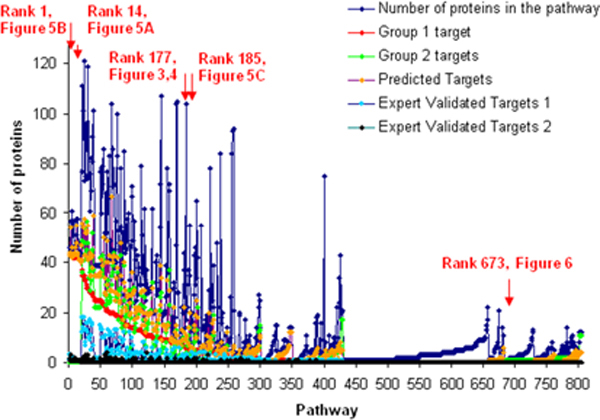
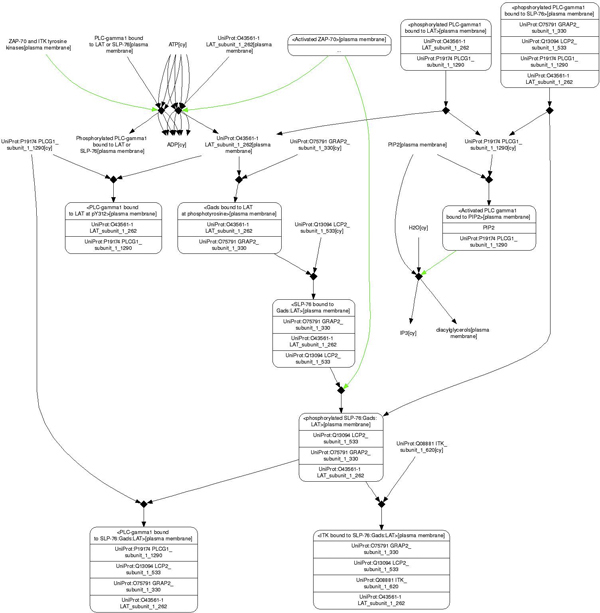
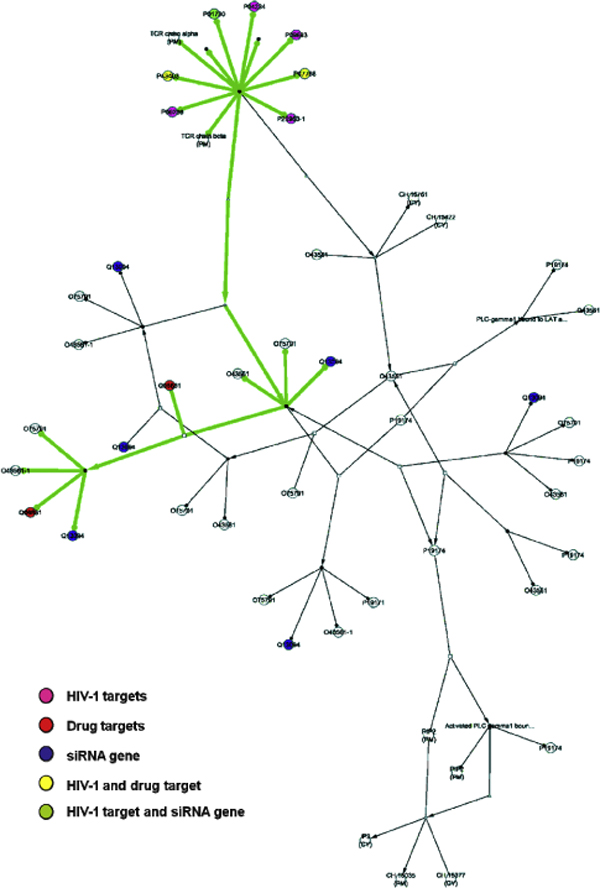
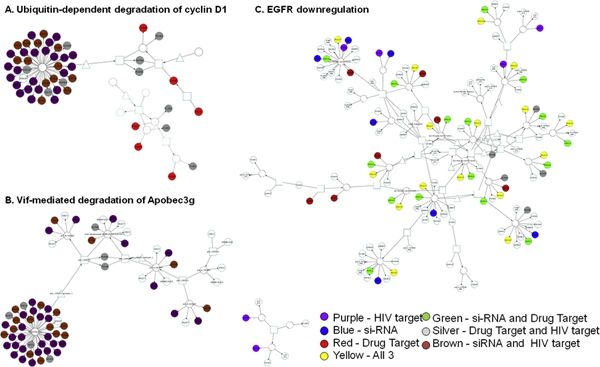
Integration of HIV-1, human interactions with known signal transduction pathways indicates that the majority of known human pathways have the potential to be effected through at least one interaction with an HIV-1 protein at some point during the HIV-1 life cycle. For each pathway, we define simple paths between start points (i.e. no edges going into a node) and end points (i.e. no edges leaving a node). We then identify the paths that pass through human proteins that interact with HIV-1 proteins. We supplement the combined map with functional information, including which proteins are known drug targets and which proteins contribute significantly to HIV-1 function as revealed by recent siRNA screens. We find that there are often alternative paths starting and ending at the same proteins but circumventing the intermediate steps disrupted by HIV-1.
A mapping of HIV-1, human interactions to human signal transduction pathways is presented here to link interactions with functions. We proposed a new way of analyzing the virus host interactions by identifying HIV-1 targets as well as alternative paths bypassing the HIV-1 targeted steps. This approach yields numerous experimentally testable hypotheses on how HIV-1 function may be compromised and human cellular function restored by pharmacological approaches. We are making the full set of pathway analysis results available to the community.
人类免疫缺陷病毒 1 型(HIV-1)的基因组仅有 9 个基因,编码 15 种蛋白。因此,HIV-1 在其生命周期的几乎所有方面都依赖于人类宿主。包括病原体和宿主之间在内的生物系统中的通用交流语言是信号转导途径。这些途径的基本单元是蛋白质-蛋白质相互作用。要理解 HIV-1、人类相互作用的功能意义,就需要将它们置于人类信号转导途径的背景下进行观察。
将 HIV-1 与已知信号转导途径的相互作用整合表明,在 HIV-1 生命周期的某个阶段,大多数已知的人类途径都有可能通过与 HIV-1 蛋白的至少一次相互作用来产生影响。对于每条途径,我们定义了从起始点(即没有进入节点的边)到终点(即没有离开节点的边)之间的简单路径。然后,我们确定了经过与人 HIV-1 蛋白相互作用的人类蛋白的路径。我们用功能信息补充了组合图谱,包括哪些蛋白是已知的药物靶点,以及哪些蛋白在最近的 siRNA 筛选中揭示了对 HIV-1 功能的重要贡献。我们发现,通常有替代路径从相同的蛋白质开始和结束,但绕过了被 HIV-1 破坏的中间步骤。
这里提出了一种将 HIV-1 与人类信号转导途径的相互作用映射到人类信号转导途径的方法,将相互作用与功能联系起来。我们提出了一种新的方法来分析病毒-宿主相互作用,即确定 HIV-1 的靶点以及绕过 HIV-1 靶向步骤的替代路径。这种方法产生了许多可通过实验检验的假设,即 HIV-1 功能如何受到干扰以及通过药理学方法恢复人类细胞功能。我们正在向社区提供完整的通路分析结果。