Department of Human Oncology, University of Wisconsin School of Public Health and Medicine, Madison, WI, USA.
J Neurooncol. 2010 Jan;96(1):71-83. doi: 10.1007/s11060-009-0062-7. Epub 2009 Dec 4.
This recommendation applies to adults with newly diagnosed brain metastases; however, the recommendation below does not apply to the exquisitely chemosensitive tumors, such as germinomas metastatic to the brain.
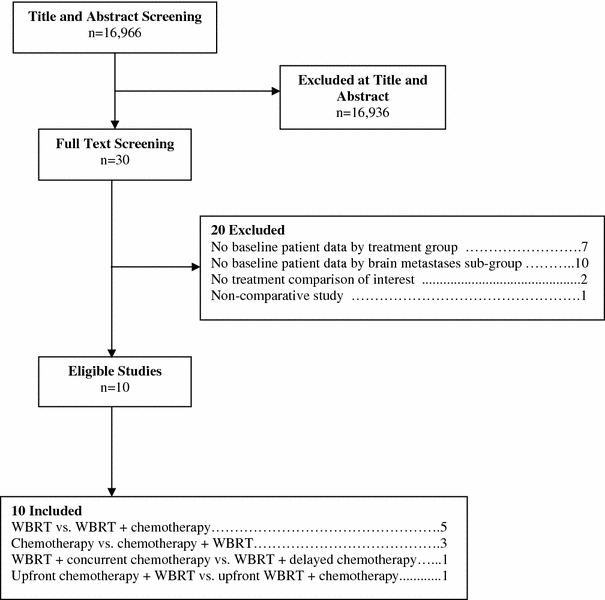
Should patients with brain metastases receive chemotherapy in addition to whole brain radiotherapy (WBRT)? Level 1 Routine use of chemotherapy following WBRT for brain metastases has not been shown to increase survival and is not recommended. Four class I studies examined the role of carboplatin, chloroethylnitrosoureas, tegafur and temozolomide, and all resulted in no survival benefit. Two caveats are provided in order to allow the treating physician to individualize decision-making: First, the majority of the data are limited to non small cell lung (NSCLC) and breast cancer; therefore, in other tumor histologies, the possibility of clinical benefit cannot be absolutely ruled out. Second, the addition of chemotherapy to WBRT improved response rates in some, but not all trials; response rate was not the primary endpoint in most of these trials and end-point assessment was non-centralized, non-blinded, and post-hoc. Enrollment in chemotherapy-related clinical trials is encouraged.
本推荐适用于新诊断为脑转移的成年人;然而,以下推荐不适用于高度敏感的化疗肿瘤,如生殖细胞瘤脑转移。
脑转移患者是否应在全脑放疗(WBRT)的基础上加用化疗?在脑转移的 WBRT 基础上加用常规化疗并未显示可提高生存率,因此不推荐。四项 I 级研究探讨了卡铂、氯乙基亚硝脲类、替加氟和替莫唑胺的作用,所有研究均未带来生存获益。为了让治疗医生能够个体化决策,提出了两点注意事项:首先,大多数数据仅限于非小细胞肺癌(NSCLC)和乳腺癌;因此,在其他肿瘤组织学中,不能绝对排除临床获益的可能性。其次,在一些但不是所有试验中,化疗联合 WBRT 提高了缓解率;在这些试验中,缓解率不是主要终点,并且终点评估是非中心化的、非盲的和事后的。鼓励患者参加化疗相关的临床试验。