Department of Medical Oncology, Dana-Farber Cancer Institute, Boston, MA, USA.
Oncogene. 2010 Mar 18;29(11):1588-97. doi: 10.1038/onc.2009.452. Epub 2009 Dec 7.
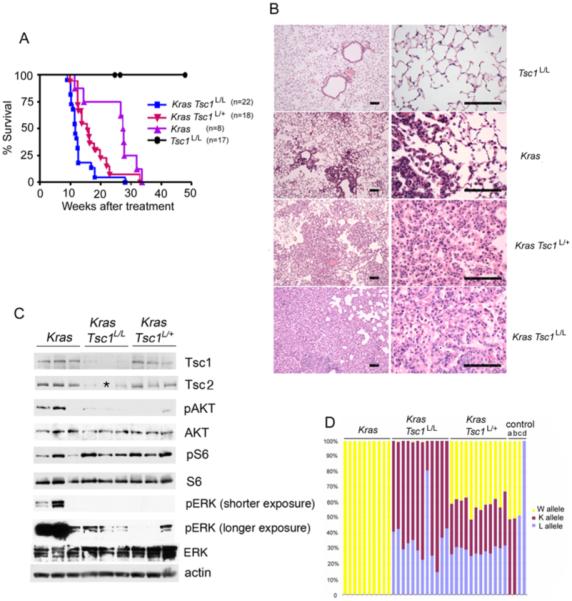
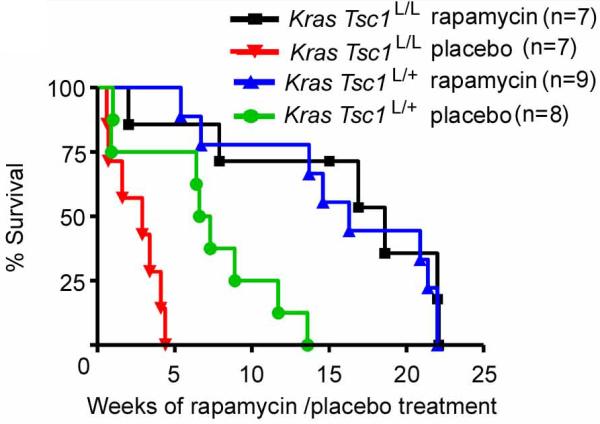
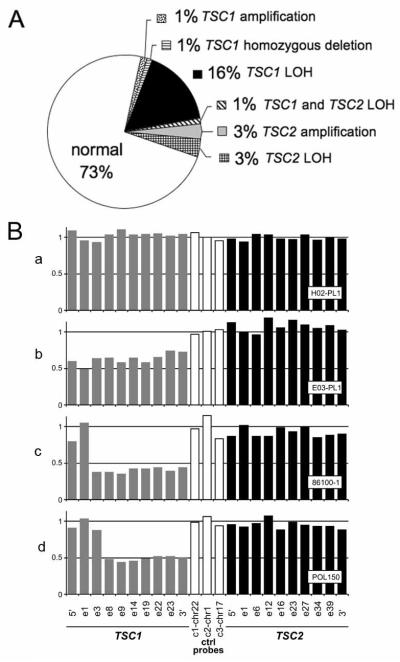
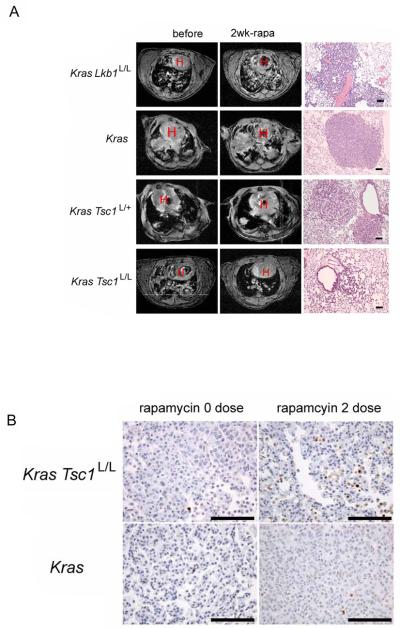
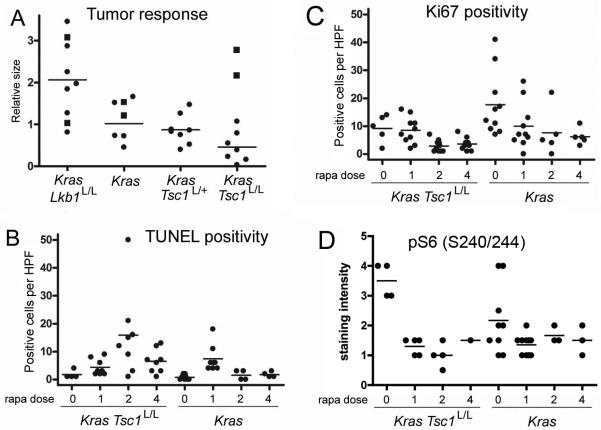
Germline TSC1 or TSC2 mutations cause tuberous sclerosis complex (TSC), a hamartoma syndrome with lung involvement. To explore the potential interaction between TSC1 and KRAS activation in lung cancer, mice in which Tsc1 loss and Kras(G12D) expression occur in a small fraction of lung epithelial cells were generated. Mice with a combined Tsc1-Kras(G12D) mutation had dramatically reduced tumor latency (median survival: 11.6-15.6 weeks) in comparison with Kras(G12D) alone mutant mice (median survival: 27.5 weeks). Tsc1-Kras(G12D) tumors showed consistent activation of mTOR (mammalian target of rapamycin)C1 and responded to treatment with rapamycin, leading to significantly improved survival, whereas rapamycin had minor effects on cancers in Kras(G12D) alone mice. Loss of heterozygosity for TSC1 or TSC2 was found in 22% of 86 human lung cancer specimens. However, none of the 80 lung cancer lines studied showed evidence of the lack of expression of either TSC1 or TSC2 or a signaling pattern corresponding to complete loss. These data indicate that Tsc1 loss synergizes with the Kras mutation to enhance lung tumorigenesis in the mouse, but that this is a rare event in human lung cancer. Rapamycin may have unique benefit for patients with lung cancer, for whom the TSC1/TSC2 function is limited.
胚系 TSC1 或 TSC2 突变导致结节性硬化症复合征(TSC),这是一种伴有肺部受累的错构瘤综合征。为了探索 TSC1 与 KRAS 激活在肺癌中的潜在相互作用,我们生成了一小部分肺上皮细胞中同时缺失 Tsc1 和表达 Kras(G12D)的小鼠。与单独的 Kras(G12D)突变小鼠相比,同时具有 Tsc1-Kras(G12D)突变的小鼠肿瘤潜伏期显著缩短(中位生存时间:11.6-15.6 周)。Tsc1-Kras(G12D)肿瘤持续激活 mTOR(雷帕霉素靶蛋白)C1,并对雷帕霉素治疗有反应,导致生存显著改善,而雷帕霉素对单独 Kras(G12D)小鼠的肿瘤仅有轻微作用。在 86 个人类肺癌标本中发现 22%存在 TSC1 或 TSC2 的杂合性缺失。然而,在研究的 80 个人类肺癌细胞系中,没有一个存在 TSC1 或 TSC2 表达缺失或相应的信号模式完全缺失的证据。这些数据表明,Tsc1 的缺失与 Kras 突变协同作用,增强了小鼠肺部肿瘤的发生,但这在人类肺癌中是一种罕见事件。雷帕霉素可能对 TSC1/TSC2 功能有限的肺癌患者具有独特的益处。