
青少年牙周炎中多形核白细胞甲酰肽受体缺陷
Defective polymorphonuclear leukocyte formyl peptide receptor(s) in juvenile periodontitis.
作者信息
Perez H D, Kelly E, Elfman F, Armitage G, Winkler J
机构信息
Rosalind Russell Arthritis Research Laboratory, Department of Medicine, University of California, San Francisco 94143.
出版信息
J Clin Invest. 1991 Mar;87(3):971-6. doi: 10.1172/JCI115105.
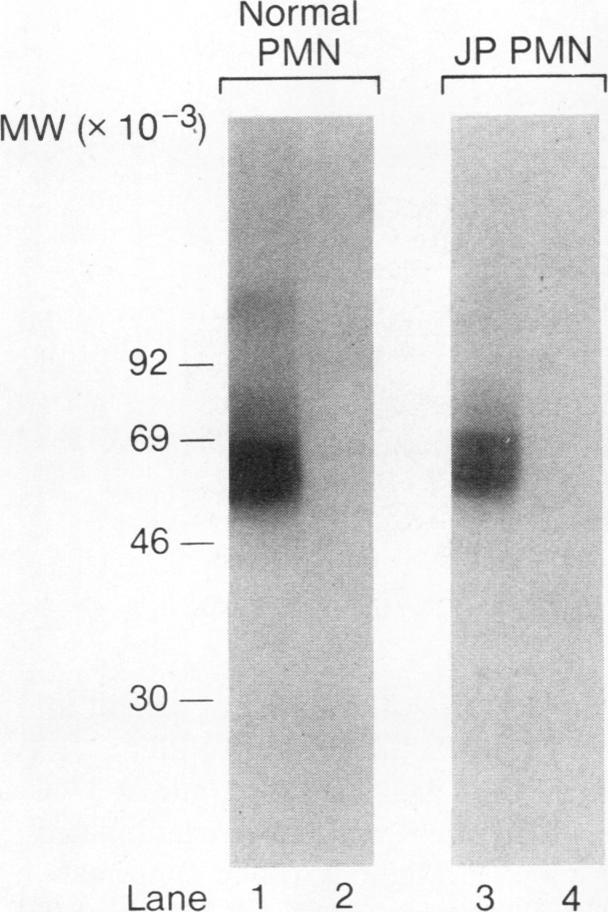
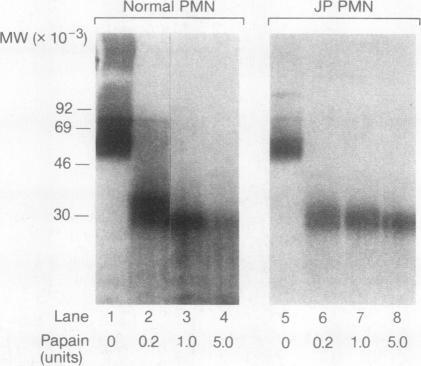
Juvenile periodontitis (JP) is a disease characterized by severe gingival infections. PMN from some JP patients exhibit abnormal chemotactic responsiveness when challenged with the synthetic formyl peptide, FMLP. While investigating PMN function in JP, we found a patient in whom abnormal PMN chemotactic responses to FMLP were associated with a defective population of PMN formyl peptide receptor(s) (FPR). JP PMN failed to respond chemotactically when challenged with FMLP, but exhibited normal chemotactic responses upon exposure to purified human C5a. Furthermore, JP PMN were capable of degranulating and generating superoxide anion radicals as well as normal PMN upon exposure to FMLP. Binding studies demonstrated that JP PMN had a diminution in the number of high-affinity FPR. Studies in which FPR was radiolabeled by chemical cross-linking demonstrated that JP PMN FPR exhibited the same molecular weight and N-linked glycosylation as normal PMN FPR. JP PMN FPR, however, was more resistant to papain cleavage than normal PMN FPR. Autoradiograms obtained from 2D-PAGE of normal and JP PMN FPR demonstrated decreased amounts of FPR isoforms in JP PMN.
青少年牙周炎(JP)是一种以严重牙龈感染为特征的疾病。一些JP患者的中性粒细胞(PMN)在受到合成的甲酰肽FMLP刺激时,表现出异常的趋化反应性。在研究JP患者的PMN功能时,我们发现一名患者中,PMN对FMLP的异常趋化反应与PMN甲酰肽受体(FPR)的缺陷群体有关。当受到FMLP刺激时,JP患者的PMN没有趋化反应,但在暴露于纯化的人C5a时表现出正常的趋化反应。此外,JP患者的PMN在暴露于FMLP时能够脱颗粒并产生超氧阴离子自由基,与正常PMN一样。结合研究表明,JP患者的PMN高亲和力FPR数量减少。通过化学交联对FPR进行放射性标记的研究表明,JP患者的PMN FPR与正常PMN FPR具有相同的分子量和N-连接糖基化。然而,JP患者的PMN FPR比正常PMN FPR对木瓜蛋白酶切割更具抗性。从正常和JP患者的PMN FPR的二维聚丙烯酰胺凝胶电泳获得的放射自显影片显示,JP患者的PMN中FPR同工型的量减少。


 Zotero 插件