Department of Surgery, University of Louisville School of Medicine, Louisville, KY 40292, USA.
Virology. 2010 Feb 20;397(2):337-45. doi: 10.1016/j.virol.2009.11.021. Epub 2009 Dec 8.
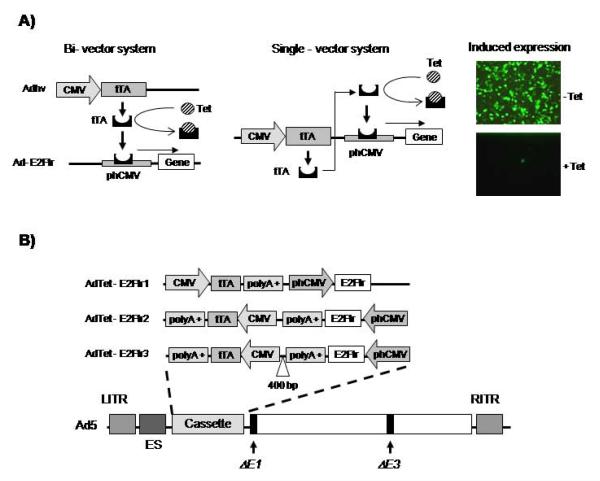
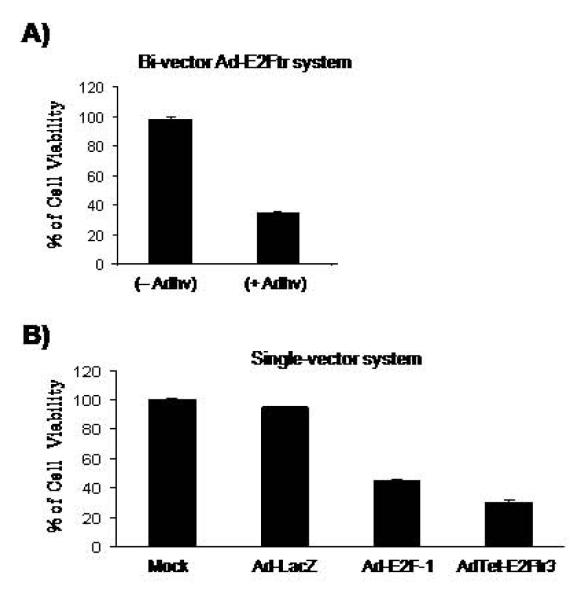
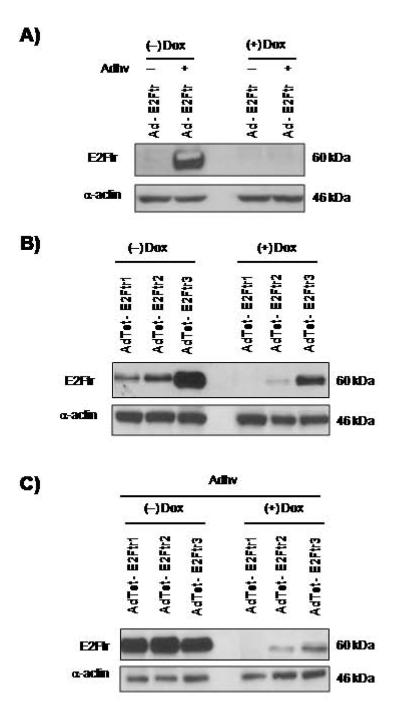
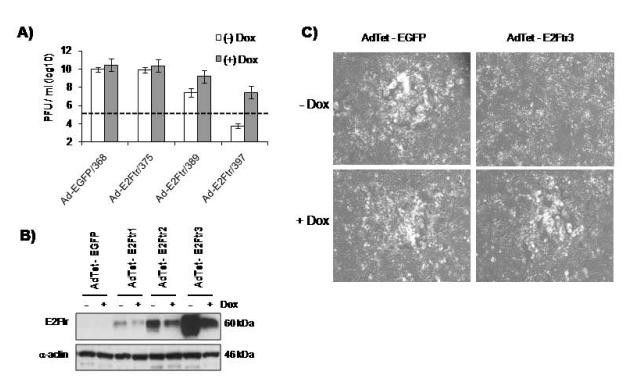
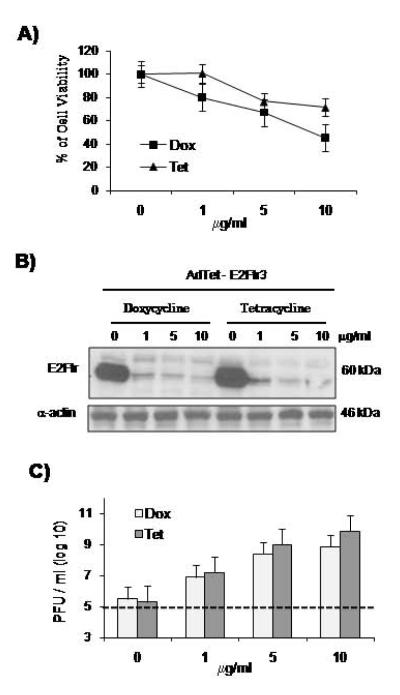
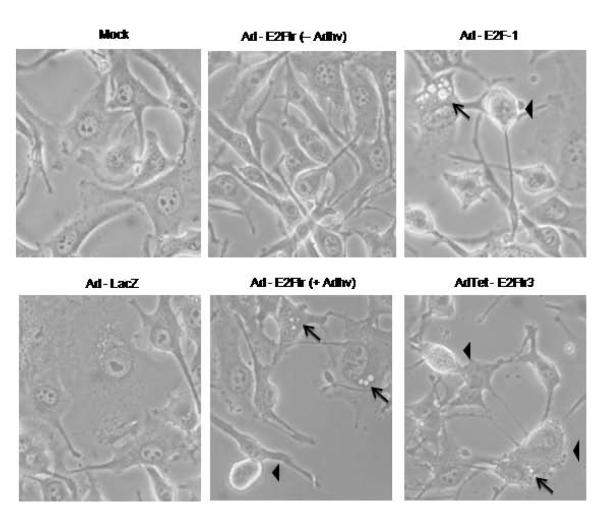
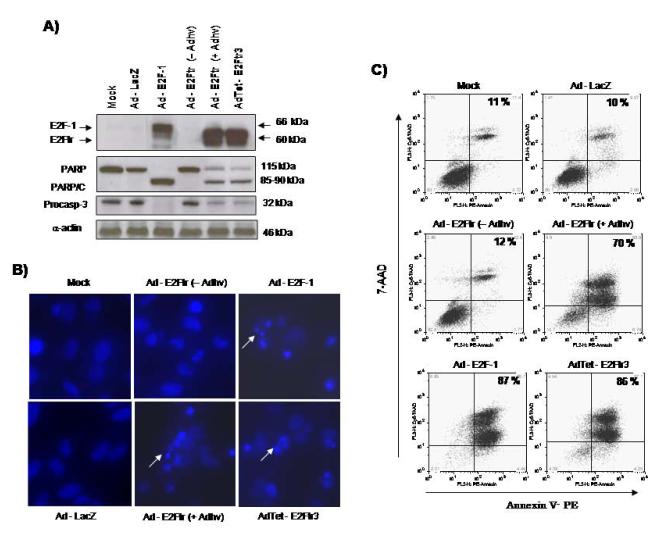
Adenoviral vectors are highly efficient at transferring genes into cells and are broadly used in cancer gene therapy. However, many therapeutic genes are toxic to vector host cells and thus inhibit vector production. The truncated form of E2F-1 (E2Ftr), which lacks the transactivation domain, can significantly induce cancer cell apoptosis, but is also toxic to HEK-293 cells and inhibits adenovirus replication. To overcome this, we have developed binary- and single-vector systems with a modified tetracycline-off inducible promoter to control E2Ftr expression. We compared several vectors and found that the structure of expression cassettes in vectors significantly affects E2Ftr expression. One construct expresses high levels of inducible E2Ftr and efficiently causes apoptotic cancer cell death by activation of caspase-3. The approach developed in this study may be applied in other viral vectors for encoding therapeutic genes that are toxic to their host cells and/or inhibit vector propagation.
腺病毒载体在将基因转入细胞方面非常高效,广泛应用于癌症基因治疗。然而,许多治疗基因对载体宿主细胞有毒性,从而抑制载体的产生。E2F-1 的截断形式(E2Ftr)缺乏转录激活域,可以显著诱导癌细胞凋亡,但对 HEK-293 细胞也有毒性,并抑制腺病毒复制。为了克服这一问题,我们开发了带有改良四环素关闭诱导启动子的双载体和单载体系统来控制 E2Ftr 的表达。我们比较了几种载体,发现载体中表达盒的结构显著影响 E2Ftr 的表达。一种构建体表达高水平的诱导型 E2Ftr,并通过激活 caspase-3 有效地导致凋亡的癌细胞死亡。本研究中开发的方法可应用于其他病毒载体,用于编码对宿主细胞有毒性和/或抑制载体传播的治疗基因。