Curriculum in Neurobiology, UNC School of Medicine, Chapel Hill, NC 27599, USA.
Alcohol. 2009 Dec;43(8):603-18. doi: 10.1016/j.alcohol.2009.10.006.
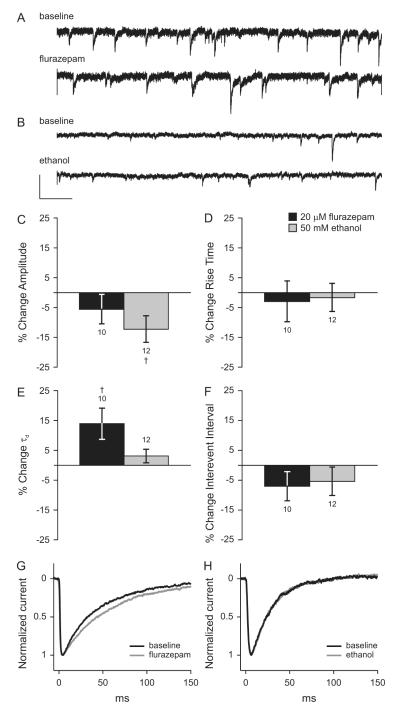
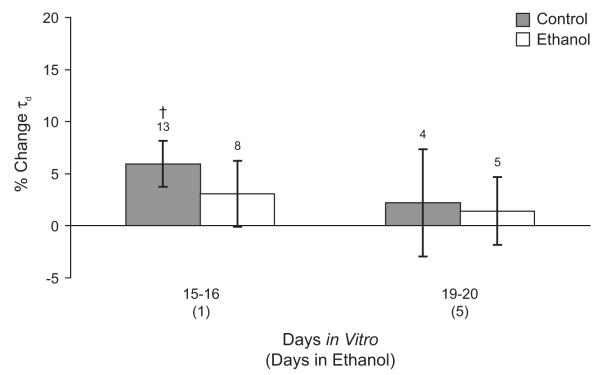
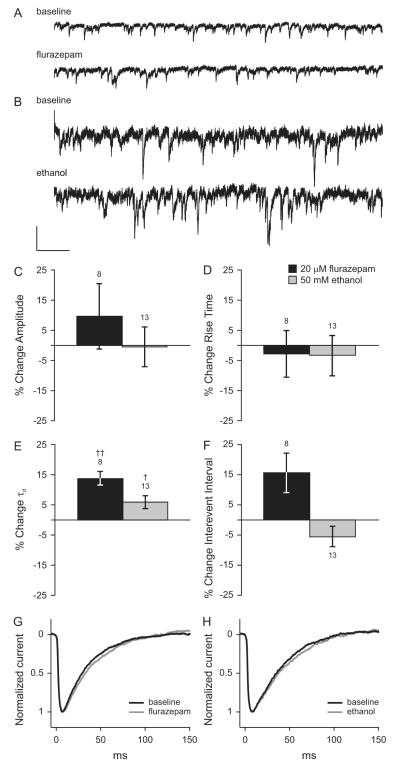
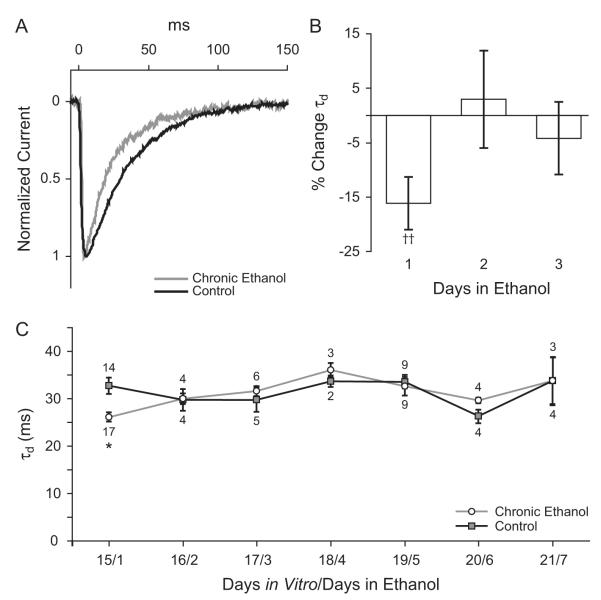
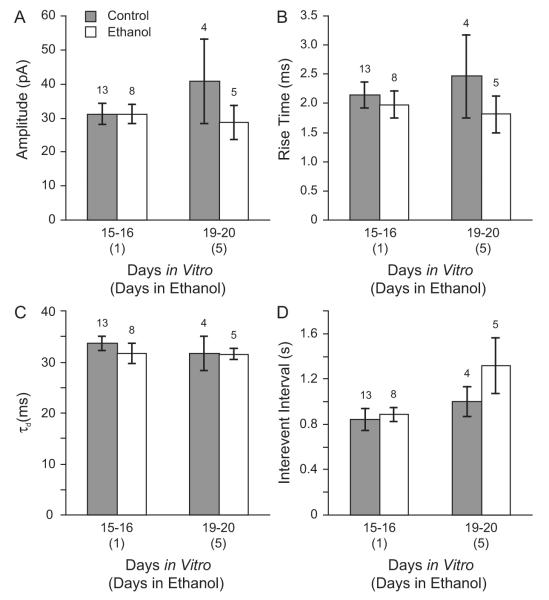
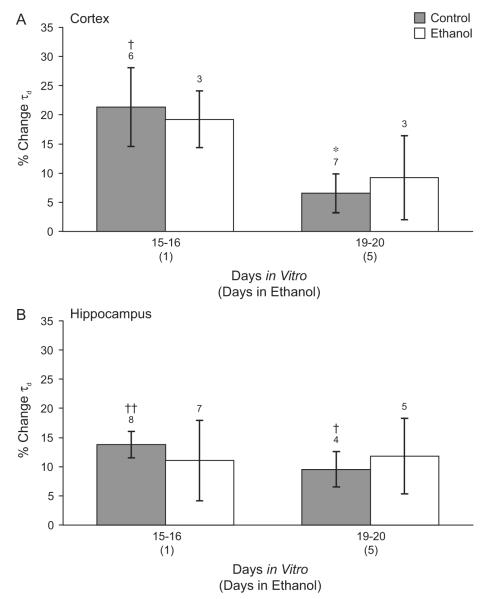
Decades after ethanol was first described as a gamma-aminobutyric acid (GABA) mimetic, the precise mechanisms that produce the acute effects of ethanol and the physiological adaptations that underlie ethanol tolerance and dependence remain unclear. Although a substantial body of evidence suggests that ethanol acts on GABAergic neurotransmission to enhance inhibition in the central nervous system, the precise mechanisms underlying the physiological effects of both acute and chronic ethanol exposure are still under investigation. We have used in vitro ethanol exposure followed by recording of miniature inhibitory postsynaptic currents (mIPSCs) to determine whether acute or chronic ethanol exposure directly alters synaptic GABA(A) receptor (GABA(A)R) function or GABA release in cultured cortical and hippocampal neurons. Acute ethanol exposure slightly increased the duration of mIPSCs in hippocampal neurons but did not alter mIPSC kinetics in cortical neurons. Acute ethanol exposure did not change mIPSC frequency in either hippocampal or cortical neurons. One day of chronic ethanol exposure produced a transient decrease in mIPSC duration in cortical neurons but did not alter mIPSC kinetics in hippocampal neurons. Chronic ethanol exposure did not change mIPSC frequency in either hippocampal or cortical neurons. Chronic ethanol exposure also did not produce substantial cross-tolerance to a benzodiazepine in either hippocampal or cortical neurons. The results suggest that ethanol exposure in vitro has limited effects on synaptic GABA(A)R function and action potential-independent GABA release in cultured neurons and that ethanol exposure in cultured cortical and hippocampal neurons may not reproduce all the effects that occur in vivo and in acute brain slices.
几十年来,乙醇被首次描述为一种γ-氨基丁酸(GABA)类似物,但其产生急性作用的精确机制和构成乙醇耐受和依赖的生理适应仍不清楚。尽管大量证据表明,乙醇作用于 GABA 能神经传递以增强中枢神经系统的抑制,但乙醇急性和慢性暴露的生理效应的确切机制仍在研究中。我们采用体外乙醇暴露,随后记录微小抑制性突触后电流(mIPSCs),以确定急性或慢性乙醇暴露是否直接改变培养皮质和海马神经元中的突触 GABA(A)受体(GABA(A)R)功能或 GABA 释放。急性乙醇暴露略微增加海马神经元中 mIPSCs 的持续时间,但不改变皮质神经元中 mIPSC 的动力学。急性乙醇暴露既不改变海马神经元也不改变皮质神经元中 mIPSC 的频率。慢性乙醇暴露 1 天会使皮质神经元中 mIPSC 的持续时间短暂减少,但不会改变海马神经元中的 mIPSC 动力学。慢性乙醇暴露也不会改变海马或皮质神经元中 mIPSC 的频率。慢性乙醇暴露也不会在海马或皮质神经元中产生对苯二氮䓬的实质性交叉耐受。结果表明,体外乙醇暴露对培养神经元中突触 GABA(A)R 功能和动作电位非依赖性 GABA 释放的影响有限,并且培养的皮质和海马神经元中的乙醇暴露可能无法复制体内和急性脑切片中发生的所有作用。