Department of Neuroscience, Columbia University New York City, NY, USA ; Department of Anesthesiology, Columbia University New York City, NY, USA.
Department of Anesthesiology, Columbia University New York City, NY, USA ; Department of Pharmacology, Columbia University New York City, NY, USA.
Front Integr Neurosci. 2013 Dec 11;7:89. doi: 10.3389/fnint.2013.00089. eCollection 2013.
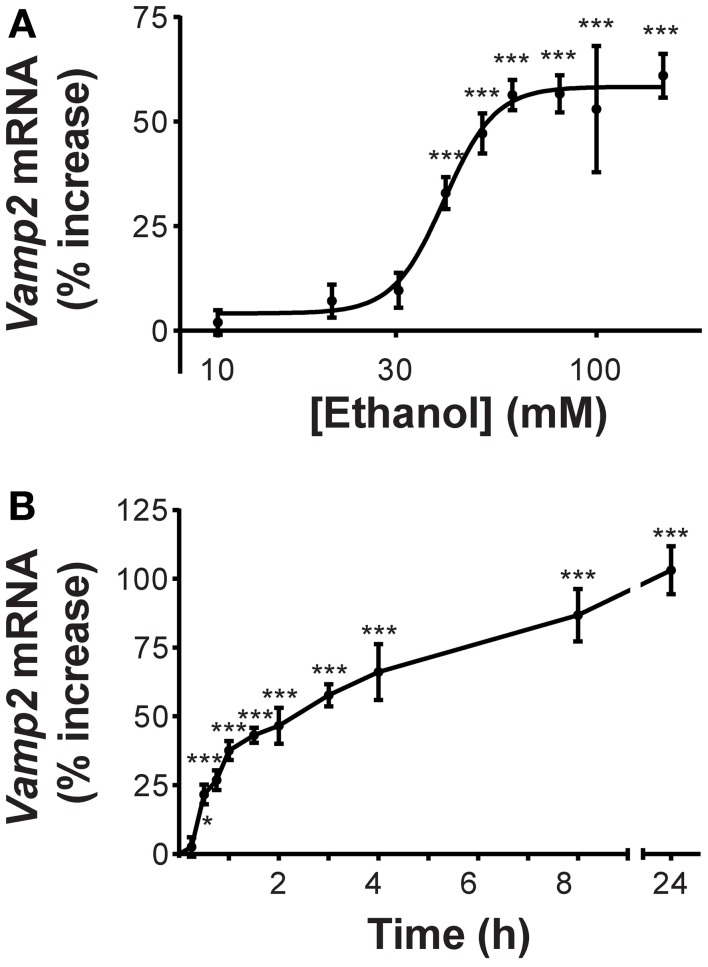
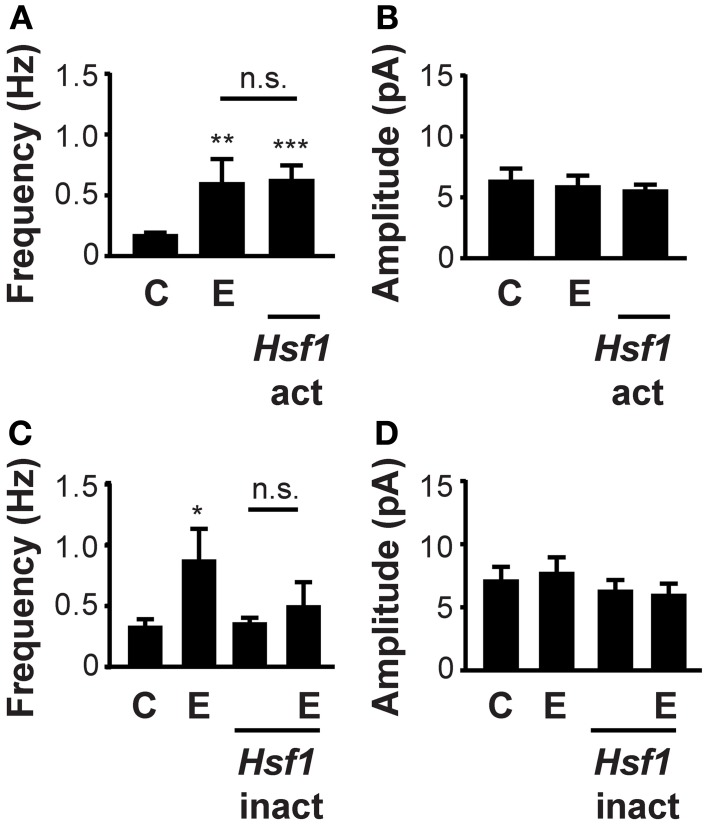
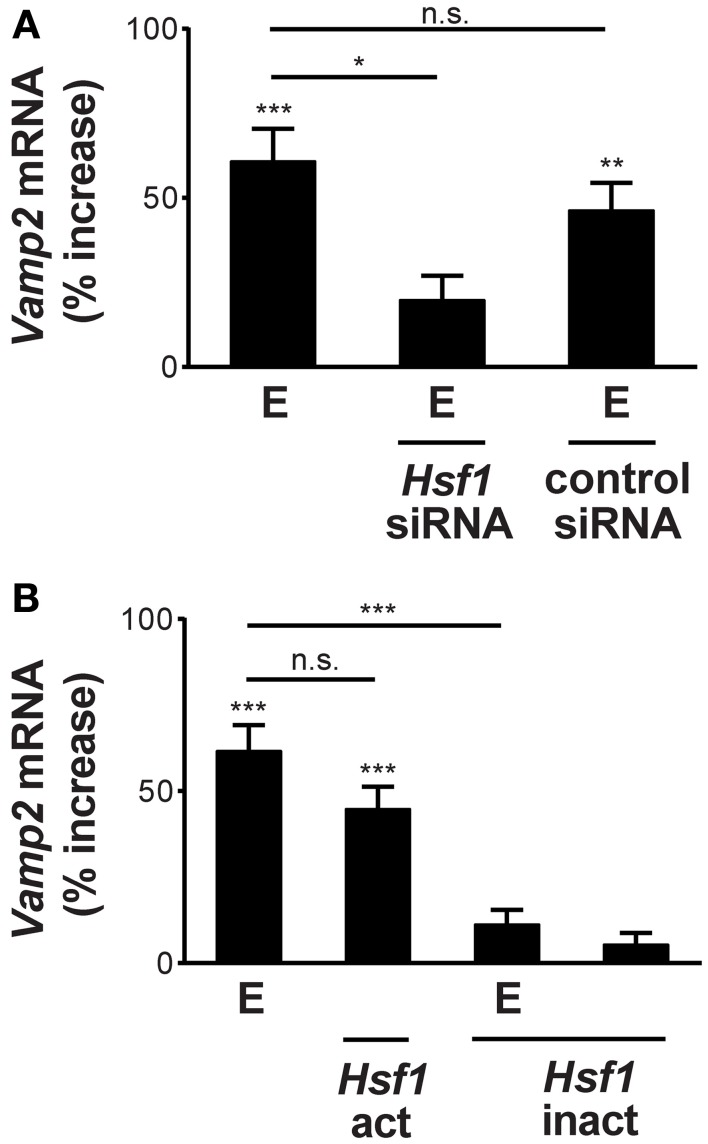
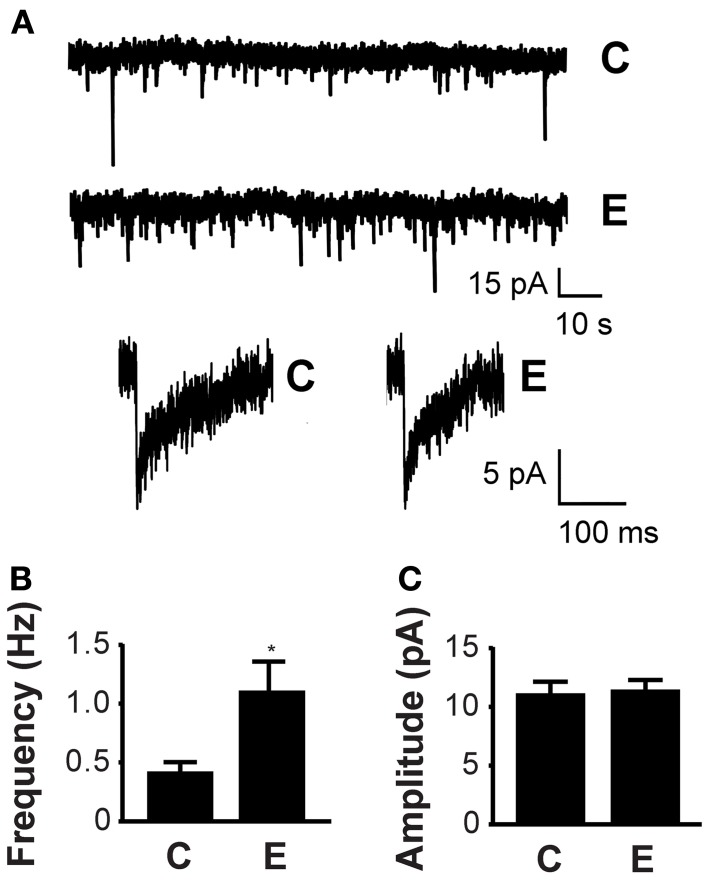
Many central synapses are highly sensitive to alcohol, and it is now accepted that short-term alterations in synaptic function may lead to longer-term changes in circuit function. The regulation of postsynaptic receptors by alcohol has been well studied, but the mechanisms underlying the effects of alcohol on the presynaptic terminal are relatively unexplored. To identify a pathway by which alcohol regulates neurotransmitter release, we recently investigated the mechanism by which ethanol induces Vamp2, but not Vamp1, in mouse primary cortical cultures. These two genes encode isoforms of synaptobrevin, a vesicular soluble N-ethylmaleimide-sensitive factor attachment protein receptor (SNARE) protein required for synaptic vesicle fusion. We found that alcohol activates the transcription factor heat shock factor 1 (HSF1) to induce Vamp2 expression, while Vamp1 mRNA levels remain unaffected. As the Vamp2 gene encodes a SNARE protein, we then investigated whether ethanol exposure and HSF1 transcriptional activity alter neurotransmitter release using electrophysiology. We found that alcohol increased the frequency of γ-aminobutyric acid (GABA)-mediated miniature IPSCs via HSF1, but had no effect on mEPSCs. Overall, these data indicate that alcohol induces HSF1 transcriptional activity to trigger a specific coordinated adaptation in GABAergic presynaptic terminals. This mechanism could explain some of the changes in synaptic function that occur soon after alcohol exposure, and may underlie some of the more enduring effects of chronic alcohol intake on local circuit function.
许多中枢突触对酒精高度敏感,现在人们普遍认为,突触功能的短期改变可能导致电路功能的长期改变。酒精对突触后受体的调节已经得到了很好的研究,但酒精对突触前末梢影响的机制相对来说还没有被探索过。为了确定酒精调节神经递质释放的途径,我们最近研究了乙醇在小鼠原代皮质培养物中诱导 Vamp2 而不是 Vamp1 的机制。这两个基因编码突触融合所需的囊泡可溶性 N-乙基马来酰亚胺敏感因子附着蛋白受体(SNARE)蛋白 synaptobrevin 的同工型。我们发现,酒精激活转录因子热休克因子 1(HSF1)诱导 Vamp2 表达,而 Vamp1 mRNA 水平不受影响。由于 Vamp2 基因编码 SNARE 蛋白,我们随后使用电生理学研究了乙醇暴露和 HSF1 转录活性是否改变神经递质释放。我们发现,酒精通过 HSF1 增加了γ-氨基丁酸(GABA)介导的微小 IPSC 的频率,但对 mEPSC 没有影响。总的来说,这些数据表明,酒精诱导 HSF1 转录活性,触发 GABA 能突触前末梢的特定协调适应。这种机制可以解释酒精暴露后不久发生的一些突触功能变化,并可能是慢性酒精摄入对局部回路功能的一些更持久影响的基础。