Laboratory of Cell Biology, Department of Bioinformatics, Faculty of Engineering, Soka University, Hachioji, Tokyo, Japan.
PLoS One. 2009 Dec 11;4(12):e8262. doi: 10.1371/journal.pone.0008262.
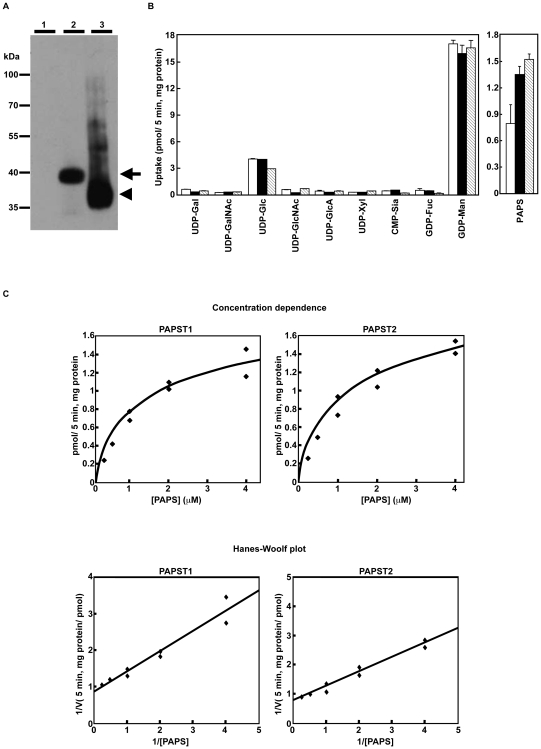
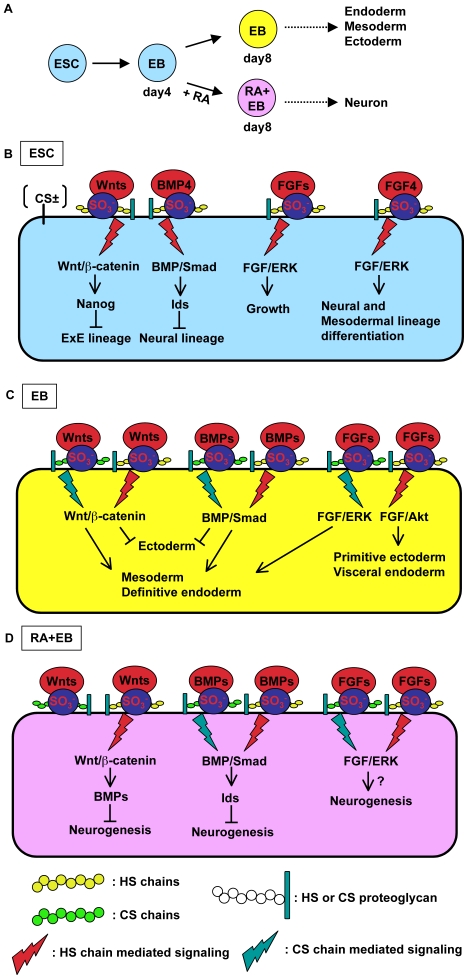
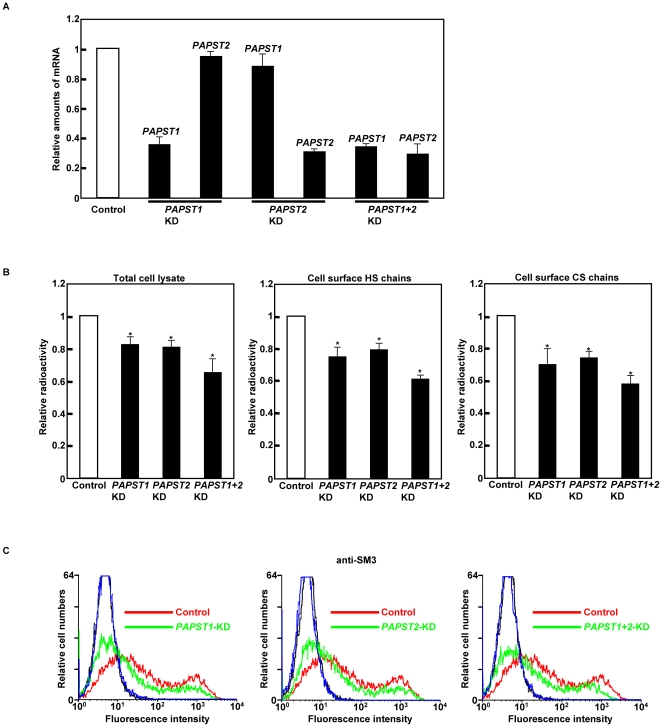
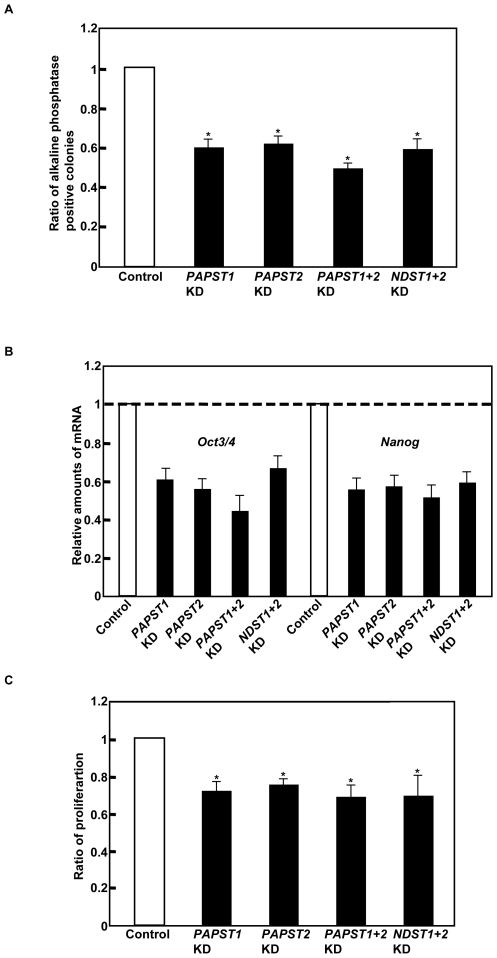
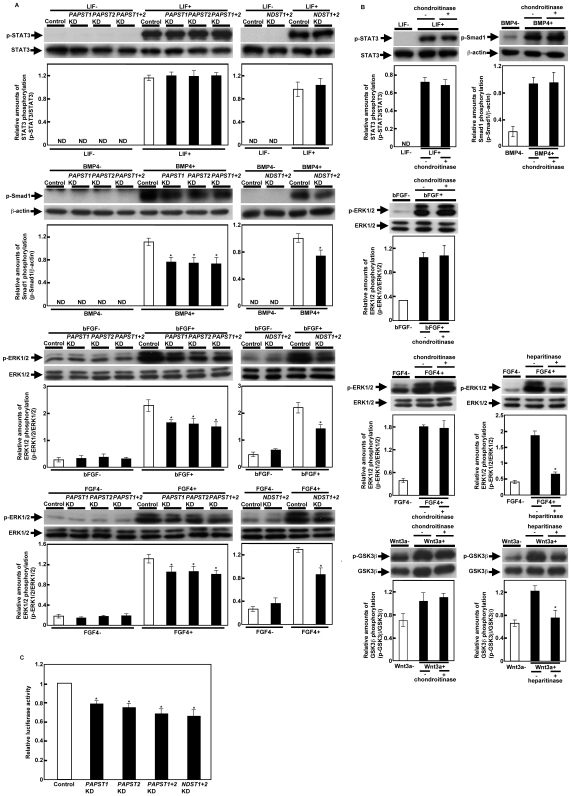
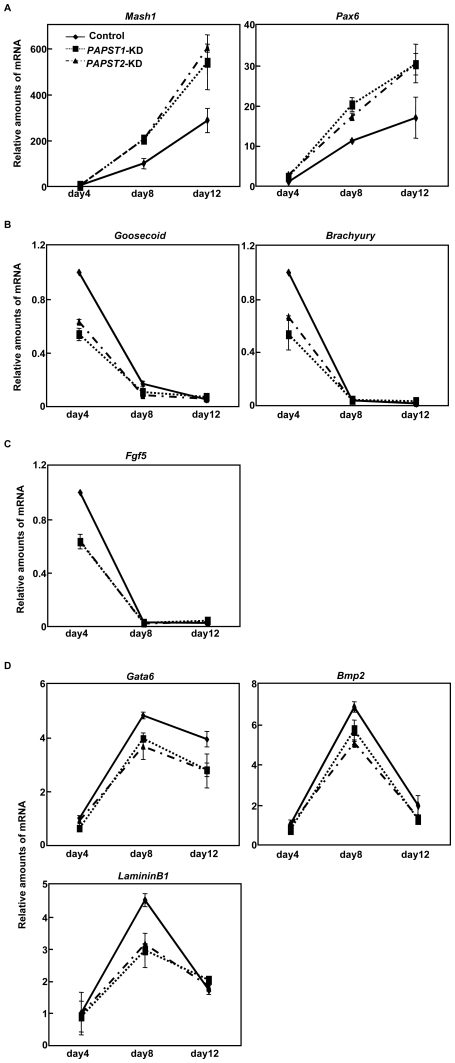
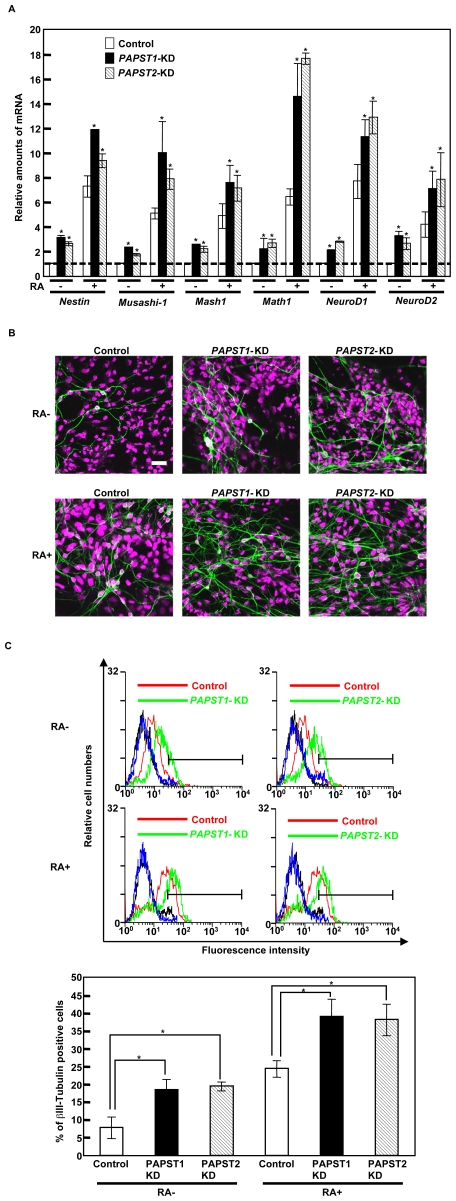
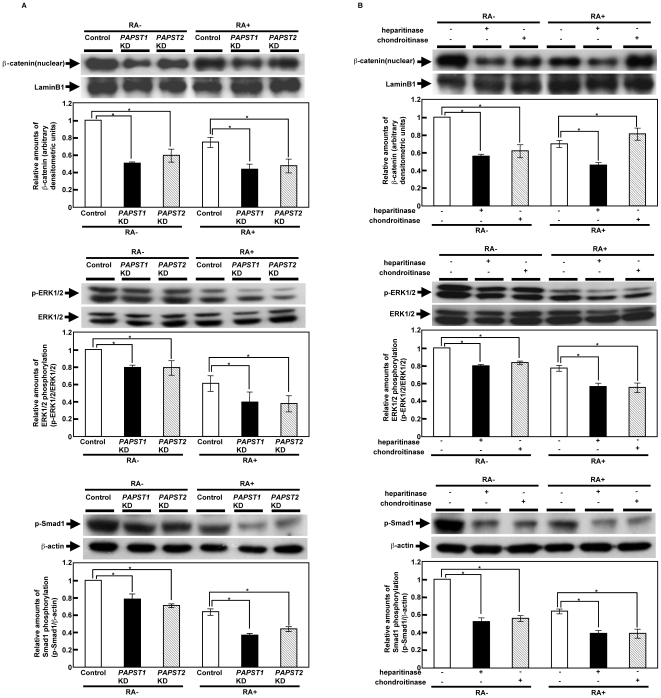
Recently, we have identified two 3'-phosphoadenosine 5'-phosphosulfate (PAPS) transporters (PAPST1 and PAPST2), which contribute to PAPS transport into the Golgi, in both human and Drosophila. Mutation and RNA interference (RNAi) of the Drosophila PAPST have shown the importance of PAPST-dependent sulfation of carbohydrates and proteins during development. However, the functional roles of PAPST in mammals are largely unknown. Here, we investigated whether PAPST-dependent sulfation is involved in regulating signaling pathways required for the maintenance of mouse embryonic stem cells (mESCs), differentiation into the three germ layers, and neurogenesis. By using a yeast expression system, mouse PAPST1 and PAPST2 proteins were shown to have PAPS transport activity with an apparent K(m) value of 1.54 microM or 1.49 microM, respectively. RNAi-mediated knockdown of each PAPST induced the reduction of chondroitin sulfate (CS) chain sulfation as well as heparan sulfate (HS) chain sulfation, and inhibited mESC self-renewal due to defects in several signaling pathways. However, we suggest that these effects were due to reduced HS, not CS, chain sulfation, because knockdown of mouse N-deacetylase/N-sulfotransferase, which catalyzes the first step of HS sulfation, in mESCs gave similar results to those observed in PAPST-knockdown mESCs, but depletion of CS chains did not. On the other hand, during embryoid body formation, PAPST-knockdown mESCs exhibited abnormal differentiation, in particular neurogenesis was promoted, presumably due to the observed defects in BMP, FGF and Wnt signaling. The latter were reduced as a result of the reduction in both HS and CS chain sulfation. We propose that PAPST-dependent sulfation of HS or CS chains, which is regulated developmentally, regulates the extrinsic signaling required for the maintenance and normal differentiation of mESCs.
最近,我们在人和果蝇中鉴定出两种 3'-磷酸腺苷 5'-磷酸硫酸(PAPS)转运体(PAPST1 和 PAPST2),它们有助于 PAPS 向高尔基体的转运。果蝇 PAPST 的突变和 RNA 干扰(RNAi)表明,PAPST 依赖性碳水化合物和蛋白质的硫酸化在发育过程中很重要。然而,PAPST 在哺乳动物中的功能作用在很大程度上尚不清楚。在这里,我们研究了 PAPST 依赖性硫酸化是否参与调节维持小鼠胚胎干细胞(mESC)、分化为三个胚层和神经发生所需的信号通路。通过使用酵母表达系统,显示鼠 PAPST1 和 PAPST2 蛋白具有 PAPS 转运活性,表观 K(m) 值分别为 1.54μM 或 1.49μM。每种 PAPST 的 RNAi 介导的敲低都会导致软骨素硫酸盐(CS)链硫酸化以及肝素硫酸盐(HS)链硫酸化减少,并由于几种信号通路的缺陷而抑制 mESC 的自我更新。然而,我们认为这些影响是由于 HS 链硫酸化减少,而不是 CS 链硫酸化减少所致,因为在 mESCs 中敲低催化 HS 硫酸化第一步的鼠 N-脱乙酰基/N-磺基转移酶会产生与 PAPST 敲低 mESCs 观察到的相似结果,但 CS 链的耗竭则没有。另一方面,在胚状体形成过程中,PAPST 敲低的 mESC 表现出异常分化,特别是神经发生得到促进,这可能是由于观察到的 BMP、FGF 和 Wnt 信号的缺陷所致。由于 HS 和 CS 链硫酸化的减少,这些信号都减少了。我们提出,PAPST 依赖性 HS 或 CS 链硫酸化受发育调控,调节维持和 mESC 正常分化所需的外在信号。