Neafsey Patricia J, Anderson Elizabeth, Coleman Craig, Lin Carolyn A, M'lan Cyr E, Walsh Stephen
School of Nursing.
Patient Prefer Adherence. 2009 Nov 29;3:323-34. doi: 10.2147/ppa.s7906.
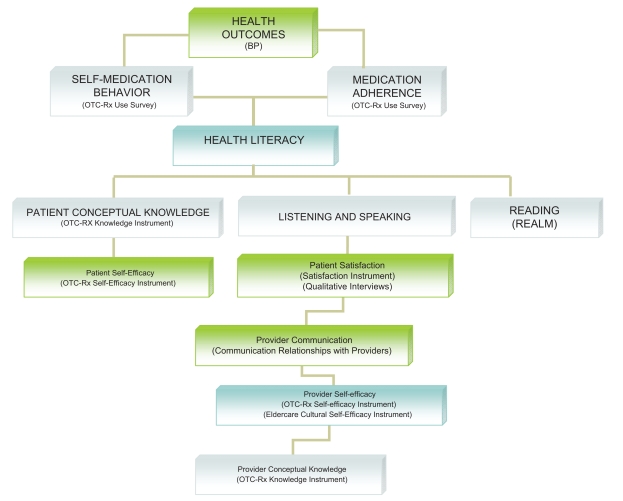
A randomized controlled efficacy trial targeting older adults with hypertension is providing a tailored education intervention with a Next Generation Personal Education Program (PEP-NG) in primary care practices in New England. Ten participating advanced practice registered nurses (APRNs) completed online knowledge and self-efficacy measures pre-onsite training and twice more after completing a continuing education program. Patient participants self-refer in response to study recruitment brochures and posters. Twenty-four participants from each APRN practice (total N = 240) are randomly assigned by the PEP-NG software to either control (data collection and four routine APRN visits) or tailored intervention (PEP-NG interface and four focused APRN visits) conditions. Patients access the PEP-NG interface via wireless tablet and use a stylus to answer demographic, knowledge, and self-efficacy questions as well as prescription and over-the-counter self-medication practice questions. The PEP-NG analyzes patient-reported information and delivers tailored educational content. Patients' outcome measures are self-reported antihypertensive medication adherence, blood pressure, knowledge and self-efficacy concerning potential adverse self-medication practices, adverse self-medication behavior "risk" score and satisfaction with the PEP-NG and APRN provider relationship. APRN outcome measures are knowledge and self-efficacy concerning adverse self-medication practices, self-efficacy for communicating with older adults and satisfaction with the PEP-NG. Time-motion and cost-benefit analyses will be conducted.
一项针对老年高血压患者的随机对照疗效试验正在新英格兰的初级医疗实践中,通过下一代个人教育计划(PEP-NG)提供量身定制的教育干预。十名参与的高级执业注册护士(APRN)在现场培训前完成了在线知识和自我效能测量,并在完成继续教育计划后又进行了两次测量。患者参与者根据研究招募手册和海报进行自我推荐。PEP-NG软件将每个APRN诊所的24名参与者(总共N = 240)随机分配到对照组(数据收集和四次常规APRN就诊)或量身定制的干预组(PEP-NG界面和四次针对性的APRN就诊)。患者通过无线平板电脑访问PEP-NG界面,并用手写笔回答人口统计学、知识、自我效能问题以及处方药和非处方药自我用药实践问题。PEP-NG分析患者报告的信息并提供量身定制的教育内容。患者的结果测量指标包括自我报告的抗高血压药物依从性、血压、关于潜在不良自我用药实践的知识和自我效能、不良自我用药行为“风险”评分以及对PEP-NG和APRN提供者关系的满意度。APRN的结果测量指标包括关于不良自我用药实践的知识和自我效能、与老年人沟通的自我效能以及对PEP-NG的满意度。将进行时间动作分析和成本效益分析。