Department of Molecular and Cellular Biochemistry, Ohio State University, Columbus, OH 43210, USA.
Oncogene. 2010 Mar 25;29(12):1787-97. doi: 10.1038/onc.2009.468. Epub 2009 Dec 21.
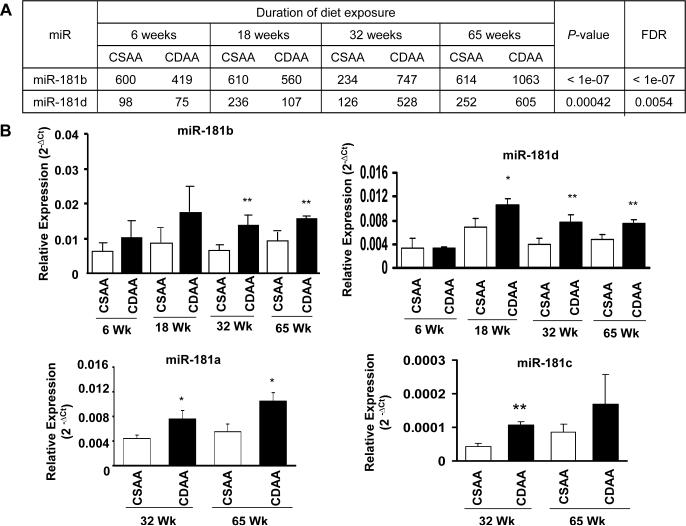
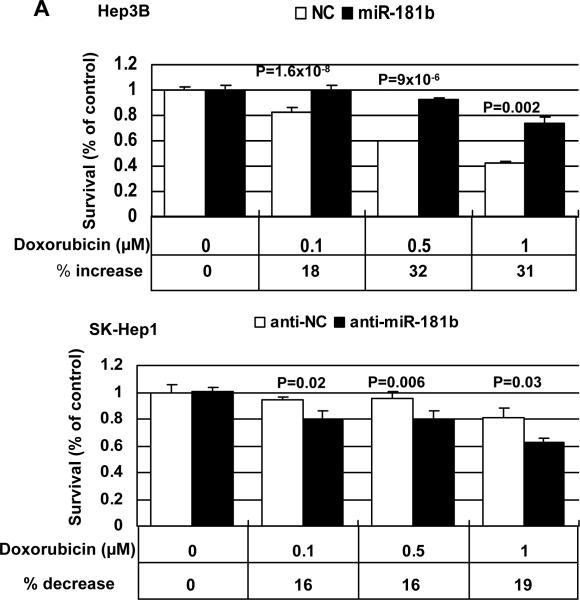
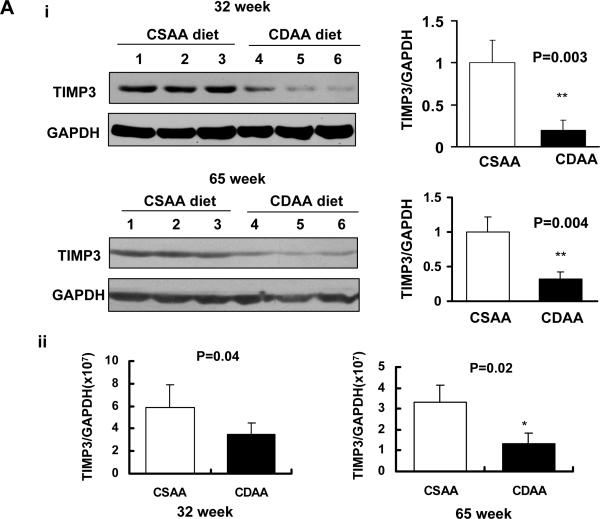
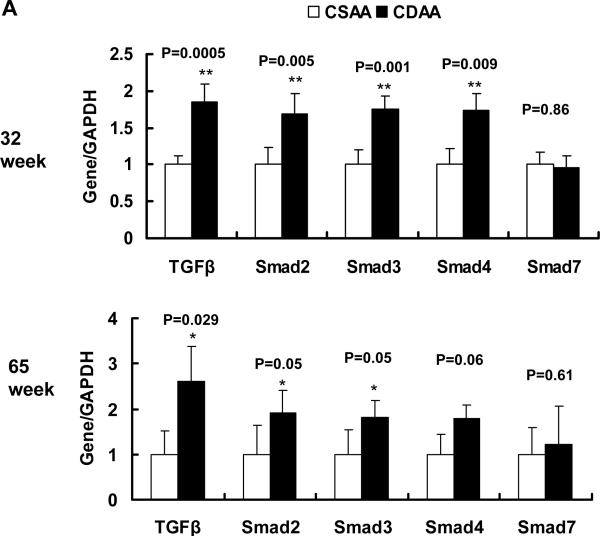
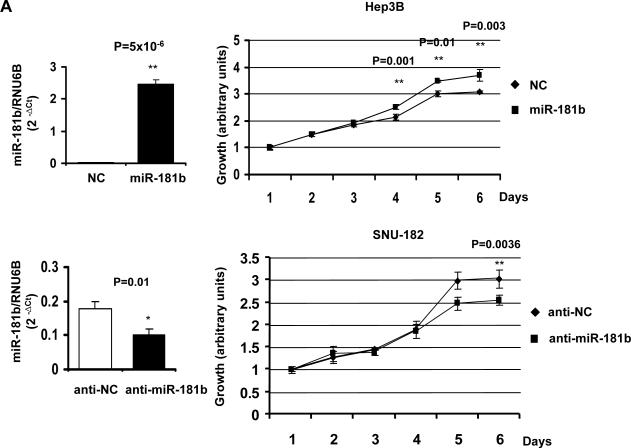
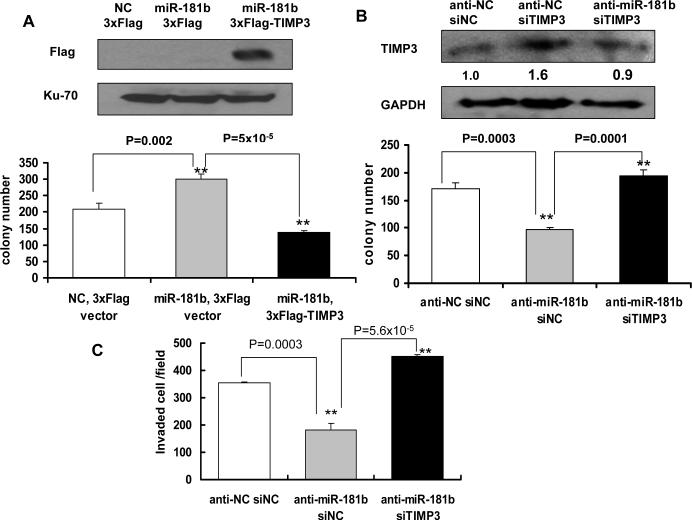
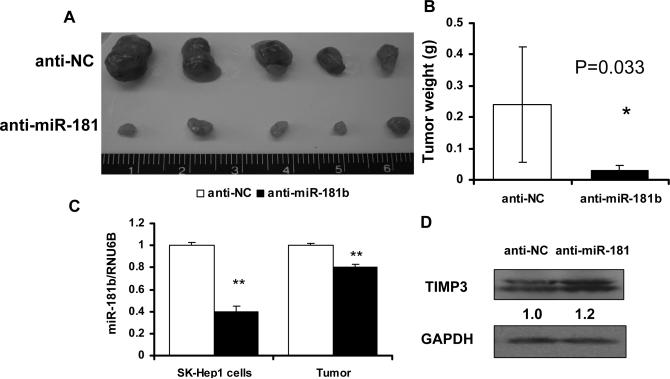
To identify microRNAs (miRNAs) that may have a causal role in hepatocarcinogenesis, we used an animal model in which C57BL/6 mice fed choline-deficient and amino acid defined (CDAA) diet develop preneoplastic lesions at 65 weeks and hepatocellular carcinomas after 84 weeks. miRNA expression profiling showed significant upregulation of miR-181b and miR-181d in the livers of mice as early as 32 weeks that persisted at preneoplastic stage. The expression of tissue inhibitor of metalloprotease 3 (TIMP3), a tumor suppressor and a validated miR-181 target, was markedly suppressed in the livers of mice fed CDAA diet. Upregulation of hepatic transforming growth factor (TGF)beta and its downstream mediators Smad 2, 3 and 4 and increase in phospho-Smad2 in the liver nuclear extract correlated with elevated miR-181b/d in mice fed CDAA diet. The levels of the precursor and mature miR-181b were augmented on exposure of hepatic cells to TGFbeta and were significantly reduced by small interference RNA-mediated depletion of Smad4, showing the involvement of TGFbeta signaling pathway in miR-181b expression. Ectopic expression and depletion of miR-181b showed that miR-181b enhanced matrix metallopeptidases (MMP)2 and MMP9 activity and promoted growth, clonogenic survival, migration and invasion of hepatocellular carcinoma (HCC) cells that could be reversed by modulating TIMP3 level. Further, depletion of miR-181b inhibited tumor growth of HCC cells in nude mice. miR-181b also enhanced resistance of HCC cells to the anticancer drug doxorubicin. On the basis of these results, we conclude that upregulation of miR-181b at early stages of feeding CDAA diet promotes hepatocarcinogenesis.
为了鉴定可能在肝癌发生中起因果作用的 microRNAs(miRNAs),我们使用了一个动物模型,其中 C57BL/6 小鼠在食用胆碱缺乏和氨基酸定义(CDAA)饮食后,在第 65 周发展出前肿瘤病变,在第 84 周后发展出肝细胞癌。miRNA 表达谱分析显示,早在 32 周时,小鼠肝脏中 miR-181b 和 miR-181d 的表达就显著上调,并在前期病变阶段持续存在。组织金属蛋白酶抑制剂 3(TIMP3)的表达在喂食 CDAA 饮食的小鼠肝脏中明显受到抑制,TIMP3 是一种肿瘤抑制因子和已验证的 miR-181 靶标。在喂食 CDAA 饮食的小鼠肝脏中,转化生长因子(TGF)β及其下游介质 Smad2、3 和 4 的上调以及磷酸化 Smad2 在肝核提取物中的增加与 miR-181b/d 在小鼠中的上调相关喂食 CDAA 饮食。当暴露于 TGFbeta 时,肝细胞中前体和成熟的 miR-181b 的水平增加,并且通过小干扰 RNA 介导的 Smad4 耗竭显著降低,表明 TGFbeta 信号通路参与 miR-181b 的表达。外源性表达和 miR-181b 的耗竭表明,miR-181b 增强了基质金属蛋白酶(MMP)2 和 MMP9 的活性,并促进了肝癌(HCC)细胞的生长、克隆存活、迁移和侵袭,这些可以通过调节 TIMP3 水平来逆转。此外,miR-181b 的耗竭抑制了裸鼠 HCC 细胞的肿瘤生长。miR-181b 还增强了 HCC 细胞对抗癌药物阿霉素的耐药性。基于这些结果,我们得出结论,在喂食 CDAA 饮食的早期阶段上调 miR-181b 可促进肝癌的发生。