Life Sciences Institute and Department of Molecular, Cellular and Developmental Biology, University of Michigan, Ann Arbor, MI 48109-2216, USA.
Curr Opin Cell Biol. 2010 Apr;22(2):124-31. doi: 10.1016/j.ceb.2009.11.014. Epub 2009 Dec 23.
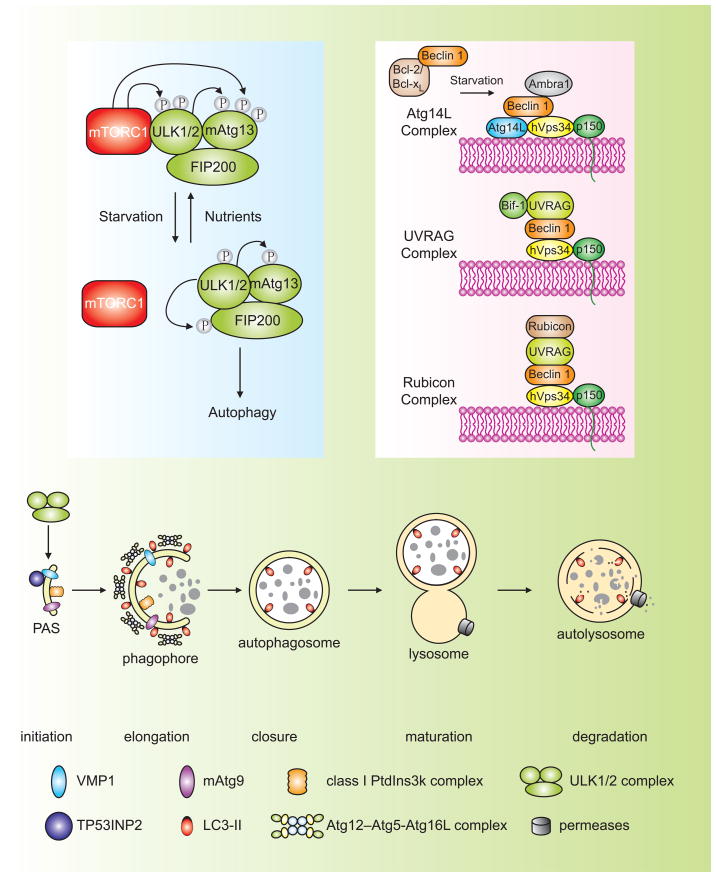
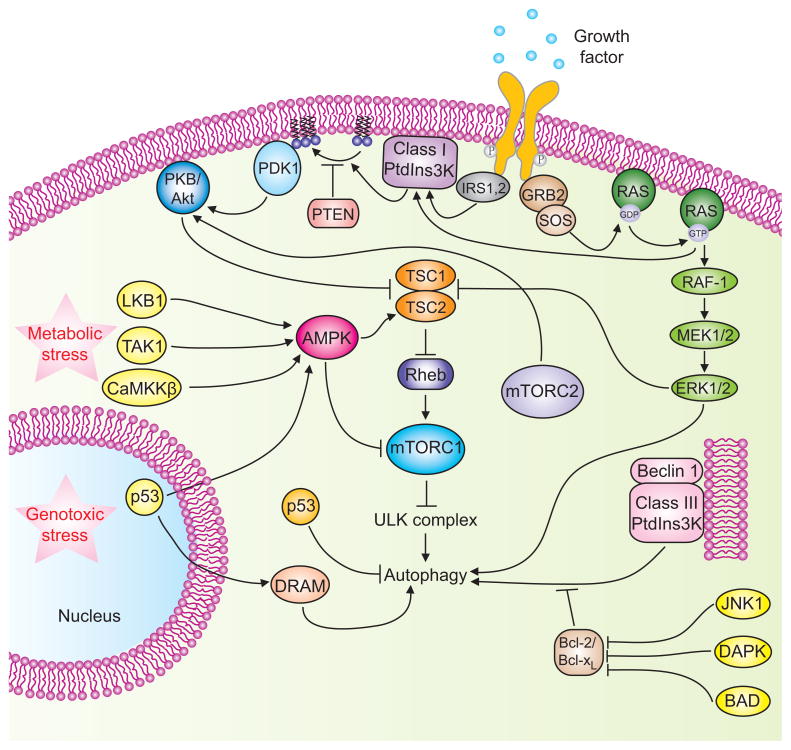
Autophagy, a cellular catabolic pathway, is evolutionarily conserved from yeast to mammals. Central to this process is the formation of autophagosomes, double-membrane vesicles responsible for delivering long-lived proteins and excess or damaged organelle into the lysosome for degradation and reuse of the resulting macromolecules. In addition to the hallmark discovery of core molecular machinery components involved in autophagosome formation, complex signaling cascades controlling autophagy have also begun to emerge, with mTOR as a central but far from exclusive player. Malfunction of autophagy has been linked to a wide range of human pathologies, including cancer, neurodegeneration, and pathogen infection. Here we highlight the recent advances in identifying and understanding the core molecular machinery and signaling pathways that are involved in mammalian autophagy.
自噬是一种从酵母到哺乳动物进化上保守的细胞降解途径。这个过程的核心是自噬体的形成,双层膜囊泡负责将寿命长的蛋白质和多余或受损的细胞器输送到溶酶体中进行降解,并重新利用产生的大分子。除了标志性的发现参与自噬体形成的核心分子机制成分外,控制自噬的复杂信号级联反应也开始出现,其中 mTOR 是一个核心但远非唯一的参与者。自噬功能障碍与广泛的人类病理有关,包括癌症、神经退行性变和病原体感染。在这里,我们重点介绍了在鉴定和理解参与哺乳动物自噬的核心分子机制和信号通路方面的最新进展。