German Cancer Research Center, Division of Molecular Genome Analysis, Im Neuenheimer Feld 580, D-69120 Heidelberg, Germany.
Mol Cancer. 2009 Dec 27;8:130. doi: 10.1186/1476-4598-8-130.
Despite recent progress in the identification of genetic and molecular alterations in prostate cancer, markers associated with tumor progression are scarce. Therefore precise diagnosis of patients and prognosis of the disease remain difficult. This study investigated novel molecular markers discriminating between low and highly aggressive types of prostate cancer.
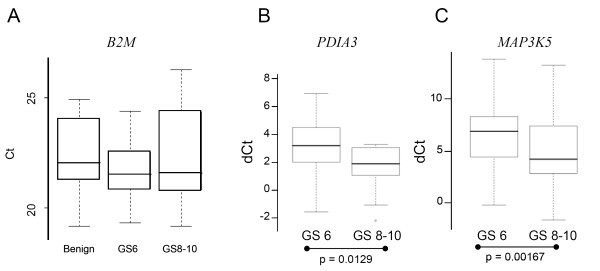
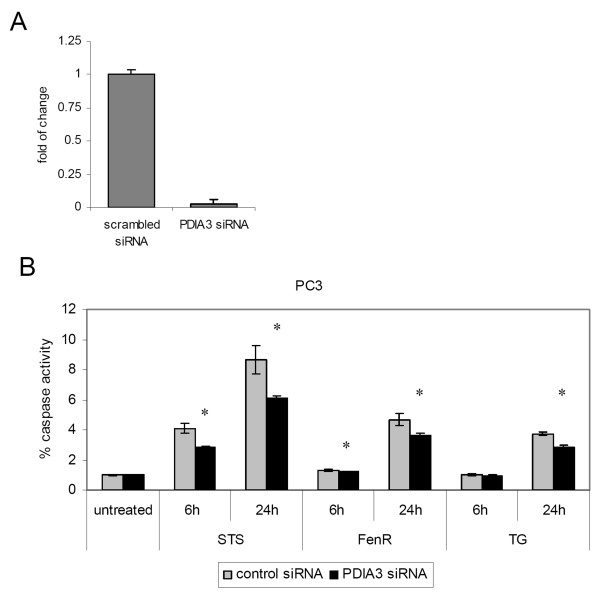
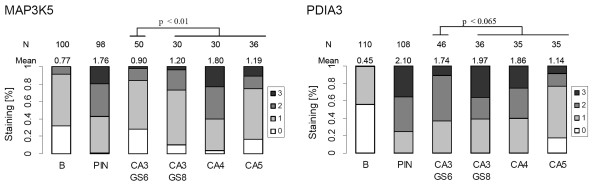
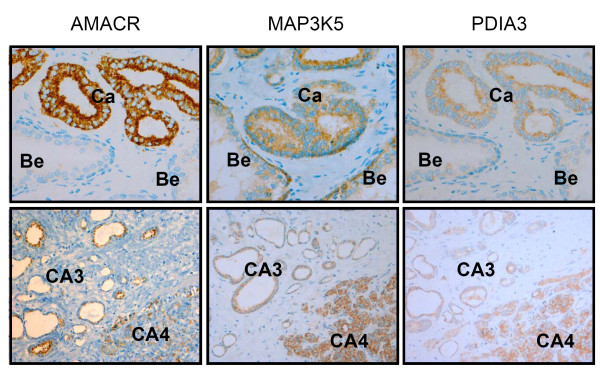
Using 52 microdissected cell populations of low- and high-risk prostate tumors, we identified via global cDNA microarrays analysis almost 1200 genes being differentially expressed among these groups. These genes were analyzed by statistical, pathway and gene enrichment methods. Twenty selected candidate genes were verified by quantitative real time PCR and immunohistochemistry. In concordance with the mRNA levels, two genes MAP3K5 and PDIA3 exposed differential protein expression. Functional characterization of PDIA3 revealed a pro-apoptotic role of this gene in PC3 prostate cancer cells.
Our analyses provide deeper insights into the molecular changes occurring during prostate cancer progression. The genes MAP3K5 and PDIA3 are associated with malignant stages of prostate cancer and therefore provide novel potential biomarkers.
尽管近年来在前列腺癌的基因和分子改变的鉴定方面取得了进展,但与肿瘤进展相关的标志物仍然很少。因此,患者的精确诊断和疾病的预后仍然很困难。本研究调查了区分低侵袭性和高侵袭性前列腺癌的新型分子标志物。
使用低风险和高风险前列腺肿瘤的 52 个微切割细胞群体,我们通过全球 cDNA 微阵列分析鉴定了这些群体之间差异表达的近 1200 个基因。通过统计、途径和基因富集方法分析这些基因。通过定量实时 PCR 和免疫组织化学验证了 20 个选定的候选基因。与 mRNA 水平一致,MAP3K5 和 PDIA3 这两个基因显示出不同的蛋白表达。PDIA3 的功能特征揭示了该基因在 PC3 前列腺癌细胞中的促凋亡作用。
我们的分析提供了对前列腺癌进展过程中发生的分子变化的更深入了解。MAP3K5 和 PDIA3 基因与前列腺癌的恶性阶段相关,因此提供了新的潜在生物标志物。