Department of Biological Sciences, University of North Texas, Denton, Texas, USA.
PLoS One. 2009 Dec 23;4(12):e8403. doi: 10.1371/journal.pone.0008403.
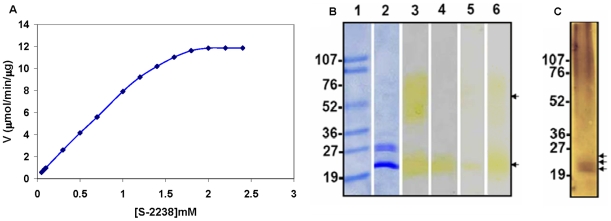
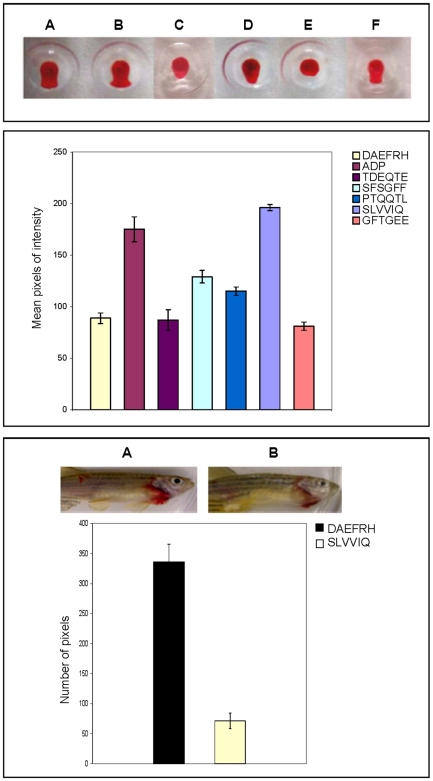
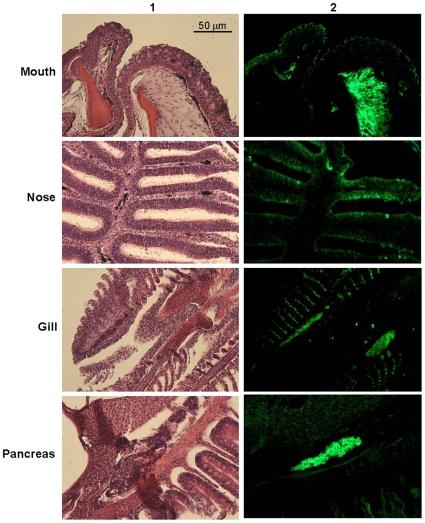
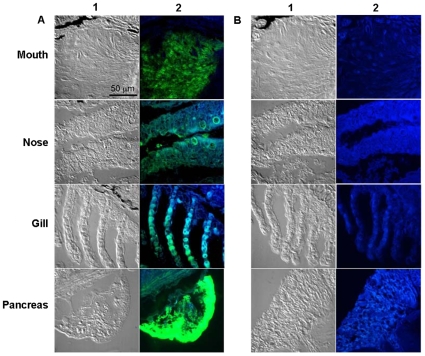
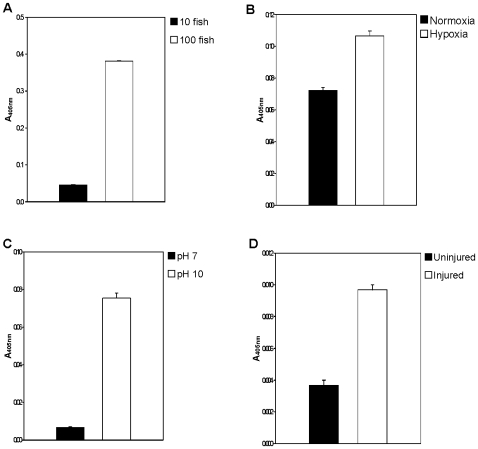
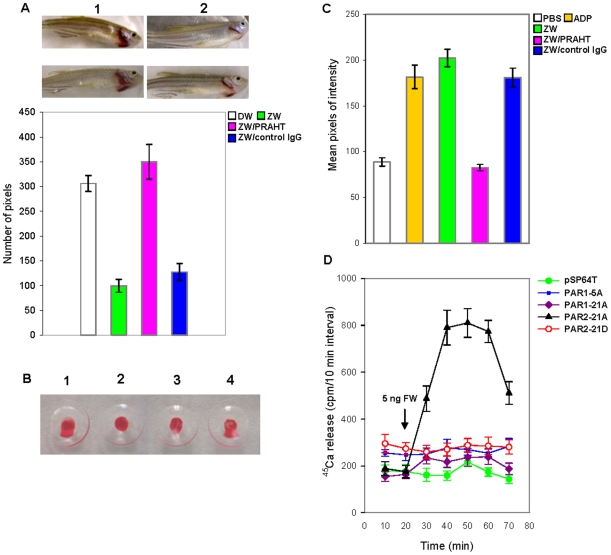
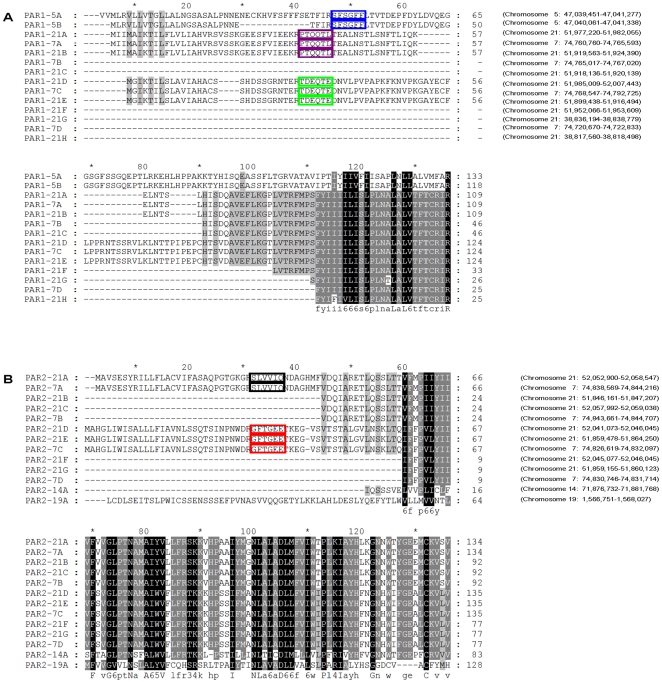
Hemostasis is a defense mechanism which protects the organism in the event of injury to stop bleeding. Recently, we established that all the known major mammalian hemostatic factors are conserved in early vertebrates. However, since their highly vascularized gills experience high blood pressure and are exposed to the environment, even very small injuries could be fatal to fish. Since trypsins are forerunners for coagulation proteases and are expressed by many extrapancreatic cells such as endothelial cells and epithelial cells, we hypothesized that trypsin or trypsin-like proteases from gill epithelial cells may protect these animals from gill bleeding following injuries. In this paper we identified the release of three different trypsins from fish gills into water under stress or injury, which have tenfold greater serine protease activity compared to bovine trypsin. We found that these trypsins activate the thrombocytes and protect the fish from gill bleeding. We found 27 protease-activated receptors (PARs) by analyzing zebrafish genome and classified them into five groups, based on tethering peptides, and two families, PAR1 and PAR2, based on homologies. We also found a canonical member of PAR2 family, PAR2-21A which is activated more readily by trypsin, and PAR2-21A tethering peptide stops gill bleeding just as trypsin. This finding provides evidence that trypsin cleaves a PAR2 member on thrombocyte surface. In conclusion, we believe that the gills are evolutionarily selected to produce trypsin to activate PAR2 on thrombocyte surface and protect the gills from bleeding. We also speculate that trypsin may also protect the fish from bleeding from other body injuries due to quick contact with the thrombocytes. Thus, this finding provides evidence for the role of trypsins in primary hemostasis in early vertebrates.
止血是一种保护机体的防御机制,可防止受伤后出血。最近,我们发现所有已知的主要哺乳动物止血因子在早期脊椎动物中都得到了保守。然而,由于它们高度血管化的鳃承受着高血压并暴露于环境中,即使是非常小的损伤也可能对鱼类致命。由于胰蛋白酶是凝血蛋白酶的前身,并且由许多胰外细胞(如内皮细胞和上皮细胞)表达,我们假设来自鳃上皮细胞的胰蛋白酶或胰蛋白酶样蛋白酶可能会保护这些动物免受受伤后鳃出血。在本文中,我们在应激或损伤下从鱼鳃中鉴定出三种不同的胰蛋白酶释放到水中,其丝氨酸蛋白酶活性比牛胰蛋白酶高十倍。我们发现这些胰蛋白酶激活血小板并保护鱼类免受鳃出血。通过分析斑马鱼基因组,我们发现了 27 种蛋白酶激活受体(PARs),并根据连接肽将它们分为五组,根据同源性将它们分为 PAR1 和 PAR2 两个家族。我们还发现了 PAR2 家族的一个典型成员 PAR2-21A,它更容易被胰蛋白酶激活,而 PAR2-21A 连接肽可以像胰蛋白酶一样阻止鳃出血。这一发现为胰蛋白酶在血小板表面切割 PAR2 成员提供了证据。总之,我们认为鳃在进化上选择产生胰蛋白酶以激活血小板表面的 PAR2,从而保护鳃不出血。我们还推测,由于与血小板的快速接触,胰蛋白酶可能也会保护鱼类免受其他身体损伤的出血。因此,这一发现为胰蛋白酶在早期脊椎动物中的初级止血中的作用提供了证据。