Theoretical Biology Group, Centre for Ecological and Evolutionary Studies, University of Groningen, Kerklaan 30, 9751 NN, Haren, The Netherlands.
Oecologia. 2010 Apr;162(4):873-84. doi: 10.1007/s00442-009-1544-1. Epub 2009 Dec 31.
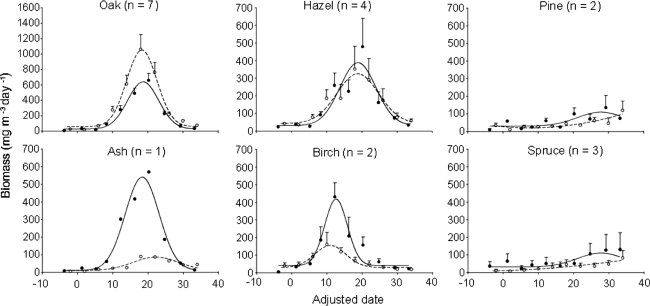
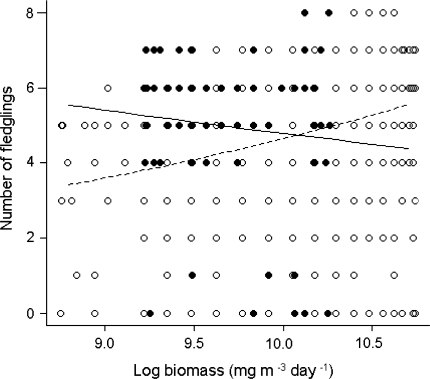
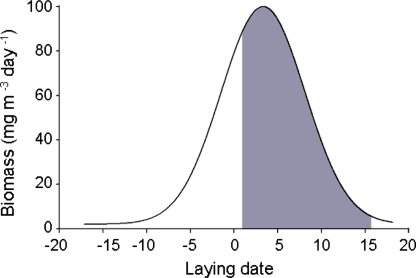
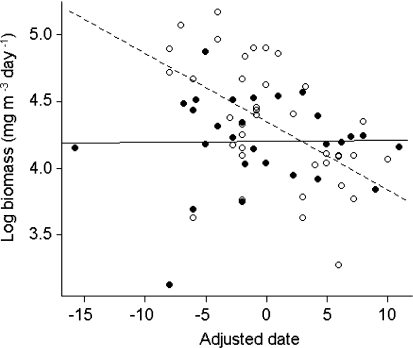
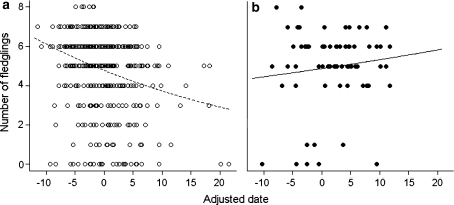
Many related species share the same environment and utilize similar resources. This is surprising because based on the principle of competitive exclusion one would predict that the superior competitor would drive the other species to extinction; coexistence is only predicted if interspecific competition is weaker than intraspecific competition. Interspecific competition is frequently reduced by differential resource use, resulting in habitat segregation. In this paper, we use the closely related collared and pied flycatcher to assess the potential of habitat differences to affect interspecific competition through a different mechanism, namely by generating temporal differences in availability of similar food resources between the two species. We found that the tree species composition of the breeding territories of the two species differed, mainly by a higher abundance of coniferous species around nest-boxes occupied by pied flycatchers. The temporal availability of caterpillars was measured using frass traps under four deciduous and two coniferous tree species. Deciduous tree species showed an early and narrow peak in abundance, which contrasted with the steady increase in caterpillar abundance in the coniferous tree species through the season. We subsequently calculated the predicted total caterpillar biomass available in each flycatcher territory. This differed between the species, with biomass decreasing more slowly in pied flycatcher territories. Caterpillar biomass is strongly correlated with the reproductive success of collared flycatchers, but much less so with pied flycatchers. However, caterpillar availability can only partly explain the differences in seasonal decline of reproductive success between the two species; we discuss additional factors that may contribute to this species difference. Overall, our results are consistent with the suggestion that minor habitat differences between these two species may contribute to promoting their coexistence.
许多相关物种共享相同的环境并利用相似的资源。这令人惊讶,因为根据竞争排斥原理,人们会预测占优势的竞争者将迫使其他物种灭绝;只有当种间竞争弱于种内竞争时,共存才会被预测。种间竞争通常通过差异资源利用而减少,从而导致栖息地隔离。在本文中,我们使用密切相关的斑胸草雀和白腰文鸟来评估栖息地差异通过不同的机制(即在两种物种之间产生相似食物资源可用性的时间差异)影响种间竞争的潜力。我们发现,两种物种的繁殖地的树种组成不同,主要是由于在白腰文鸟占据的巢箱周围有更高密度的针叶树种。使用粪便陷阱在四种落叶树和两种针叶树物种下测量了毛毛虫的时间可用性。落叶树种的数量呈现早期和狭窄的高峰,与整个季节中针叶树种毛毛虫数量的稳定增加形成对比。随后,我们计算了每个草雀领地中可用的预测总毛毛虫生物量。这在物种之间有所不同,白腰文鸟领地中的生物量减少得更慢。毛毛虫生物量与斑胸草雀的繁殖成功率密切相关,但与白腰文鸟的相关性要小得多。然而,毛毛虫的可用性只能部分解释这两个物种繁殖成功率季节性下降的差异;我们讨论了可能导致这种物种差异的其他因素。总体而言,我们的结果与以下建议一致,即这些两种物种之间的微小栖息地差异可能有助于促进它们的共存。