School of Nursing, University of North Carolina at Chapel Hill, Chapel Hill, NC 27599-7460, USA.
Res Nurs Health. 2010 Feb;33(1):60-76. doi: 10.1002/nur.20363.
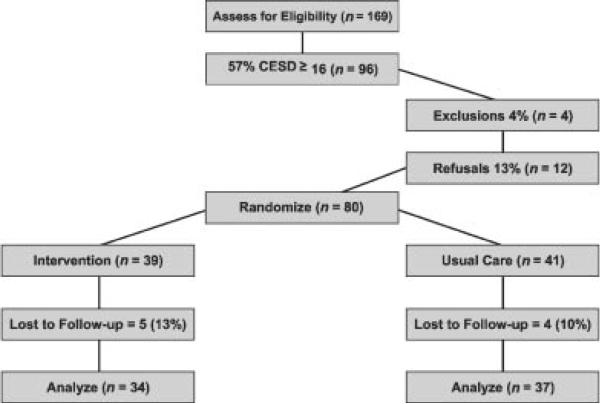
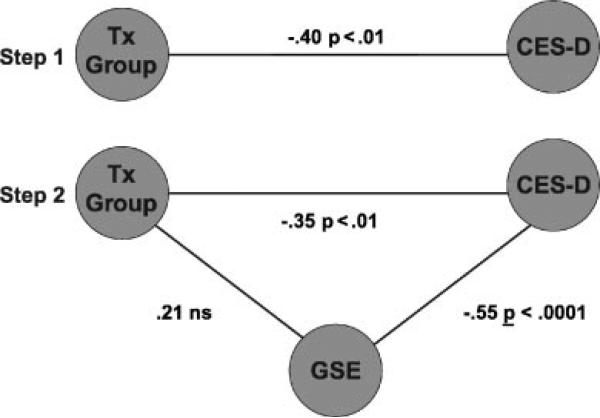
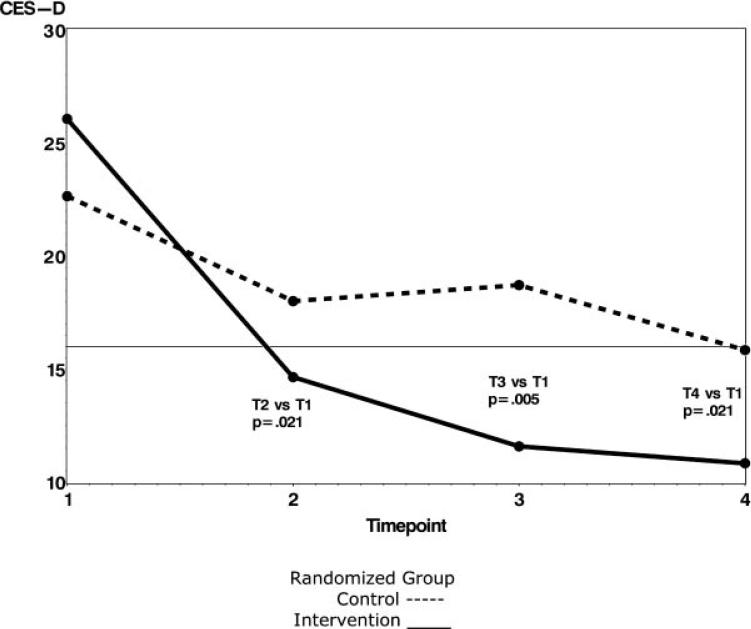
Depressive symptoms may compromise the ability of low-income Latina mothers with limited English language proficiency to parent their infants or toddlers. Eighty Early Head Start Latina mothers with limited English language proficiency were randomized to an advanced practice nurse-delivered, culturally tailored, in-home psychotherapy intervention, or to usual care. Repeated measures regression analysis showed a significantly greater decrease in depressive symptoms for intervention mothers compared to the usual care group at 22 and 26 weeks (4 weeks post intervention). Intervention mothers' reports of their child's aggression diminished significantly from T1 to T4 compared to usual care mothers (p = .03). Self-efficacy appeared to only partially mediate the intervention effect, and maternal health moderated the intervention impact. Results indicate that the intervention reduced depressive symptoms and, compared to previous studies in this population, retention of mothers in both intervention and control conditions was improved.
抑郁症状可能会降低那些英语水平有限、收入较低的拉丁裔母亲养育婴儿或幼儿的能力。80 名英语水平有限的早期开端拉丁裔母亲被随机分配到接受高级实践护士提供的、文化上量身定制的家庭心理治疗干预,或接受常规护理。重复测量回归分析显示,与常规护理组相比,干预组母亲在 22 周和 26 周(干预后 4 周)时抑郁症状显著下降。与常规护理组的母亲相比,干预组母亲报告的孩子的攻击行为从 T1 到 T4 显著减少(p =.03)。自我效能感似乎只是部分中介了干预效果,而母亲的健康状况则调节了干预的影响。结果表明,该干预措施降低了抑郁症状,与该人群之前的研究相比,干预组和对照组的母亲的保留率都有所提高。