Dermatology Branch, Center for Cancer Research, National Cancer Institute, National Institutes of Health, Bethesda, Maryland, USA.
PLoS One. 2009 Dec 31;4(12):e8543. doi: 10.1371/journal.pone.0008543.
EpCAM (CD326) is encoded by the tacstd1 gene and expressed by a variety of normal and malignant epithelial cells and some leukocytes. Results of previous in vitro experiments suggested that EpCAM is an intercellular adhesion molecule. EpCAM has been extensively studied as a potential tumor marker and immunotherapy target, and more recent studies suggest that EpCAM expression may be characteristic of cancer stem cells.
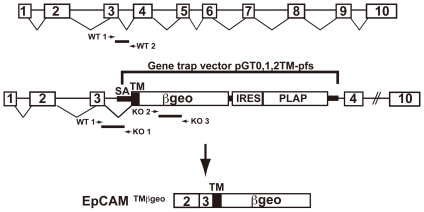
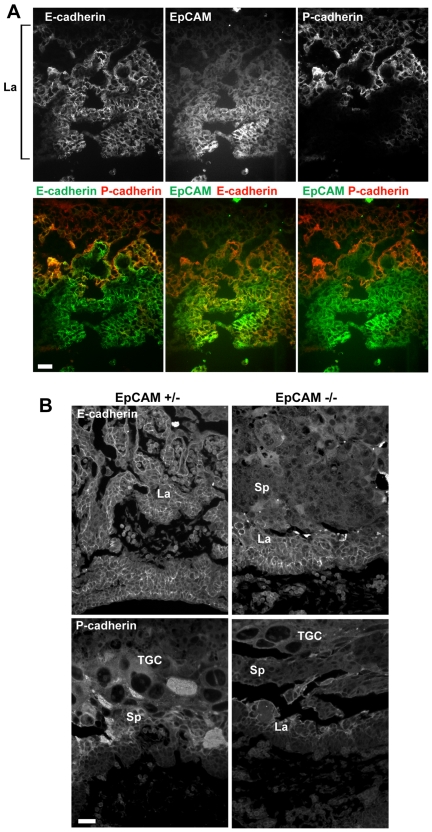
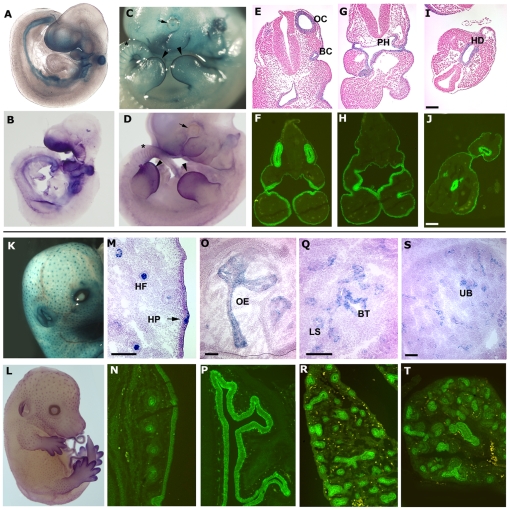
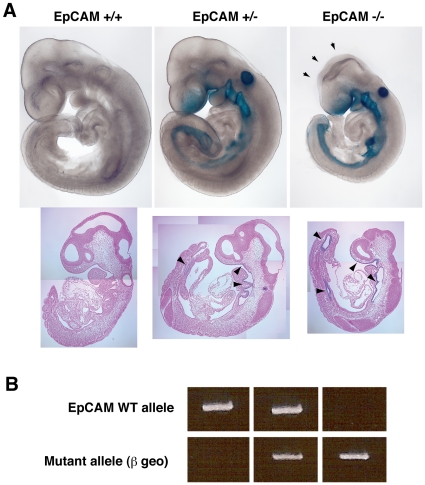
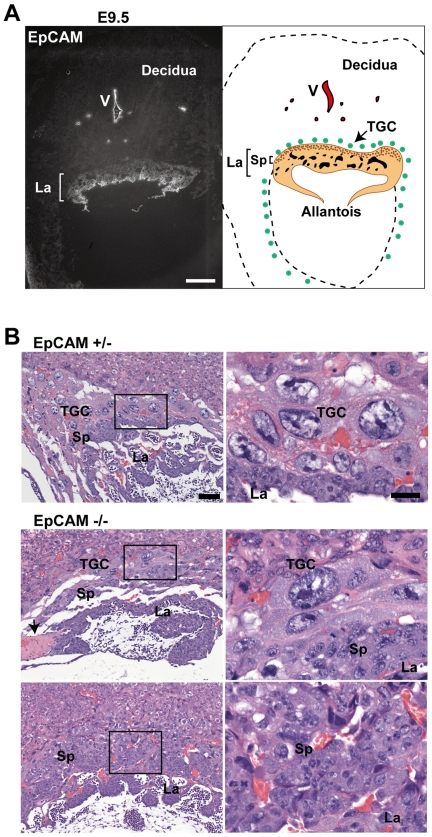
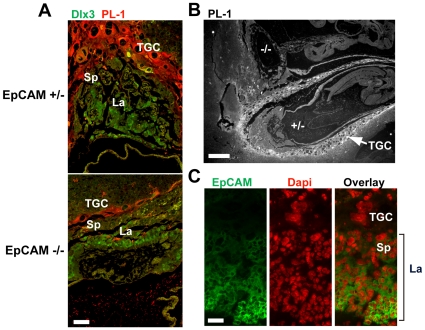
METHODOLOGY/PRINCIPAL FINDINGS: To gain insights into EpCAM function in vivo, we generated EpCAM -/- mice utilizing an embryonic stem cell line with a tacstd1 allele that had been disrupted. Gene trapping resulted in a protein comprised of the N-terminus of EpCAM encoded by 2 exons of the tacstd1 gene fused in frame to betageo. EpCAM +/- mice were viable and fertile and exhibited no obvious abnormalities. Examination of EpCAM +/- embryos revealed that betageo was expressed in several epithelial structures including developing ears (otocysts), eyes, branchial arches, gut, apical ectodermal ridges, lungs, pancreas, hair follicles and others. All EpCAM -/- mice died in utero by E12.5, and were small, developmentally delayed, and displayed prominent placental abnormalities. In developing placentas, EpCAM was expressed throughout the labyrinthine layer and by spongiotrophoblasts as well. Placentas of EpCAM -/- embryos were compact, with thin labyrinthine layers lacking prominent vascularity. Parietal trophoblast giant cells were also dramatically reduced in EpCAM -/- placentas.
EpCAM was required for differentiation or survival of parietal trophoblast giant cells, normal development of the placental labyrinth and establishment of a competent maternal-fetal circulation. The findings in EpCAM-reporter mice suggest involvement of this molecule in development of vital organs including the gut, kidneys, pancreas, lungs, eyes, and limbs.
EpCAM(CD326)由 tacstd1 基因编码,在多种正常和恶性上皮细胞以及一些白细胞中表达。先前的体外实验结果表明 EpCAM 是一种细胞间黏附分子。EpCAM 已被广泛研究作为潜在的肿瘤标志物和免疫治疗靶点,最近的研究表明 EpCAM 表达可能是癌症干细胞的特征。
方法/主要发现:为了深入了解 EpCAM 在体内的功能,我们利用一个 tacstd1 等位基因被破坏的胚胎干细胞系生成了 EpCAM -/- 小鼠。基因捕获导致由 tacstd1 基因的 2 个外显子编码的 EpCAM 的 N 末端与 betageo 融合形成蛋白质。EpCAM +/- 小鼠具有活力和繁殖力,没有明显的异常。检查 EpCAM +/- 胚胎发现 betageo 在包括发育中的耳朵(卵囊)、眼睛、鳃弓、肠道、顶外胚层嵴、肺、胰腺、毛囊等在内的几个上皮结构中表达。所有 EpCAM -/- 小鼠都在 E12.5 之前死于子宫内,体型小,发育迟缓,胎盘异常明显。在发育中的胎盘,EpCAM 在整个迷路层和海绵滋养层中表达。EpCAM -/- 胚胎的胎盘紧凑,迷路层薄,缺乏明显的血管生成。胎盘滋养层巨细胞在 EpCAM -/- 胎盘中的数量也显著减少。
EpCAM 对于滋养层巨细胞的分化或存活、胎盘迷路的正常发育以及建立功能正常的母体-胎儿循环是必需的。在 EpCAM-报告小鼠中的发现表明,该分子参与包括肠道、肾脏、胰腺、肺、眼睛和四肢在内的重要器官的发育。