Los Alamos National Laboratory, Los Alamos, NM, USA.
Curr Opin HIV AIDS. 2009 Sep;4(5):408-17. doi: 10.1097/COH.0b013e32832f129e.
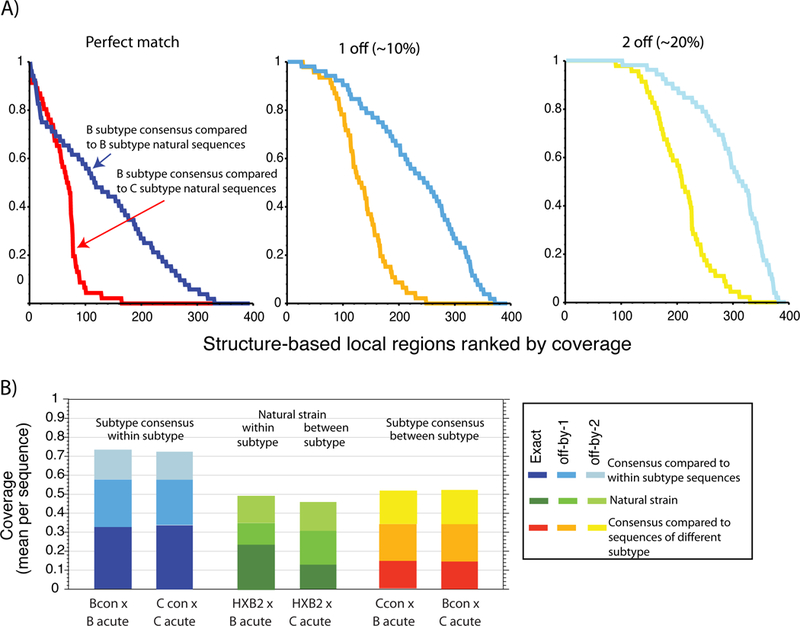
Designing an HIV vaccine capable of eliciting broadly cross-reactive neutralizing antibodies is an extraordinarily difficult challenge. Here we focus on the implications of HIV diversity for vaccine design, detailing the impact of levels of variation in epitopes of known potent neutralizing antibodies, and summarizing patterns of overall variation in regional domains within gp120. Strategies for rational vaccine design, to enhance coverage of HIV's natural diversity, are considered.
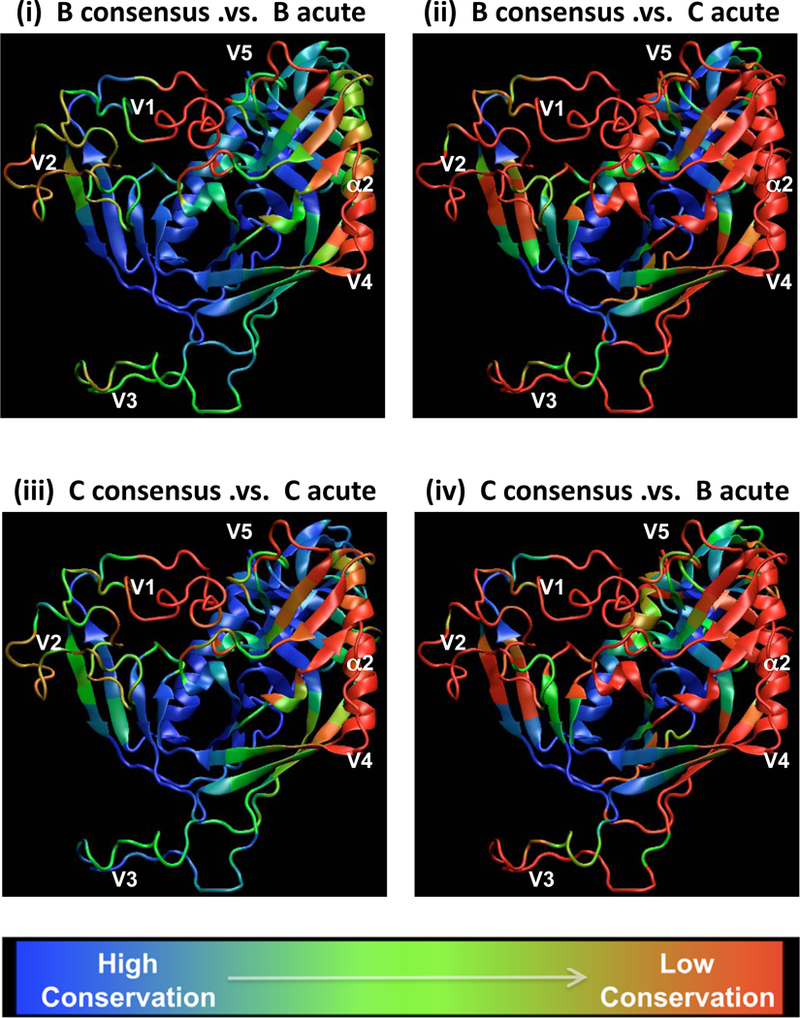
Each amino acid in an envelope gp120 three-dimensional structure was grouped with its 10 nearest neighbors and classified by their natural sequence variability. Within-subtype variation is superimposed on patterns of subtype-specific variation. Regions under selection with moderate diversity are realistic vaccine targets; their variation reflects the value of escape in these regions, whereas the level of diversity is potentially approachable with a vaccine.
HIV diversity is so extensive that vaccine design strategies may benefit by factoring in diversity from the earliest stages, even for vaccines that target relatively conserved regions.
目的综述:设计能够引发广泛交叉中和抗体的 HIV 疫苗是一项极具挑战性的工作。本文重点关注 HIV 多样性对疫苗设计的影响,详细介绍了已知强效中和抗体表位变异水平的影响,并总结了 gp120 区域内整体变异的模式。同时还考虑了增强 HIV 天然多样性覆盖范围的合理疫苗设计策略。
最近发现:将包膜 gp120 三维结构中的每个氨基酸与其 10 个最近邻氨基酸分组,并根据其天然序列变异性进行分类。亚型内的变异叠加在亚型特异性变异模式上。具有中等多样性的选择区域是现实的疫苗靶点;其变异反映了这些区域中逃逸的价值,而多样性的水平可能通过疫苗来实现。
总结:HIV 的多样性非常广泛,即使是针对相对保守区域的疫苗,在设计疫苗时从早期阶段就考虑多样性因素,可能会受益。