Microcellular Plastics Manufacturing Laboratory, Department of Mechanical and Industrial Engineering, University of Toronto, Toronto, Ontario, M5S 3G8, Canada.
Int J Mol Sci. 2009 Dec 16;10(12):5381-5397. doi: 10.3390/ijms10125381.
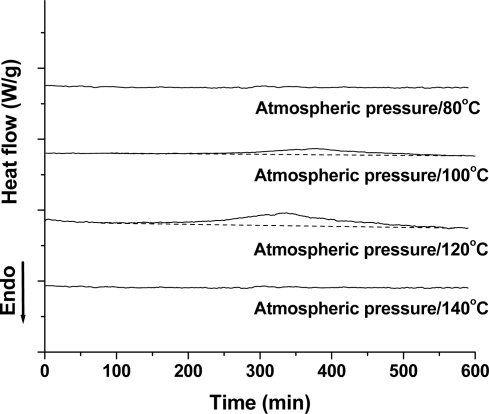
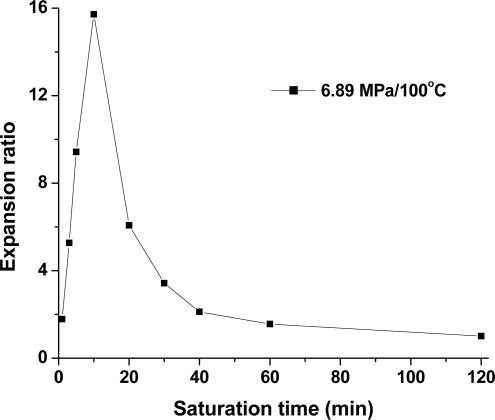
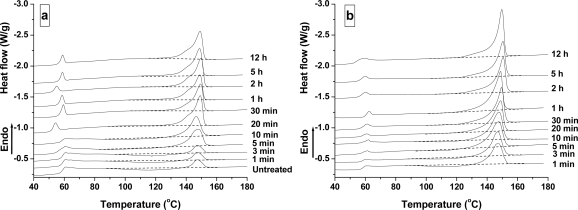
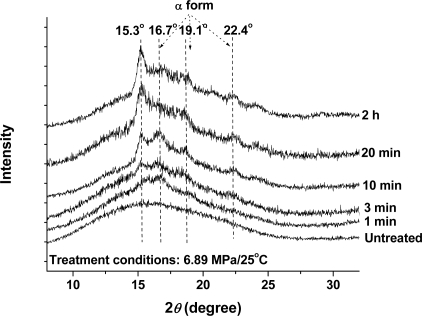
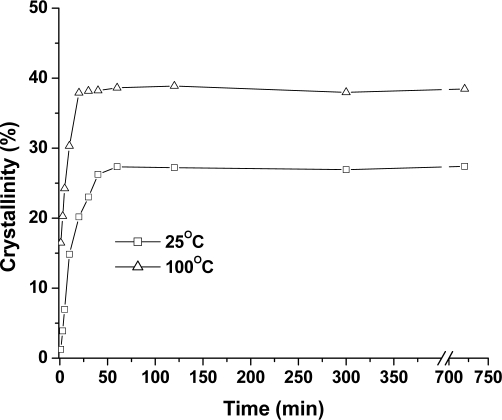
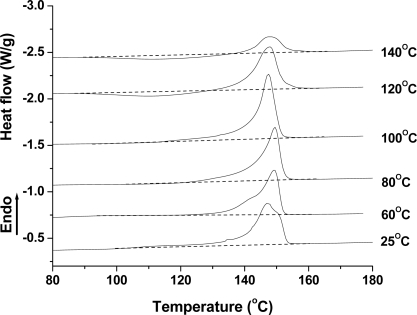
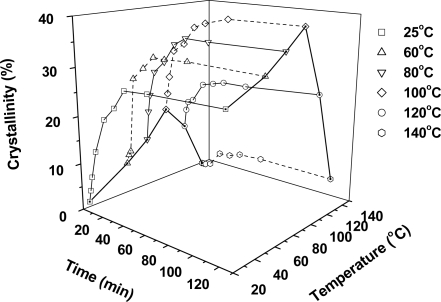
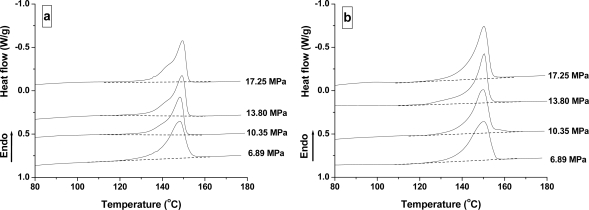
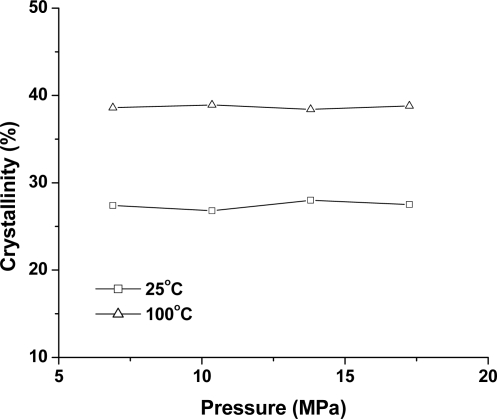
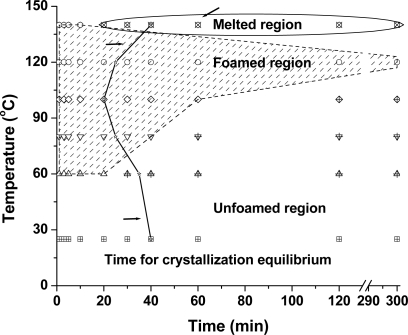
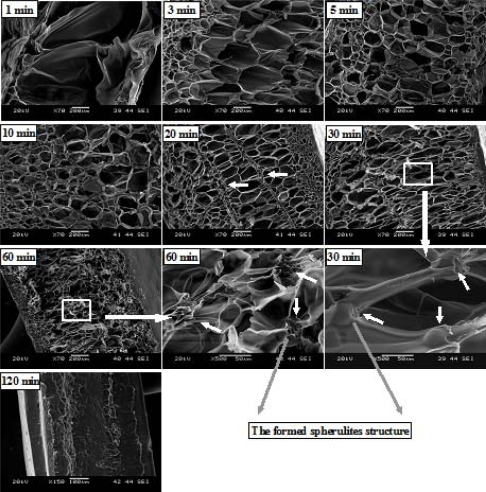
The crystallization and melting behaviors of linear polylactic acid (PLA) treated by compressed CO(2) was investigated. The isothermal crystallization test indicated that while PLA exhibited very low crystallization kinetics under atmospheric pressure, CO(2) exposure significantly increased PLA's crystallization rate; a high crystallinity of 16.5% was achieved after CO(2) treatment for only 1 min at 100 degrees C and 6.89 MPa. One melting peak could be found in the DSC curve, and this exhibited a slight dependency on treatment times, temperatures, and pressures. PLA samples tended to foam during the gas release process, and a foaming window as a function of time and temperature was established. Based on the foaming window, crystallinity, and cell morphology, it was found that foaming clearly reduced the needed time for PLA's crystallization equilibrium.
采用压缩 CO(2) 处理线性聚乳酸(PLA),研究其结晶和熔融行为。等温结晶试验表明,常压下 PLA 结晶动力学非常低,而 CO(2) 暴露可显著提高 PLA 的结晶速率;在 100℃和 6.89 MPa 下仅处理 1 min,即可达到 16.5%的高结晶度。DSC 曲线上仅发现一个熔融峰,且其略微依赖于处理时间、温度和压力。在气体释放过程中,PLA 样品容易发泡,建立了一个随时间和温度变化的发泡窗口。基于发泡窗口、结晶度和细胞形态,发现发泡明显缩短了 PLA 结晶平衡所需的时间。