Coren J S, Epstein E M, Vogt V M
Section of Genetics and Development, Cornell University, Ithaca, New York 14853.
Mol Cell Biol. 1991 Apr;11(4):2282-90. doi: 10.1128/mcb.11.4.2282-2290.1991.
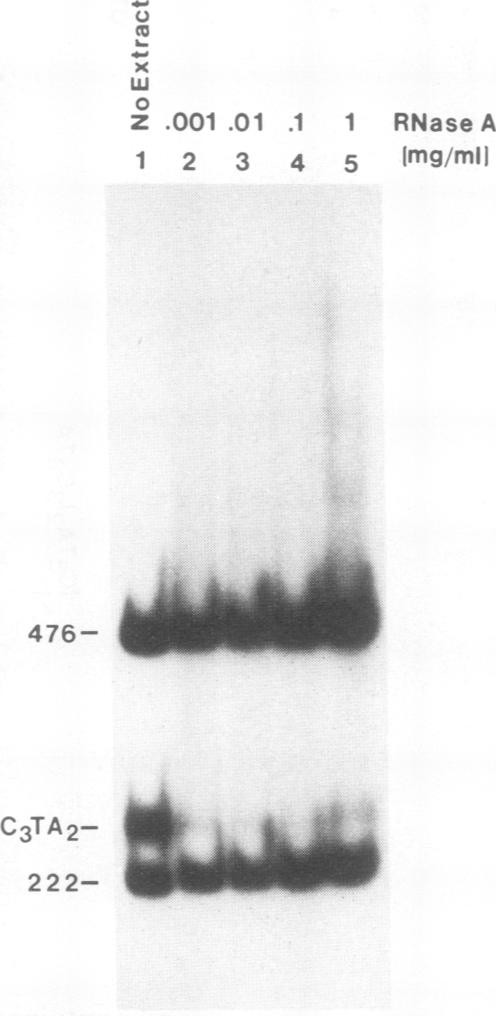
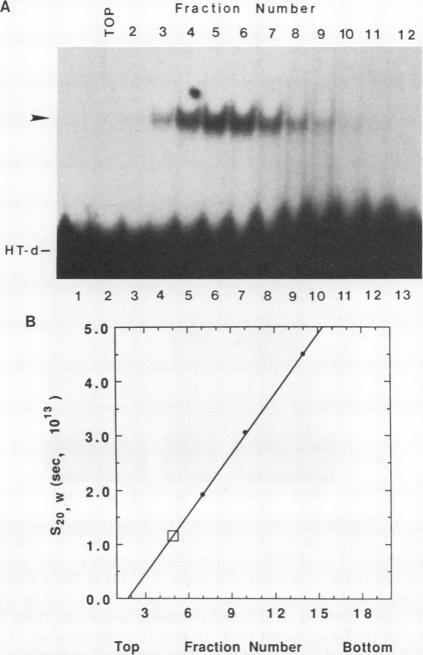
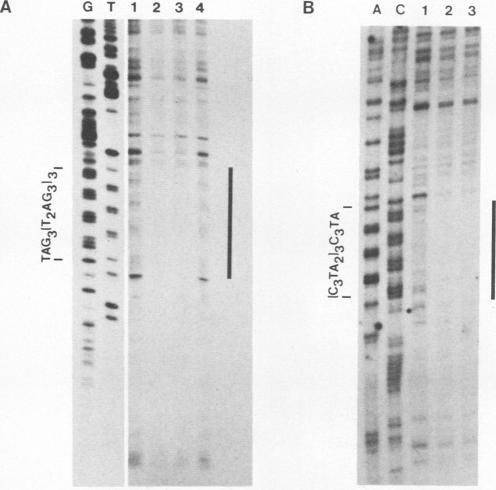
We have partially purified a nuclear protein (PPT) from Physarum polycephalum that binds to the extrachromosomal ribosomal DNA telomeres of this acellular slime mold. Binding is specific for the (T2AG3)n telomere repeats, as evidenced by nitrocellulose filter binding assays, by gel mobility shift assays with both DNA fragments and double-stranded oligonucleotides, and by DNase I footprinting. PPT is remarkably heat stable, showing undiminished binding activity after incubation at 90 degrees C. It sediments at 1.2S, corresponding to a molecular weight of about 10,000 (for a globular protein), and its binding activity is undiminished by incubation with RNase, suggesting that it is not a ribonucleoprotein. We hypothesize that PPT plays a structural role in telomeres, perhaps preventing nucleolytic degradation or promoting telomere extension by a telomere-specific terminal transferase.
我们已经从多头绒泡菌中部分纯化出一种核蛋白(PPT),该蛋白可与这种无细胞黏菌的染色体外核糖体DNA端粒结合。通过硝酸纤维素滤膜结合试验、DNA片段和双链寡核苷酸的凝胶迁移率变动分析以及DNase I足迹分析证明,这种结合对(T2AG3)n端粒重复序列具有特异性。PPT具有显著的热稳定性,在90℃孵育后仍保持未减弱的结合活性。它在1.2S处沉降,对应于约10,000的分子量(对于球状蛋白而言),并且其结合活性在与RNase孵育后未减弱,这表明它不是核糖核蛋白。我们推测PPT在端粒中起结构作用,可能是防止核酸酶降解或通过端粒特异性末端转移酶促进端粒延伸。