CNRS/IGDR (UMR 6061), IFR140 GFAS, Université de Rennes I, 2, Avenue du Pr, Léon Bernard, 35043 Rennes Cedex, France.
BMC Genomics. 2010 Jan 8;11:18. doi: 10.1186/1471-2164-11-18.
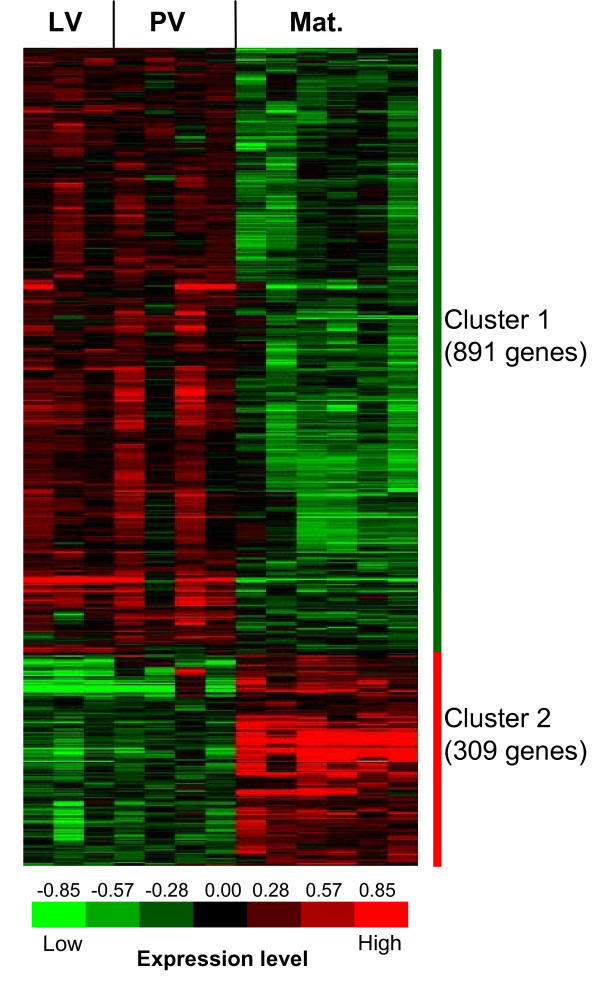
In vertebrates, late oogenesis is a key period during which the oocyte acquires its ability to resume meiosis (i.e. maturational competence) and to develop, once fertilized, into a normal embryo (i.e. developmental competence). However, the molecular mechanisms involved in these key biological processes are far from being fully understood. In order to identify key mechanisms conserved among teleosts and amphibians, we performed a comparative analysis using ovarian tissue sampled at successive steps of the maturational competence acquisition process in the rainbow trout (Oncorhynchus mykiss) and in the clawed toad (Xenopus laevis). Our study aimed at identifying common differentially expressed genes during late oogenesis in both species. Using an existing transcriptomic analysis that had previously been carried out in rainbow trout, candidate genes were selected for subsequent quantitative PCR-based comparative analysis.
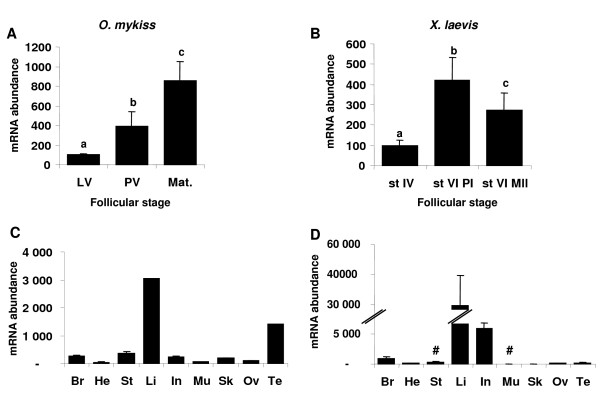
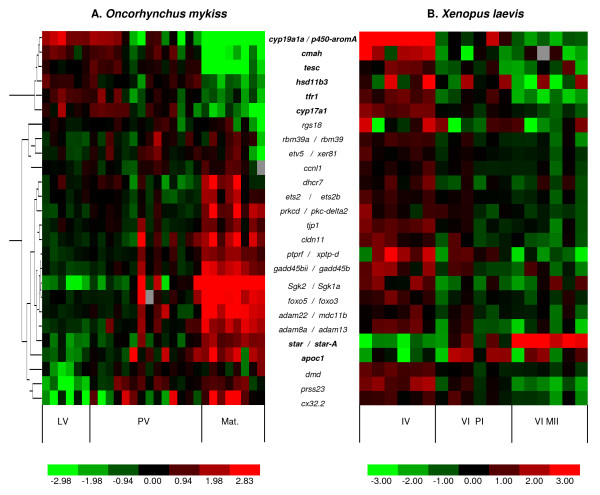
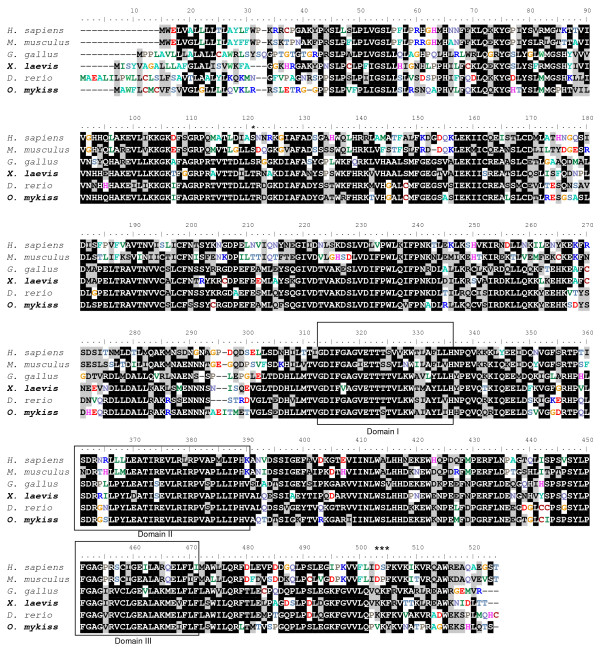
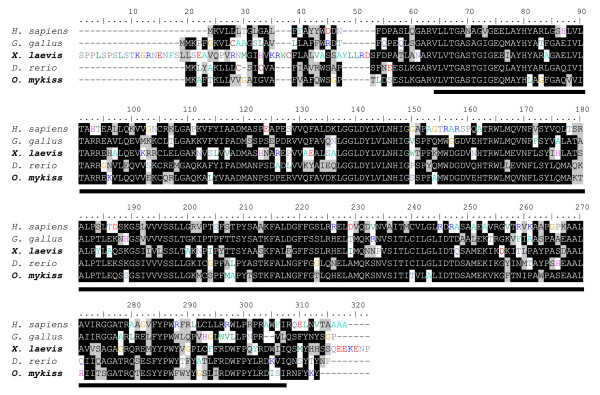
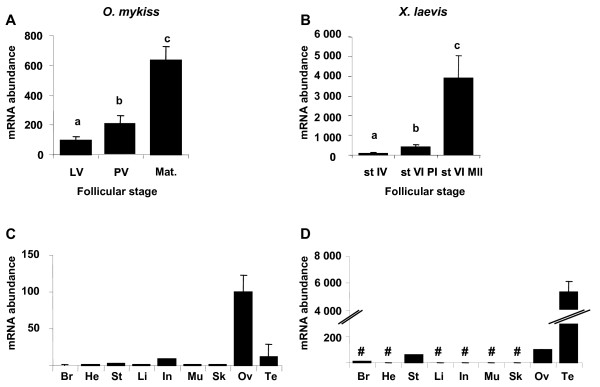
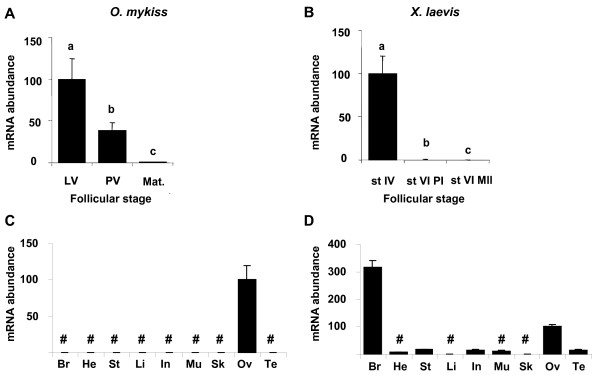
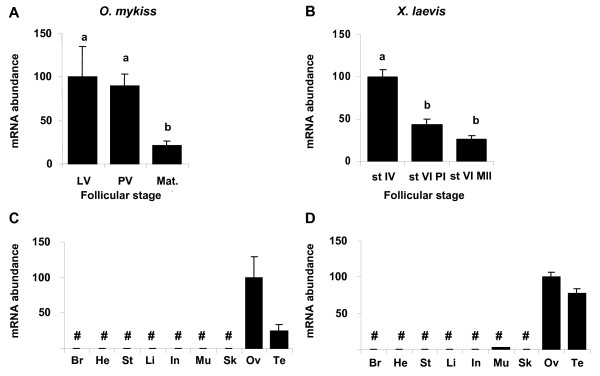
Among the 1200 differentially expressed clones in rainbow trout, twenty-six candidate genes were selected for further analysis by real-time PCR in both species during late oogenesis. Among these genes, eight had similar expression profiles in trout and Xenopus. Six genes were down-regulated during oocyte maturation (cyp19a1, cyp17a1, tescalcin, tfr1, cmah, hsd11b3) while two genes exhibited an opposite pattern (apoc1, star). In order to document possibly conserved molecular mechanisms, four genes (star, cyp19a1, cyp17a1 and hsd11b3) were further studied due to their known or suspected role in steroidogenesis after characterization of the orthology relationships between rainbow trout and Xenopus genes. Apoc1 was also selected for further analysis because of its reported function in cholesterol transport, which may modulate steroidogenesis by regulating cholesterol bioavailability in the steroidogenic cells.
We have successfully identified orthologous genes exhibiting conserved expression profiles in the ovarian follicle during late oogenesis in both trout and Xenopus. While some identified genes were previously uncharacterized during Xenopus late oogenesis, the nature of these genes has pointed out molecular mechanisms possibly conserved in amphibians and teleosts. It should also be stressed that in addition to the already suspected importance of steroidogenesis in maturational competence acquisition, our approach has shed light on other regulatory pathways which may be involved in maturational and developmental competence acquisitions that will require further studies.
在脊椎动物中,卵母细胞的晚期发生是一个关键时期,在此期间,卵母细胞获得了恢复减数分裂(即成熟能力)的能力,并在受精后发育成正常胚胎(即发育能力)。然而,这些关键生物学过程所涉及的分子机制还远未完全了解。为了鉴定硬骨鱼和两栖动物之间保守的关键机制,我们在虹鳟(Oncorhynchus mykiss)和爪蟾(Xenopus laevis)的成熟能力获得过程的连续步骤中使用卵巢组织进行了比较分析。我们的研究旨在鉴定这两个物种晚期卵发生中共同差异表达的基因。利用之前在虹鳟中进行的现有转录组分析,选择候选基因进行随后的定量 PCR 比较分析。
在虹鳟中差异表达的 1200 个克隆中,选择了 26 个候选基因,用于在晚期卵发生过程中在两个物种中进行实时 PCR 进一步分析。在这些基因中,有 8 个在虹鳟和爪蟾中的表达模式相似。六个基因在卵母细胞成熟过程中下调(cyp19a1、cyp17a1、tescalcin、tfr1、cmah、hsd11b3),而两个基因表现出相反的模式(apoc1、star)。为了记录可能保守的分子机制,由于其在类固醇生成中的已知或可疑作用,我们进一步研究了四个基因(star、cyp19a1、cyp17a1 和 hsd11b3),并且由于其在胆固醇转运中的报道功能,apoc1 也被选择用于进一步分析,因为它可能通过调节类固醇生成细胞中胆固醇的生物利用度来调节类固醇生成。
我们成功地鉴定了在虹鳟和爪蟾晚期卵发生过程中具有保守表达模式的同源基因。虽然一些鉴定的基因在爪蟾晚期卵发生中以前没有被描述过,但这些基因的性质指出了可能在两栖动物和硬骨鱼中保守的分子机制。还应该强调的是,除了类固醇生成在成熟能力获得中的已经被怀疑的重要性之外,我们的方法还揭示了其他可能参与成熟和发育能力获得的调节途径,这需要进一步的研究。