School of Biology, Georgia Institute of Technology, 310 Ferst Drive, Atlanta, GA 30332, USA.
BMC Cancer. 2010 Jan 11;10:10. doi: 10.1186/1471-2407-10-10.
Chemoresistance is a major obstacle in cancer treatment. Targeted therapies that enhance cancer cell sensitivity to chemotherapeutic agents have the potential to increase drug efficacy while reducing toxic effects on untargeted cells. Targeted cancer therapy by RNA interference (RNAi) is a relatively new approach that can be used to reversibly silence genes in vivo by selectively targeting genes such as the epidermal growth factor receptor (EGFR), which has been shown to increase the sensitivity of cancer cells to taxane chemotherapy. However, delivery represents the main hurdle for the broad development of RNAi therapeutics.
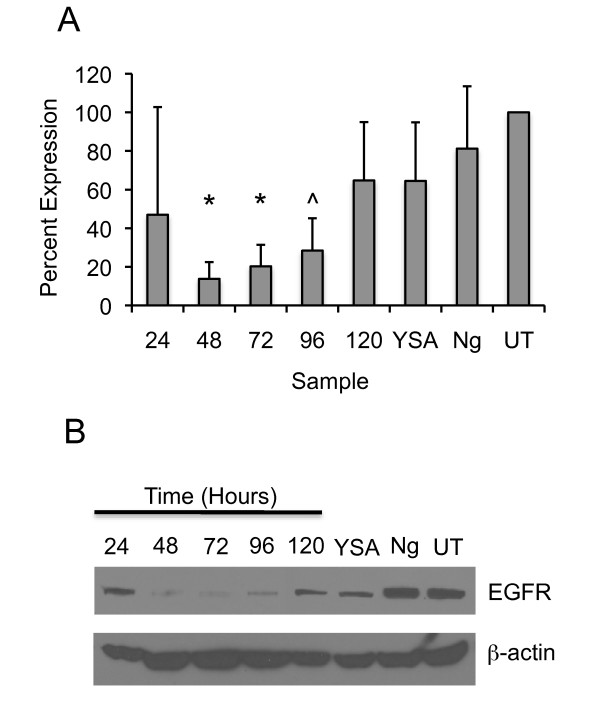
We report here the use of core/shell hydrogel nanoparticles (nanogels) functionalized with peptides that specially target the EphA2 receptor to deliver small interfering RNAs (siRNAs) targeting EGFR. Expression of EGFR was determined by immunoblotting, and the effect of decreased EGFR expression on chemosensitization of ovarian cancer cells after siRNA delivery was investigated.
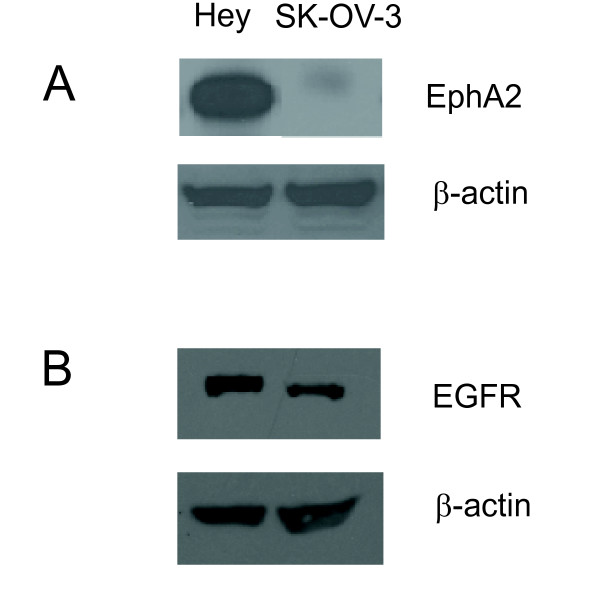
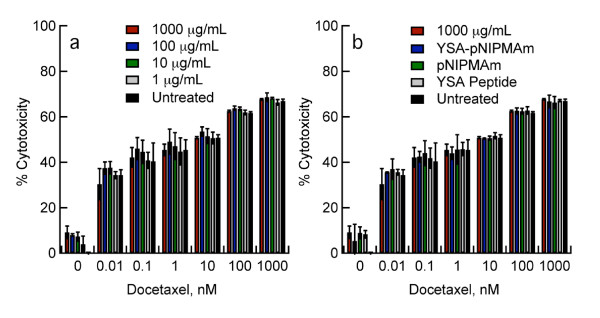
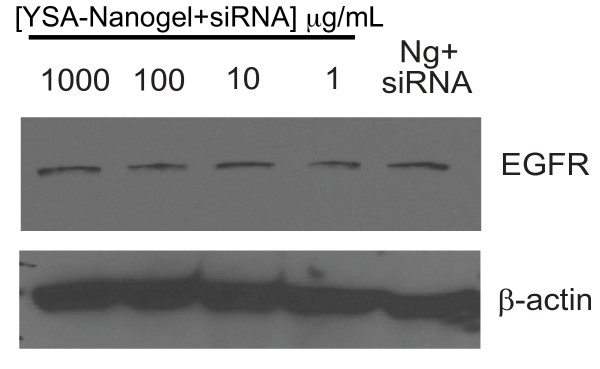
Treatment of EphA2 positive Hey cells with siRNA-loaded, peptide-targeted nanogels decreased EGFR expression levels and significantly increased the sensitivity of this cell line to docetaxel (P < 0.05). Nanogel treatment of SK-OV-3 cells, which are negative for EphA2 expression, failed to reduce EGFR levels and did not increase docetaxel sensitivity (P > 0.05).
This study suggests that targeted delivery of siRNAs by nanogels may be a promising strategy to increase the efficacy of chemotherapy drugs for the treatment of ovarian cancer. In addition, EphA2 is a viable target for therapeutic delivery, and the siRNAs are effectively protected by the nanogel carrier, overcoming the poor stability and uptake that has hindered clinical advancement of therapeutic siRNAs.
化疗耐药性是癌症治疗的主要障碍。增强癌细胞对化疗药物敏感性的靶向治疗有可能提高药物疗效,同时减少对非靶向细胞的毒性作用。RNA 干扰(RNAi)靶向癌症治疗是一种相对较新的方法,可以通过选择性靶向表皮生长因子受体(EGFR)等基因,在体内可逆地沉默基因,从而增加癌细胞对紫杉烷化疗的敏感性。然而,递药仍是 RNAi 治疗广泛发展的主要障碍。
我们在此报告使用专门针对 EphA2 受体的肽功能化核/壳水凝胶纳米颗粒(纳米凝胶)来递送针对 EGFR 的小干扰 RNA(siRNA)。通过免疫印迹测定 EGFR 的表达,研究了 siRNA 递药后降低 EGFR 表达对卵巢癌细胞化疗增敏的影响。
用载有 siRNA 的肽靶向纳米凝胶处理 EphA2 阳性 Hey 细胞,降低了 EGFR 表达水平,并显著增加了该细胞系对多西紫杉醇的敏感性(P<0.05)。EphA2 表达阴性的 SK-OV-3 细胞经纳米凝胶处理后,未能降低 EGFR 水平,也未增加多西紫杉醇敏感性(P>0.05)。
这项研究表明,纳米凝胶靶向递送 siRNA 可能是提高化疗药物治疗卵巢癌疗效的有前途的策略。此外,EphA2 是治疗性递药的可行靶标,并且 siRNA 被纳米凝胶载体有效保护,克服了阻碍治疗性 siRNA 临床应用的稳定性和摄取差的问题。