Stem Cell Institute at James Graham Brown Cancer Center, University of Louisville, 500 South Floyd Street, Room 107, Louisville, KY 40202, USA.
Mol Cancer Res. 2010 Jan;8(1):1-14. doi: 10.1158/1541-7786.MCR-09-0259. Epub 2010 Jan 12.
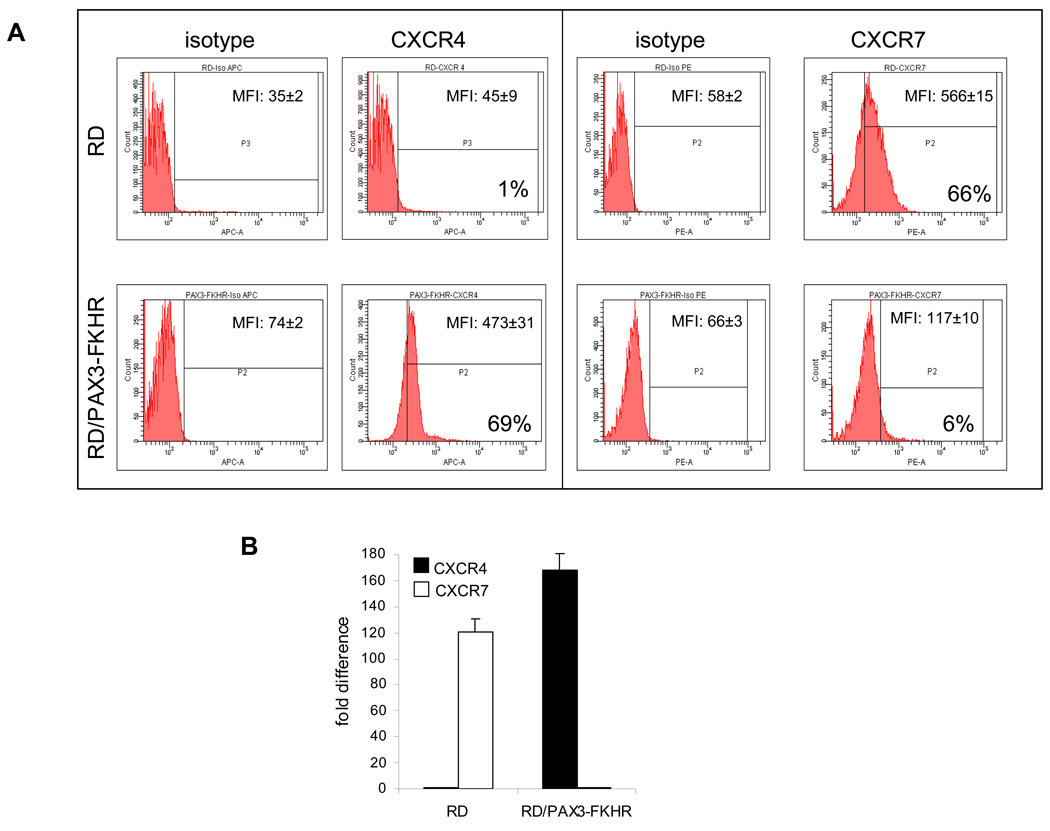
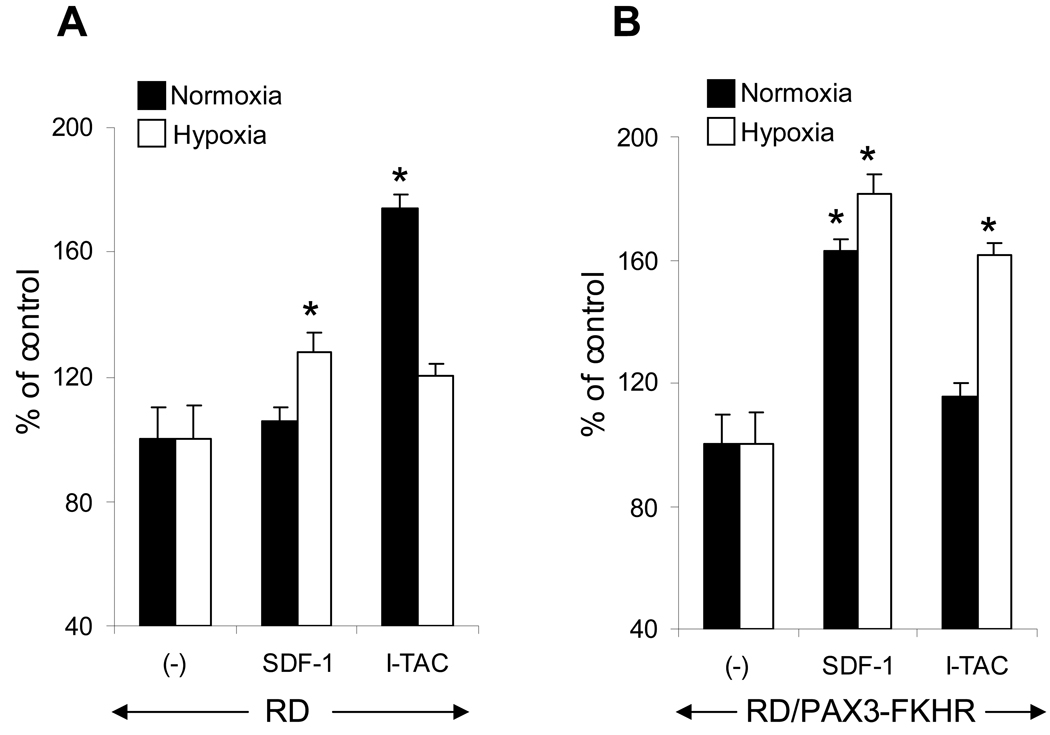
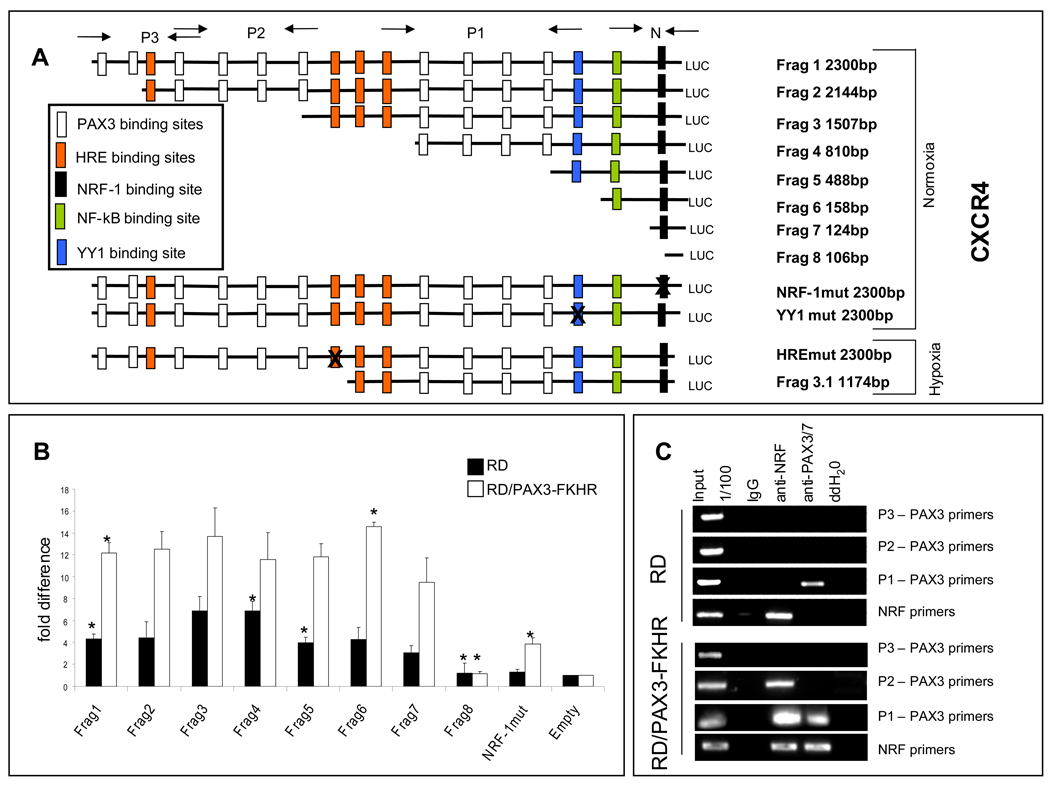
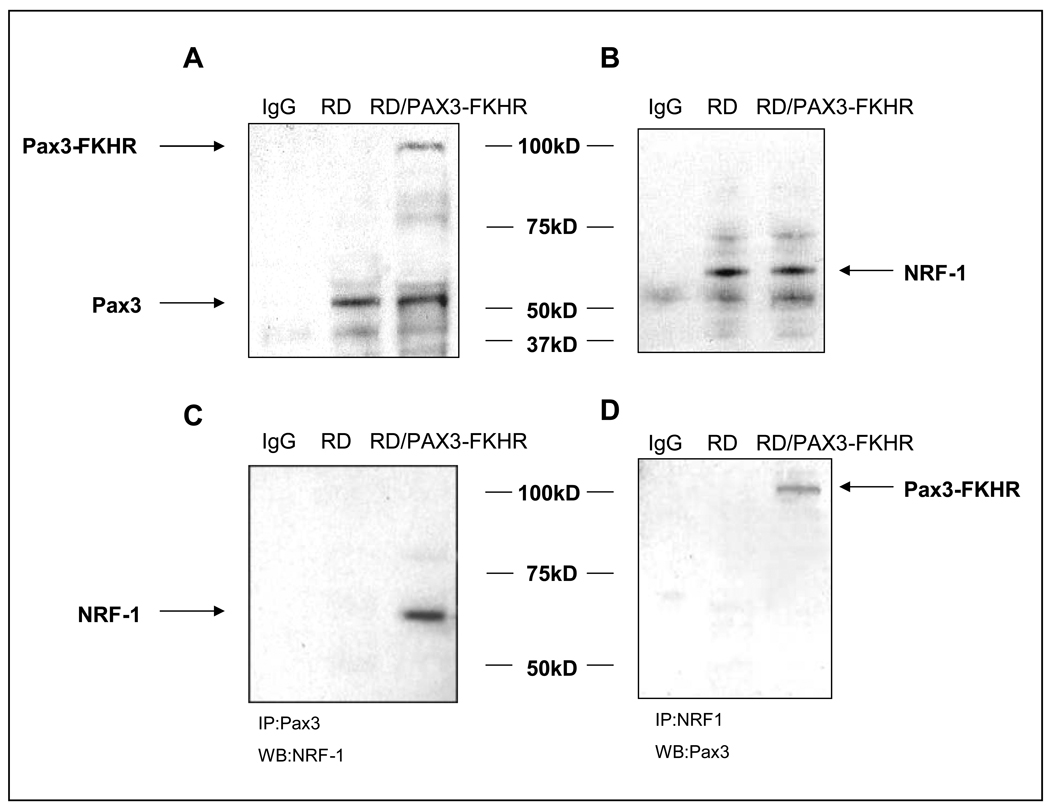
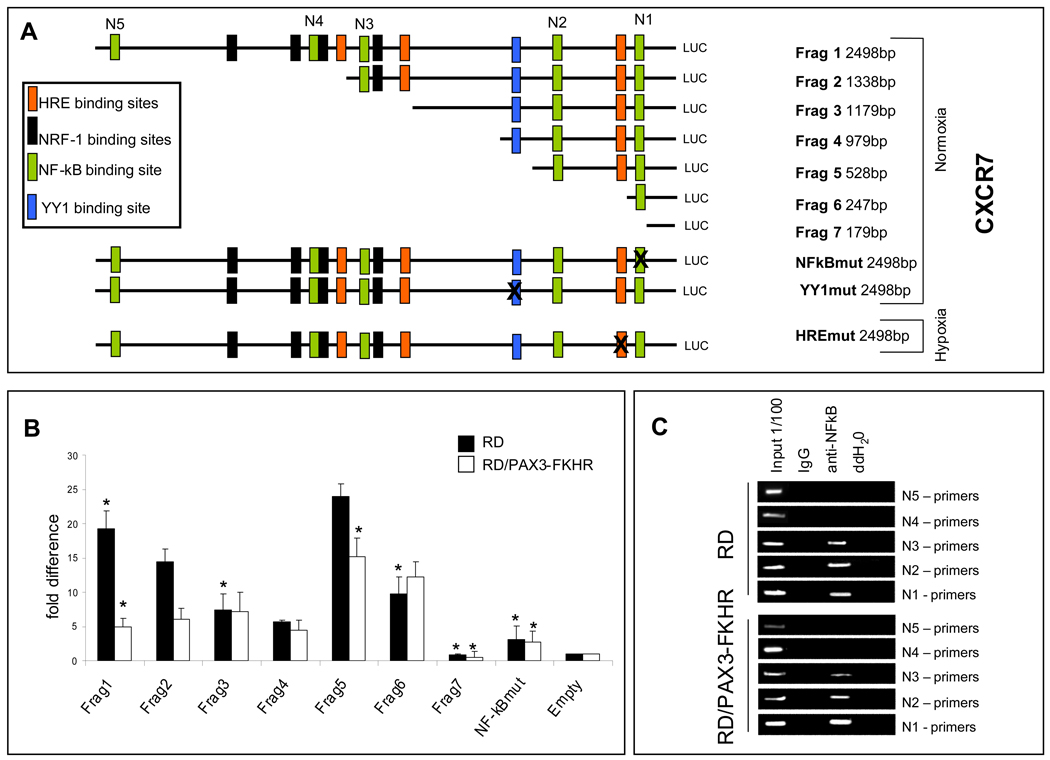
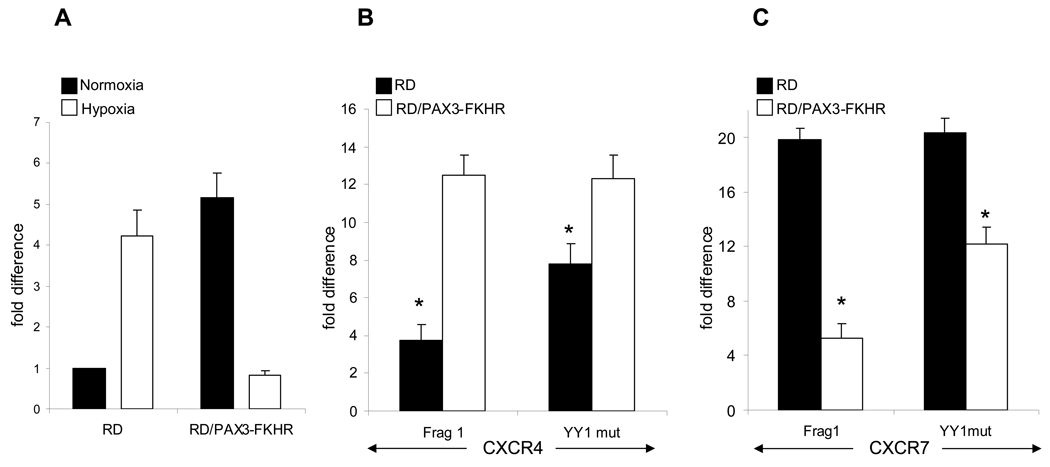
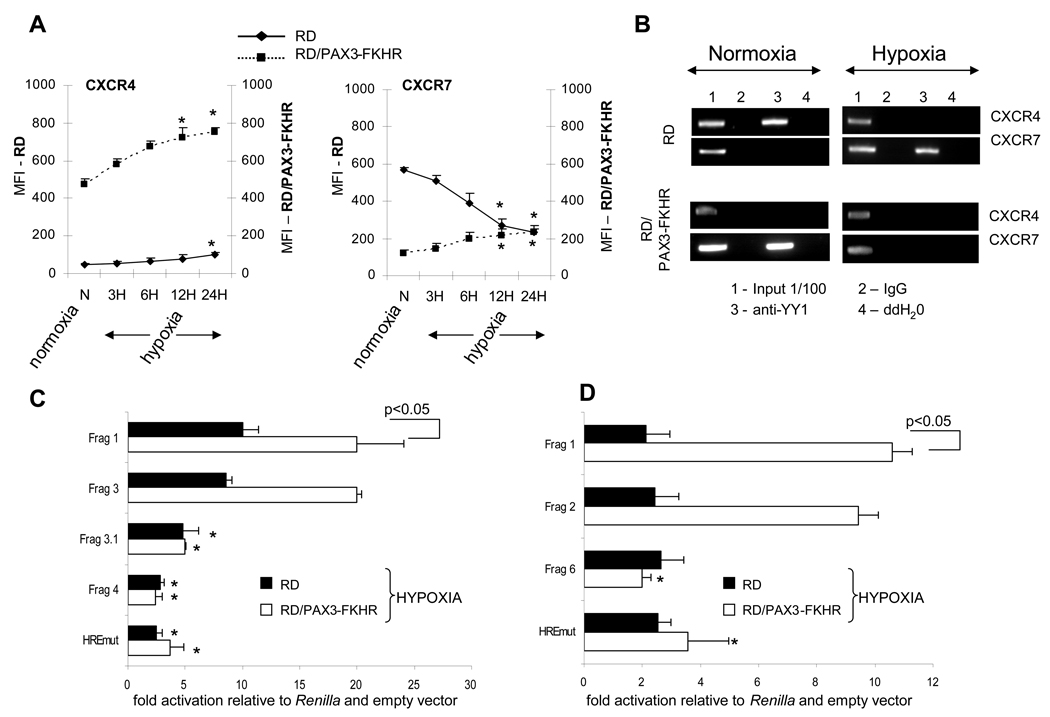
Rhabdomyosarcomas (RMS) express CXCR4 and CXCR7 receptors that bind prometastatic alpha-chemokine stromal-derived factor-1 (SDF-1). In this report, we analyzed the activity of both promoters in a model of less metastatic human embryonal-RMS cell line (RD) and more metastatic alveolar-like RMS (RD cells transduced with paired box gene 3/forkhead homologue; PAX3-FKHR fusion gene). First, CXCR4 is barely detectable in RD and becomes upregulated in RD/PAX3-FKHR cells. In contrast, CXCR7 highly expressed in RD becomes downregulated in RD/PAX3-FKHR cells. Next, promoter deletion and mutation studies revealed that whereas (a) expression of CXCR4 in RD and RD/PAX3-FKHR cells required nuclear respiratory factor-1 (NRF-1) binding site and (b) was additionally upregulated by direct interaction of NRF-1 with PAX3-FKHR, CXCR7 promoter activity required a proximal nuclear factor-kappaB-binding motif. The requirement of these factors for CXCR4 and CXCR7 promoter activities was additionally supported after blocking NRF-1 and nuclear factor-kappaB. Furthermore, CXCR4 expression in PAX3-FKHR(+) RMS cells seems to be enhanced because of the interaction of PAX3-FKHR and NRF-1 proteins in the proximal part of the promoter that prevents access of the negative regulator of transcription YY1 to its binding site. Finally, although hypoxia enhances CXCR4 and CXCR7 promoter activity and receptor expression in RD cells, it inhibits CXCR7 expression in RD/PAX3-FKHR cells. In conclusion, SDF-1 binding receptors CXCR4 and CXCR7 are differently regulated in RMS cells. The upregulation of CXCR4 and downregulation of CXCR7 expression by PAX3-FKHR or hypoxia may give SDF-1 an advantage to better engage the CXCR4 receptor, thus increasing RMS motility.
横纹肌肉瘤 (RMS) 表达 CXCR4 和 CXCR7 受体,这些受体与促转移的 α 趋化因子基质衍生因子-1 (SDF-1) 结合。在本报告中,我们分析了在转移性较低的人胚胎性 RMS 细胞系 (RD) 和转移性更强的肺泡样 RMS(转染了配对盒基因 3/叉头同源物; PAX3-FKHR 融合基因的 RD 细胞)模型中这两个启动子的活性。首先,RD 中几乎检测不到 CXCR4,而在 RD/PAX3-FKHR 细胞中则上调。相比之下,在 RD 中高表达的 CXCR7 在 RD/PAX3-FKHR 细胞中下调。接下来,启动子缺失和突变研究表明,(a)RD 和 RD/PAX3-FKHR 细胞中 CXCR4 的表达需要核呼吸因子-1 (NRF-1) 结合位点,(b)NRF-1 与 PAX3-FKHR 的直接相互作用可使 CXCR4 进一步上调,而 CXCR7 启动子活性需要一个近端核因子-κB 结合基序。在阻断 NRF-1 和核因子-κB 后,这些因素对 CXCR4 和 CXCR7 启动子活性的需求得到了进一步支持。此外,由于 PAX3-FKHR 和 NRF-1 蛋白在启动子的近端部分相互作用,阻止转录负调节剂 YY1 与其结合位点结合,PAX3-FKHR(+) RMS 细胞中的 CXCR4 表达似乎增强。最后,尽管缺氧增强了 RD 细胞中 CXCR4 和 CXCR7 启动子活性和受体表达,但它抑制了 RD/PAX3-FKHR 细胞中 CXCR7 的表达。总之,SDF-1 结合受体 CXCR4 和 CXCR7 在 RMS 细胞中受到不同的调节。PAX3-FKHR 或缺氧对 CXCR4 的上调和对 CXCR7 表达的下调可能使 SDF-1 更有利于更好地结合 CXCR4 受体,从而增强 RMS 的迁移能力。