Division of Genetics and Population Health, Queensland Institute of Medical Research, Herston, Australia.
PLoS Genet. 2010 Jan 15;6(1):e1000811. doi: 10.1371/journal.pgen.1000811.
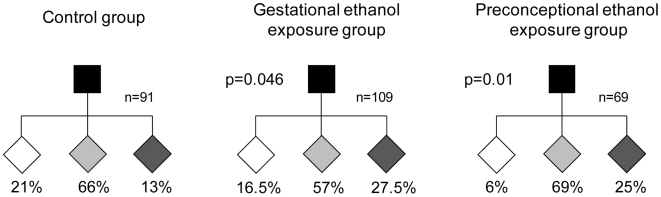
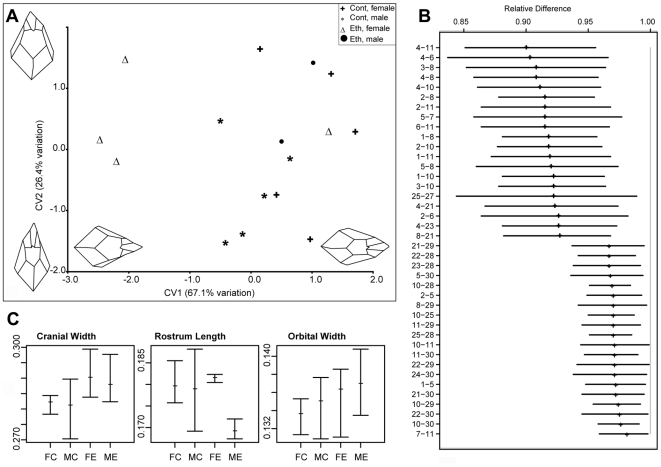
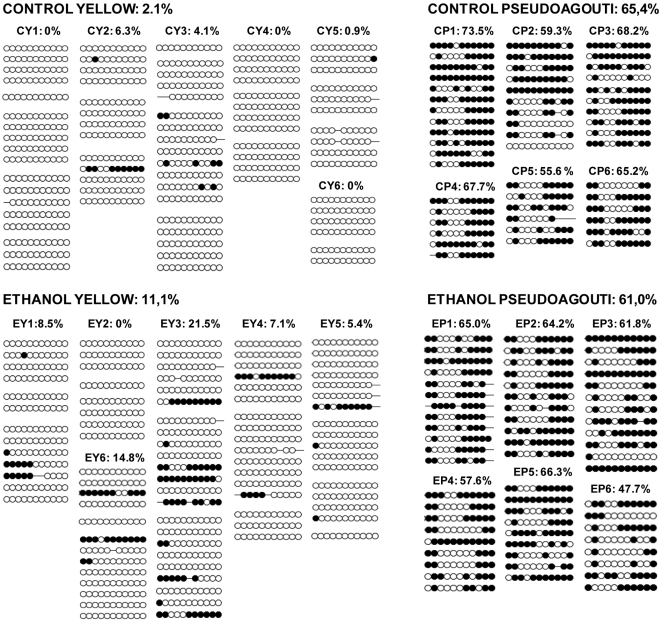
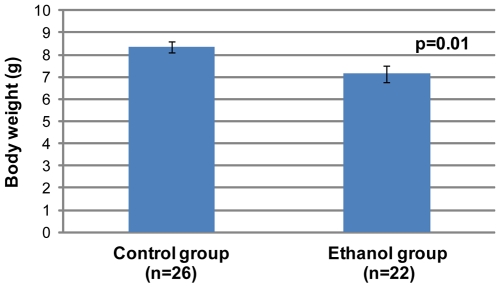
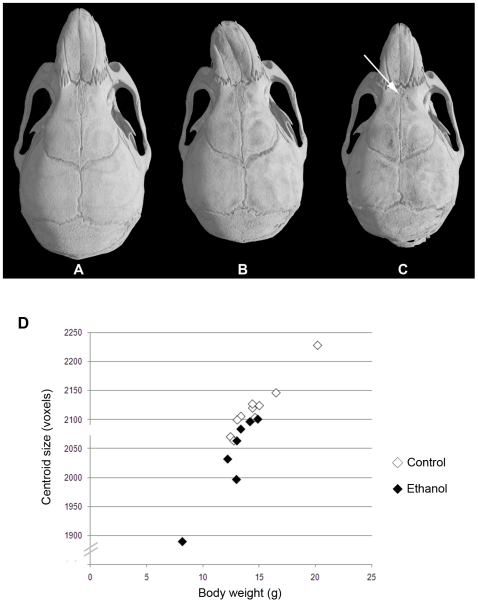
Recent studies have shown that exposure to some nutritional supplements and chemicals in utero can affect the epigenome of the developing mouse embryo, resulting in adult disease. Our hypothesis is that epigenetics is also involved in the gestational programming of adult phenotype by alcohol. We have developed a model of gestational ethanol exposure in the mouse based on maternal ad libitum ingestion of 10% (v/v) ethanol between gestational days 0.5-8.5 and observed changes in the expression of an epigenetically-sensitive allele, Agouti viable yellow (A(vy)), in the offspring. We found that exposure to ethanol increases the probability of transcriptional silencing at this locus, resulting in more mice with an agouti-colored coat. As expected, transcriptional silencing correlated with hypermethylation at A(vy). This demonstrates, for the first time, that ethanol can affect adult phenotype by altering the epigenotype of the early embryo. Interestingly, we also detected postnatal growth restriction and craniofacial dysmorphology reminiscent of fetal alcohol syndrome, in congenic a/a siblings of the A(vy) mice. These findings suggest that moderate ethanol exposure in utero is capable of inducing changes in the expression of genes other than A(vy), a conclusion supported by our genome-wide analysis of gene expression in these mice. In addition, offspring of female mice given free access to 10% (v/v) ethanol for four days per week for ten weeks prior to conception also showed increased transcriptional silencing of the A(vy) allele. Our work raises the possibility of a role for epigenetics in the etiology of fetal alcohol spectrum disorders, and it provides a mouse model that will be a useful resource in the continued efforts to understand the consequences of gestational alcohol exposure at the molecular level.
最近的研究表明,胎儿期接触某些营养补充剂和化学物质会影响发育中老鼠胚胎的表观基因组,从而导致成年疾病。我们的假设是,酒精对成年表型的妊娠编程也涉及表观遗传学。我们已经开发了一种基于母体在妊娠第 0.5-8.5 天自由摄取 10%(v/v)乙醇的老鼠妊娠期乙醇暴露模型,并观察到在后代中一个表观遗传敏感等位基因 Agouti viable yellow(A(vy))的表达发生变化。我们发现,暴露于乙醇会增加该基因座转录沉默的可能性,导致更多的老鼠具有灰褐色的皮毛。正如预期的那样,转录沉默与 A(vy)的高甲基化相关。这首次表明,乙醇可以通过改变早期胚胎的表型来影响成年表型。有趣的是,我们还在 A(vy) 老鼠的同基因 a/a 同窝仔中检测到出生后生长受限和颅面畸形,这些表现类似于胎儿酒精综合征。这些发现表明,子宫内中度乙醇暴露能够诱导除 A(vy)以外的基因表达发生变化,这一结论得到了我们对这些老鼠进行的全基因组基因表达分析的支持。此外,在受孕前每周四天自由摄取 10%(v/v)乙醇 10 周的雌性老鼠的后代也显示出 A(vy)等位基因的转录沉默增加。我们的工作提出了表观遗传学在胎儿酒精谱系障碍发病机制中的作用的可能性,并提供了一种老鼠模型,这将是在分子水平上继续努力理解妊娠期酒精暴露后果的有用资源。