Center of Marine Biotechnology, University of Maryland Biotechnology Institute, Baltimore, Maryland 21202-3101, USA.
Virol J. 2010 Jan 19;7:10. doi: 10.1186/1743-422X-7-10.
Infectious hematopoietic necrosis virus (IHNV) is the type species of the genus Novirhabdovirus, within the family Rhabdoviridae, infecting several species of wild and hatchery reared salmonids. Similar to other rhabdoviruses, IHNV has a linear single-stranded, negative-sense RNA genome of approximately 11,000 nucleotides. The IHNV genome encodes six genes; the nucleocapsid, phosphoprotein, matrix protein, glycoprotein, non-virion protein and polymerase protein genes, respectively. This study describes molecular characterization of the virulent IHNV strain 220-90, belonging to the M genogroup, and its phylogenetic relationships with available sequences of IHNV isolates worldwide.
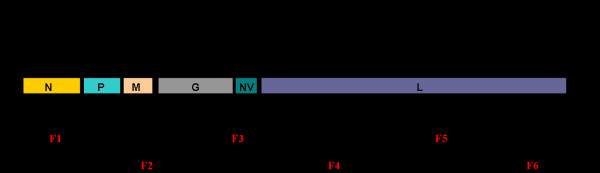
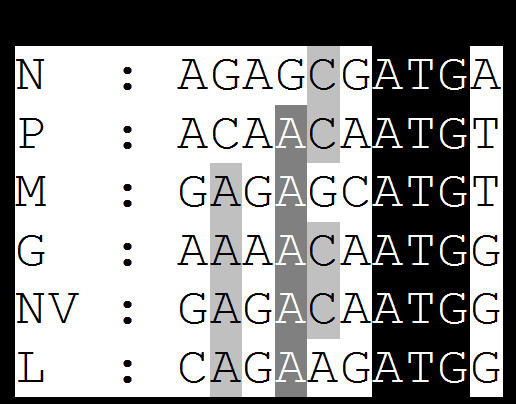
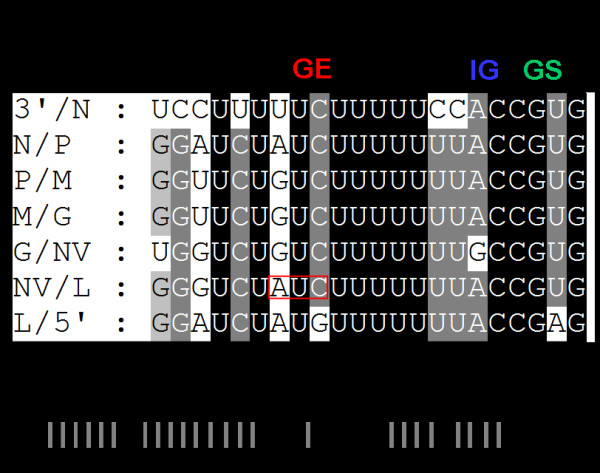
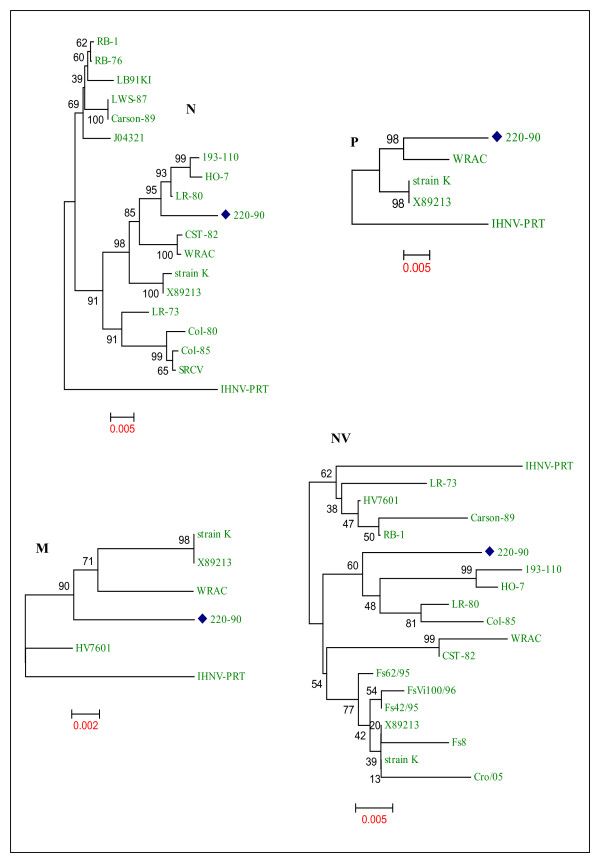
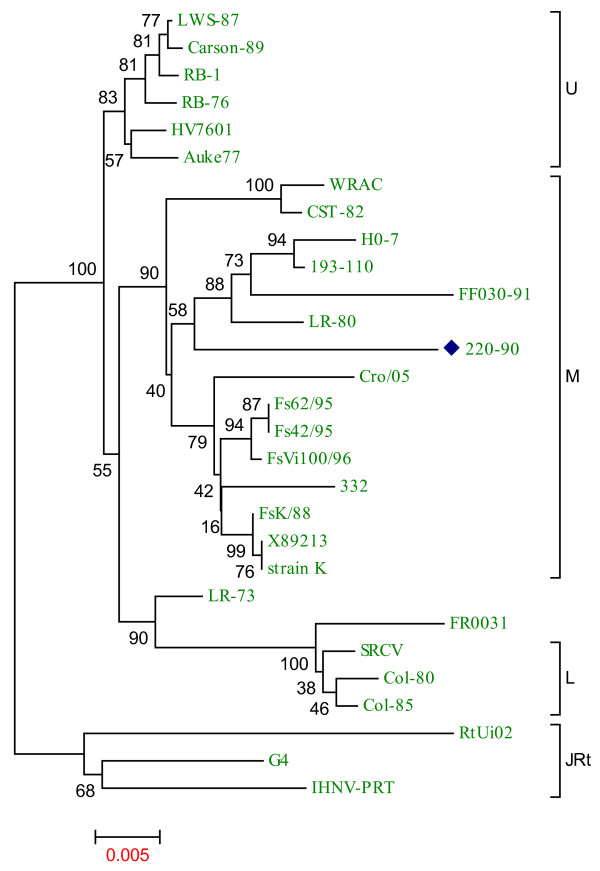
The complete genomic sequence of IHNV strain 220-90 was determined from the DNA of six overlapping clones obtained by RT-PCR amplification of genomic RNA. The complete genome sequence of 220-90 comprises 11,133 nucleotides (GenBank GQ413939) with the gene order of 3'-N-P-M-G-NV-L-5'. These genes are separated by conserved gene junctions, with di-nucleotide gene spacers. An additional uracil nucleotide was found at the end of the 5'-trailer region, which was not reported before in other IHNV strains. The first 15 of the 16 nucleotides at the 3'- and 5'-termini of the genome are complementary, and the first 4 nucleotides at 3'-ends of the IHNV are identical to other novirhadoviruses. Sequence homology and phylogenetic analysis of the glycoprotein genes show that 220-90 strain is 97% identical to most of the IHNV strains. Comparison of the virulent 220-90 genomic sequences with less virulent WRAC isolate shows more than 300 nucleotides changes in the genome, which doesn't allow one to speculate putative residues involved in the virulence of IHNV.
We have molecularly characterized one of the well studied IHNV isolates, 220-90 of genogroup M, which is virulent for rainbow trout, and compared phylogenetic relationship with North American and other strains. Determination of the complete nucleotide sequence is essential for future studies on pathogenesis of IHNV using a reverse genetics approach and developing efficient control strategies.
传染性造血器官坏死病毒(IHNV)是虹彩病毒属的模式种,属于 Rhabdoviridae 科,感染多种野生和孵化养殖的鲑科鱼类。与其他弹状病毒类似,IHNV 具有线性单链、负义 RNA 基因组,约 11000 个核苷酸。IHNV 基因组编码六个基因,分别为核衣壳蛋白、磷蛋白、基质蛋白、糖蛋白、非病毒蛋白和聚合酶蛋白基因。本研究描述了属于 M 基因型组的毒力 IHNV 株 220-90 的分子特征,并与全球现有 IHNV 分离株的系统进化关系。
通过 RT-PCR 扩增基因组 RNA 获得的六个重叠克隆的 DNA 确定了 IHNV 株 220-90 的完整基因组序列。220-90 的完整基因组序列由 11133 个核苷酸(GenBank GQ413939)组成,基因顺序为 3'-N-P-M-G-NV-L-5'。这些基因被保守的基因接头隔开,具有二核苷酸基因间隔区。在 5'-尾区的末端发现了一个额外的尿嘧啶核苷酸,这在以前的其他 IHNV 株中没有报道过。基因组 3'-和 5'-末端的前 15 个核苷酸是互补的,IHNV 的 3'-末端的前 4 个核苷酸与其他新型弹状病毒相同。糖蛋白基因的序列同源性和系统进化分析表明,220-90 株与大多数 IHNV 株的同源性为 97%。与毒力较弱的 WRAC 分离株相比,毒力 220-90 基因组序列有 300 多个核苷酸的变化,这使得我们无法推测 IHNV 毒力相关的假定残基。
我们对 M 基因型组的研究较为深入的 IHNV 分离株 220-90 进行了分子特征分析,该分离株对虹鳟鱼具有毒力,并与北美的其他分离株进行了系统进化关系比较。确定完整的核苷酸序列对于使用反向遗传学方法研究 IHNV 的发病机制和开发有效的控制策略至关重要。