Department of Anesthesiology, The First Affiliated Hospital of Soochow University, Suzhou, Jiangsu 215006, China.
Mol Pain. 2010 Jan 20;6:2. doi: 10.1186/1744-8069-6-2.
This study demonstrates a critical role in CNS innate immunity of the microglial Toll-like receptor 4 (TLR4) in the induction and maintenance of behavioral hypersensitivity in a rat model of bone cancer pain with the technique of RNA interference (RNAi). We hypothesized that after intramedullary injection of Walker 256 cells (a breast cancer cell line) into the tibia, CNS neuroimmune activation and subsequent cytokine expression are triggered by the stimulation of microglial membrane-bound TLR4.
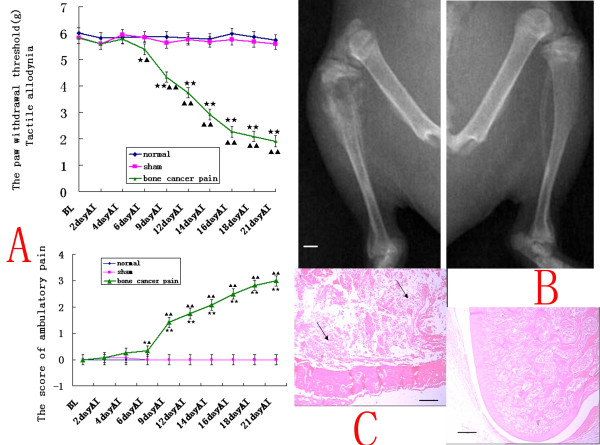
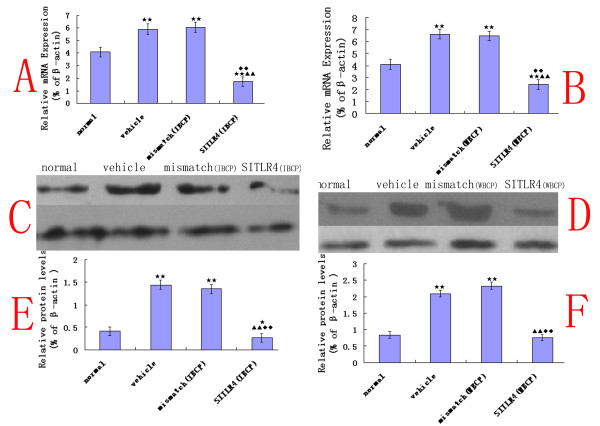
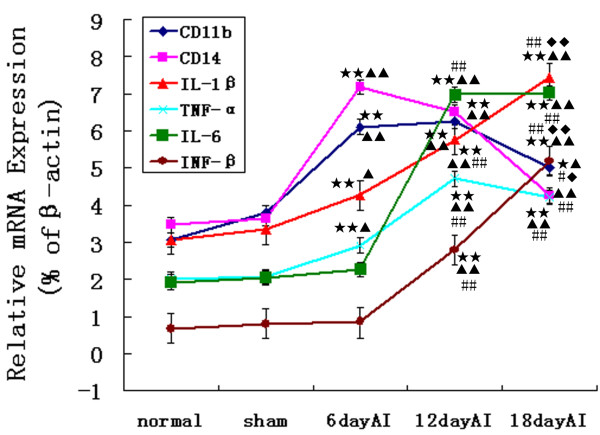
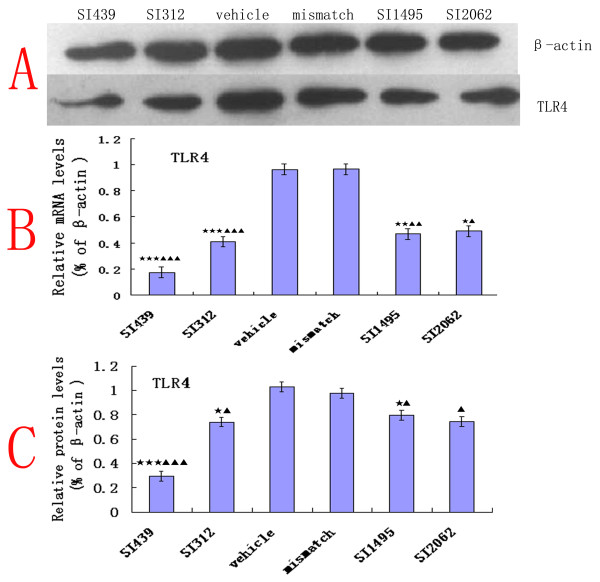
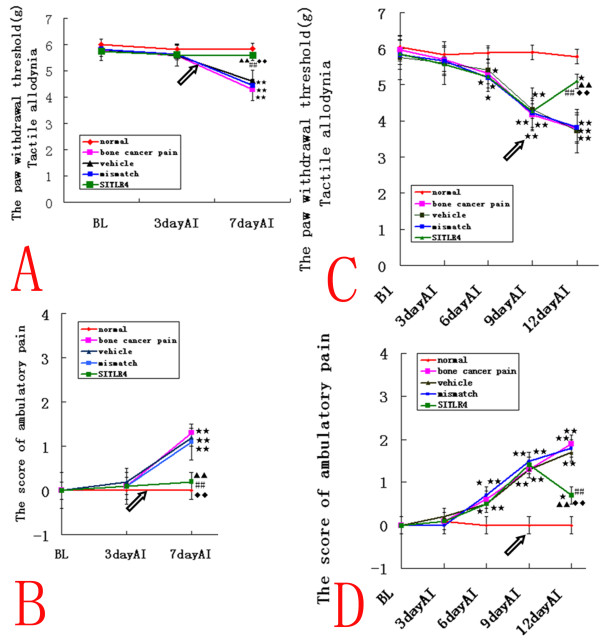
We assessed tactile allodynia and spontaneous pain in female Sprague-Dawley (SD) rats after intramedullary injection of Walker 256 cells into the tibia. In a complementary study, TLR4 small interfering RNA(siRNA) was administered intrathecally to bone cancer pain rats to reduce the expression of spinal TLR4. The bone cancer pain rats treated with TLR4 siRNA displayed significantly attenuated behavioral hypersensitivity and decreased expression of spinal microglial markers and proinflammatory cytokines compared with controls. Only intrathecal injection of TRL4 siRNA at post-inoculation day 4 could prevent initial development of bone cancer pain; intrathecal injection of TRL4 siRNA at post-inoculation day 9 could attenuate, but not completely block, well-established bone cancer pain.
TLR4 might be the main mediator in the induction of bone cancer pain. Further study of this early, specific, and innate CNS/microglial response, and how it leads to sustained glial/neuronal hypersensitivity, might lead to new therapies for the prevention and treatment of bone cancer pain syndromes.
本研究通过 RNA 干扰(RNAi)技术,证明了小胶质细胞 Toll 样受体 4(TLR4)在骨癌痛大鼠模型中枢神经系统固有免疫中的关键作用,该受体在诱导和维持行为性痛觉过敏中起作用。我们假设,在胫骨内注射 Walker 256 细胞(乳腺癌细胞系)后,TLR4 刺激小胶质细胞膜触发中枢神经系统神经免疫激活和随后的细胞因子表达。
我们评估了雌性 Sprague-Dawley(SD)大鼠胫骨内注射 Walker 256 细胞后触诱发痛和自发性疼痛。在一项补充研究中,TLR4 小干扰 RNA(siRNA)鞘内给药用于骨癌痛大鼠,以降低脊髓 TLR4 的表达。与对照组相比,用 TLR4 siRNA 治疗的骨癌痛大鼠表现出明显的行为性痛觉过敏减轻和脊髓小胶质细胞标志物及促炎细胞因子表达减少。只有在接种后第 4 天鞘内注射 TLR4 siRNA 才能预防骨癌痛的初始发展;在接种后第 9 天鞘内注射 TLR4 siRNA 可减轻,但不能完全阻断已建立的骨癌痛。
TLR4 可能是诱导骨癌痛的主要介质。进一步研究这种早期、特异、固有中枢神经系统/小胶质细胞反应,以及它如何导致持续的胶质/神经元敏感性增加,可能为预防和治疗骨癌痛综合征提供新的治疗方法。