Department of Biochemistry, The University of Texas Southwestern Medical Center at Dallas, Dallas, TX 75390-9038, USA.
Mol Biol Cell. 2010 Mar 15;21(6):956-69. doi: 10.1091/mbc.e09-08-0673. Epub 2010 Jan 20.
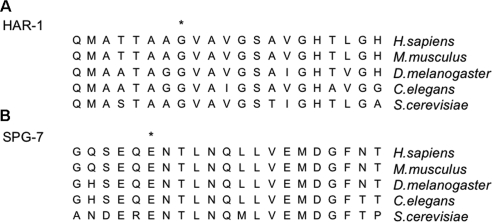
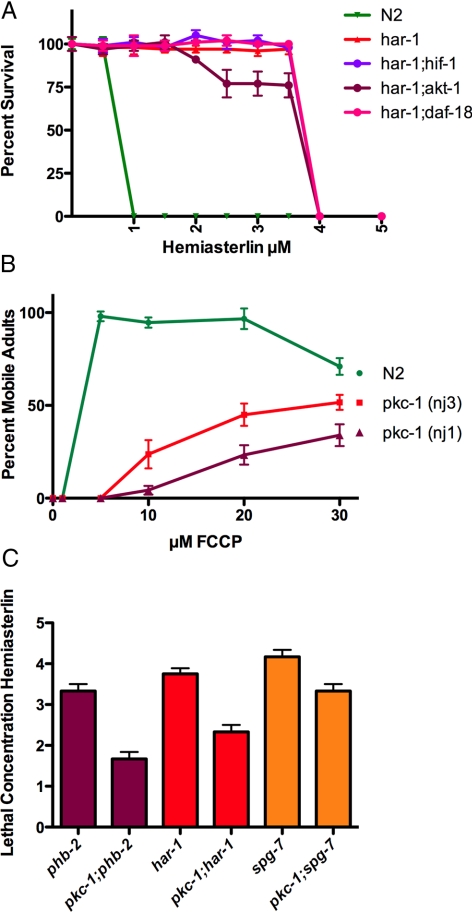
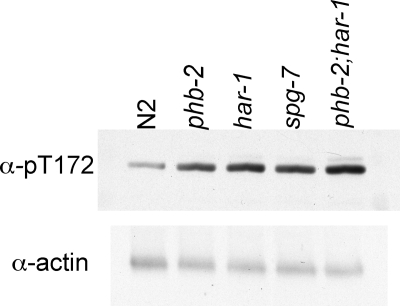
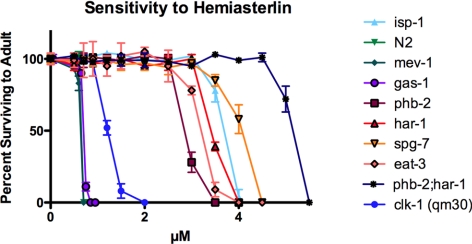
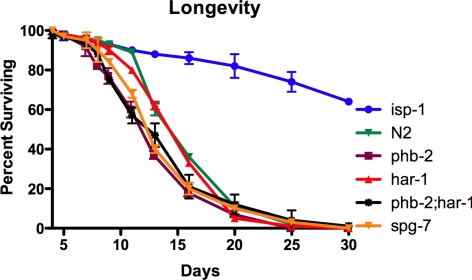
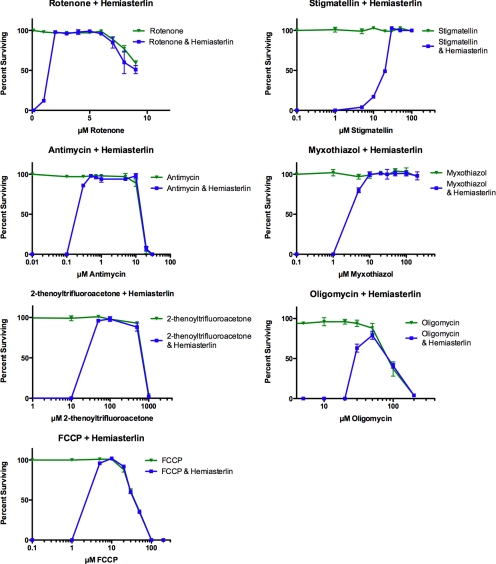
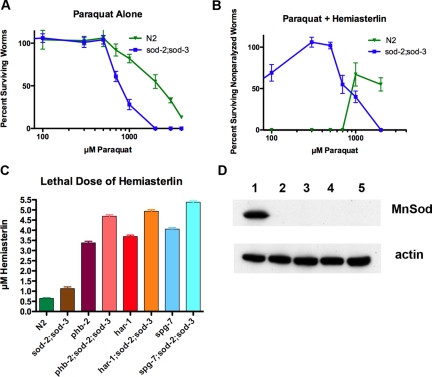
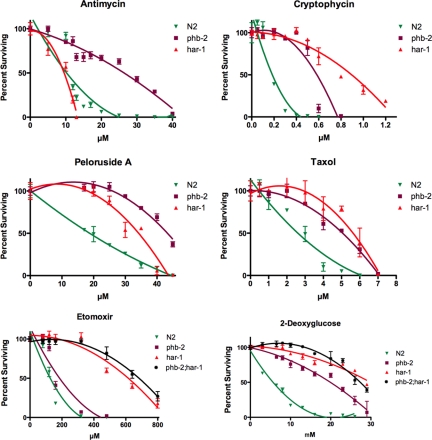
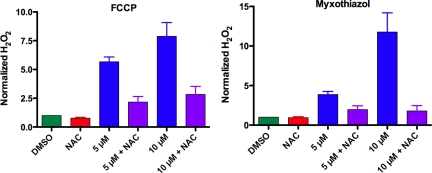
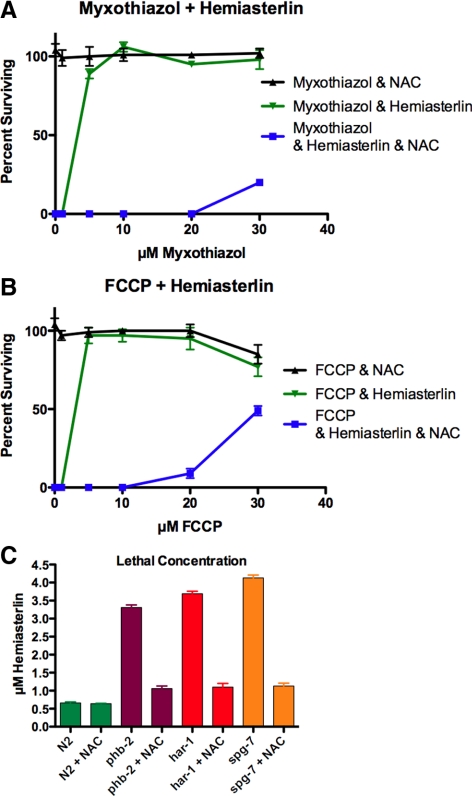
In a previous genetic screen for Caenorhabditis elegans mutants that survive in the presence of an antimitotic drug, hemiasterlin, we identified eight strong mutants. Two of these were found to be resistant to multiple toxins, and in one of these we identified a missense mutation in phb-2, which encodes the mitochondrial protein prohibitin 2. Here we identify two additional mutations that confer drug resistance, spg-7 and har-1, also in genes encoding mitochondrial proteins. Other mitochondrial mutants, isp-1, eat-3, and clk-1, were also found to be drug-resistant. Respiratory complex inhibitors, FCCP and oligomycin, and a producer of reactive oxygen species (ROS), paraquat, all rescued wild-type worms from hemiasterlin toxicity. Worms lacking mitochondrial superoxide dismutase (MnSOD) were modestly drug-resistant, and elimination of MnSOD in the phb-2, har-1, and spg-7 mutants enhanced resistance. The antioxidant N-acetyl-l-cysteine prevented mitochondrial inhibitors from rescuing wild-type worms from hemiasterlin and sensitized mutants to the toxin, suggesting that a mechanism sensitive to ROS is necessary to trigger drug resistance in C. elegans. Using genetics, we show that this drug resistance requires pkc-1, the C. elegans ortholog of human PKCepsilon.
在先前的一个针对能够在抗有丝分裂药物——海兔内酯存在的情况下存活的秀丽隐杆线虫突变体的遗传筛选中,我们鉴定了 8 个强突变体。其中两个对多种毒素具有抗性,在其中一个突变体中,我们鉴定出编码线粒体蛋白 prohibitin 2 的 phb-2 发生了错义突变。在这里,我们还鉴定出另外两个赋予药物抗性的突变体,spg-7 和 har-1,它们也编码线粒体蛋白。其他线粒体突变体,isp-1、eat-3 和 clk-1,也表现出对药物的抗性。呼吸复合物抑制剂 FCCP 和寡霉素以及产生活性氧物质 (ROS) 的百草枯都能挽救海兔内酯毒性的野生型线虫。缺乏线粒体超氧化物歧化酶 (MnSOD) 的线虫对药物有一定的抗性,并且在 phb-2、har-1 和 spg-7 突变体中消除 MnSOD 增强了抗性。抗氧化剂 N-乙酰-l-半胱氨酸可防止线粒体抑制剂挽救海兔内酯中毒的野生型线虫,并使突变体对毒素敏感,这表明对 ROS 敏感的机制是秀丽隐杆线虫产生药物抗性所必需的。我们利用遗传学方法表明,这种药物抗性需要 pkc-1,即人类 PKCepsilon 的秀丽隐杆线虫同源物。