Institute of Infectious Disease and Molecular Medicine, University of Cape Town, Observatory, 7925 Cape Town, South Africa.
Clin Immunol. 2010 Apr;135(1):137-45. doi: 10.1016/j.clim.2009.12.007. Epub 2010 Jan 25.
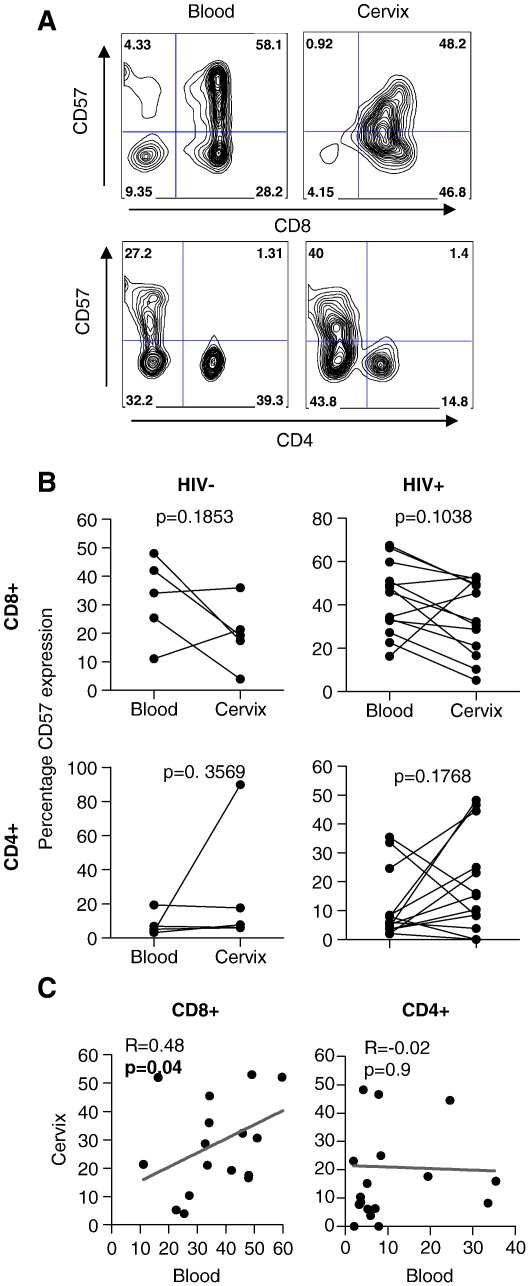
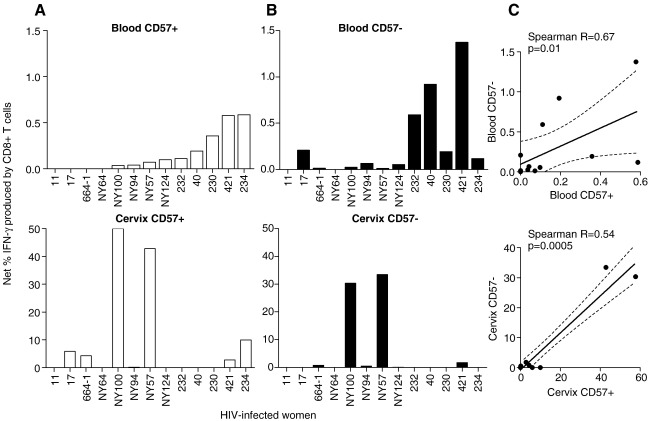
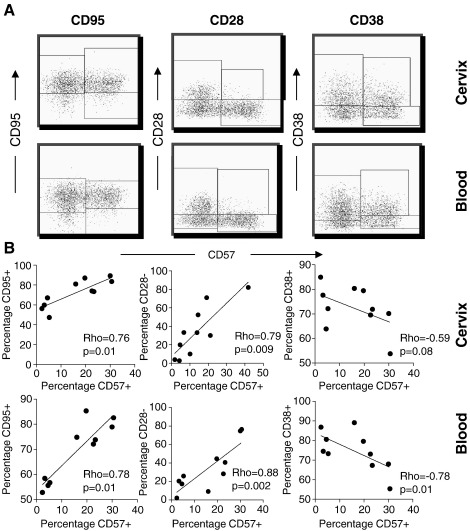
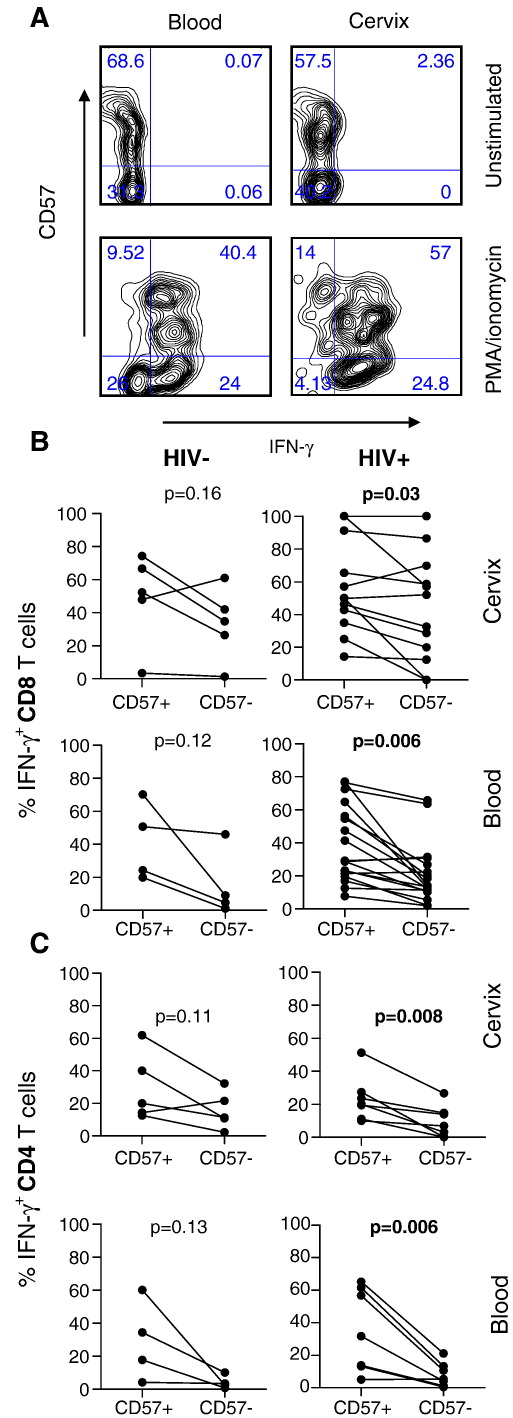
Despite an influx of T cells to the cervix during HIV infection, genital T cells are not associated with control of HIV shedding. CD57 expression by T cells has been associated with enhanced migratory potential and CD57+ T cells have been shown to accumulate in tissues during the late stages of HIV disease. We investigated the impact of HIV-infection and clinical status on the expression of CD57 by T cells from the female genital tract in 13 HIV-infected and 5 uninfected women. We found that cervical and blood-derived T cells expressed similar frequencies of CD57. The frequency of CD57 expression by cervical or blood T cells was not associated with clinical status (CD4 counts). No impairment in IFN-gamma production by CD57+ T cells from the genital tract was observed. We conclude that increased T cell senescence does not appear to be a hallmark of genital mucosal HIV-1 infection.
尽管在 HIV 感染期间有大量 T 细胞涌入宫颈,但生殖器 T 细胞与控制 HIV 脱落无关。T 细胞上的 CD57 表达与增强的迁移潜力有关,并且已经表明 CD57+T 细胞在 HIV 疾病的晚期会在组织中积累。我们研究了 HIV 感染和临床状况对 13 名 HIV 感染者和 5 名未感染者生殖道 T 细胞 CD57 表达的影响。我们发现宫颈和血液来源的 T 细胞表达相似频率的 CD57。宫颈或血液 T 细胞 CD57 表达的频率与临床状况(CD4 计数)无关。未观察到生殖道 CD57+T 细胞 IFN-γ产生受损。我们的结论是,T 细胞衰老增加似乎不是生殖器黏膜 HIV-1 感染的标志。